
September 8, 2025
Richmond, VA Installs Off-Grid Solar Lighting for Sail250 Celebration
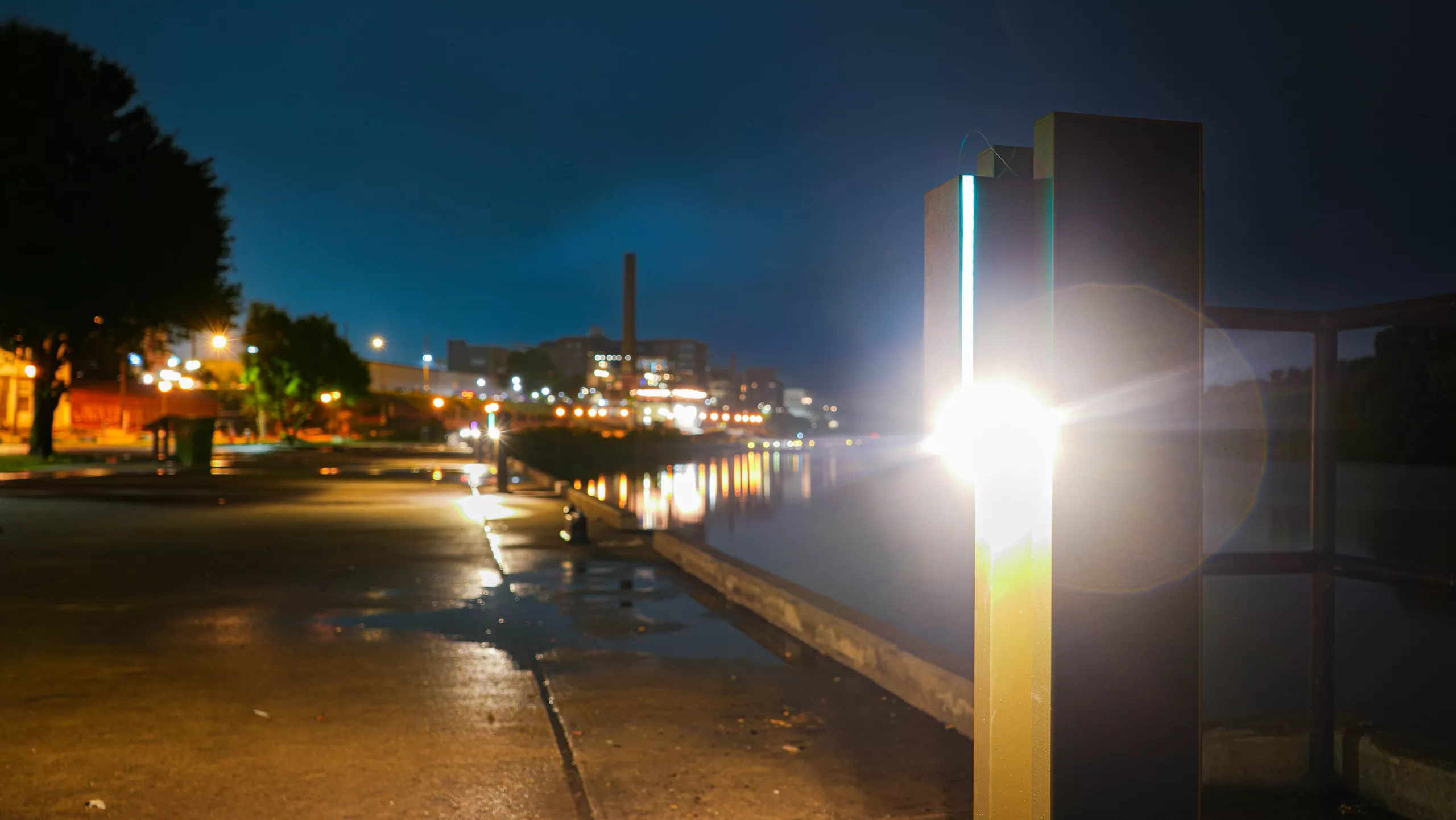
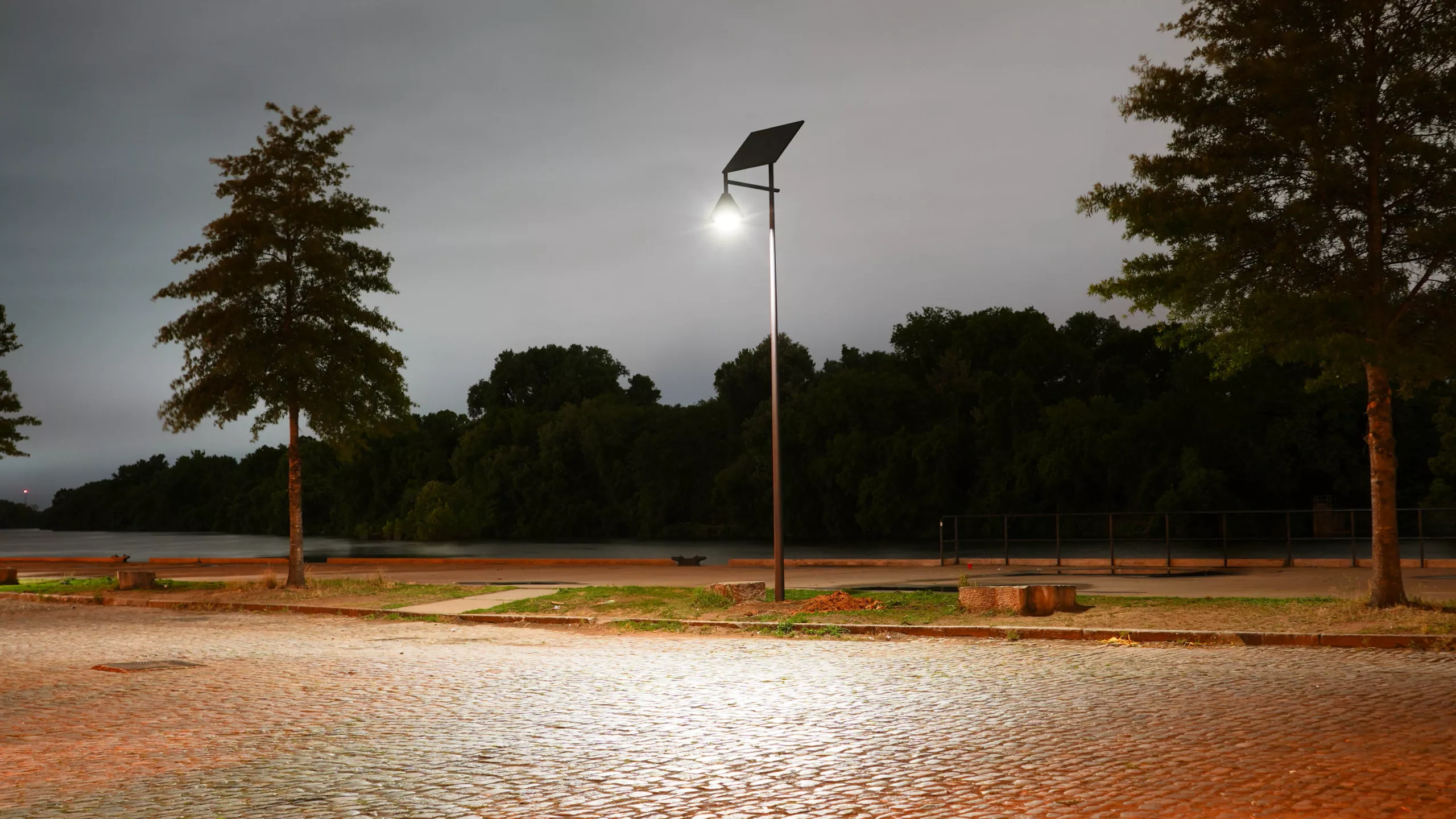
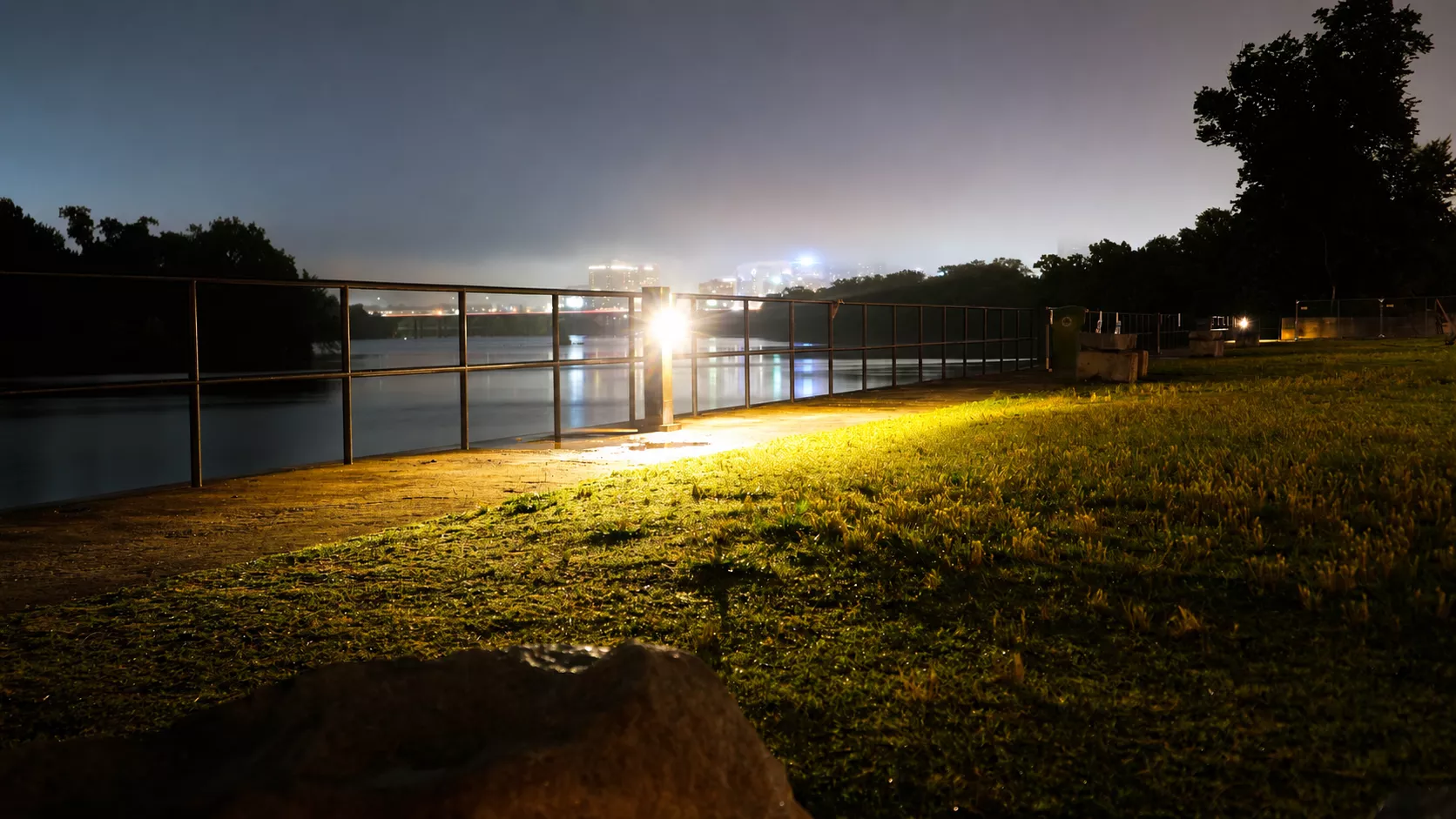
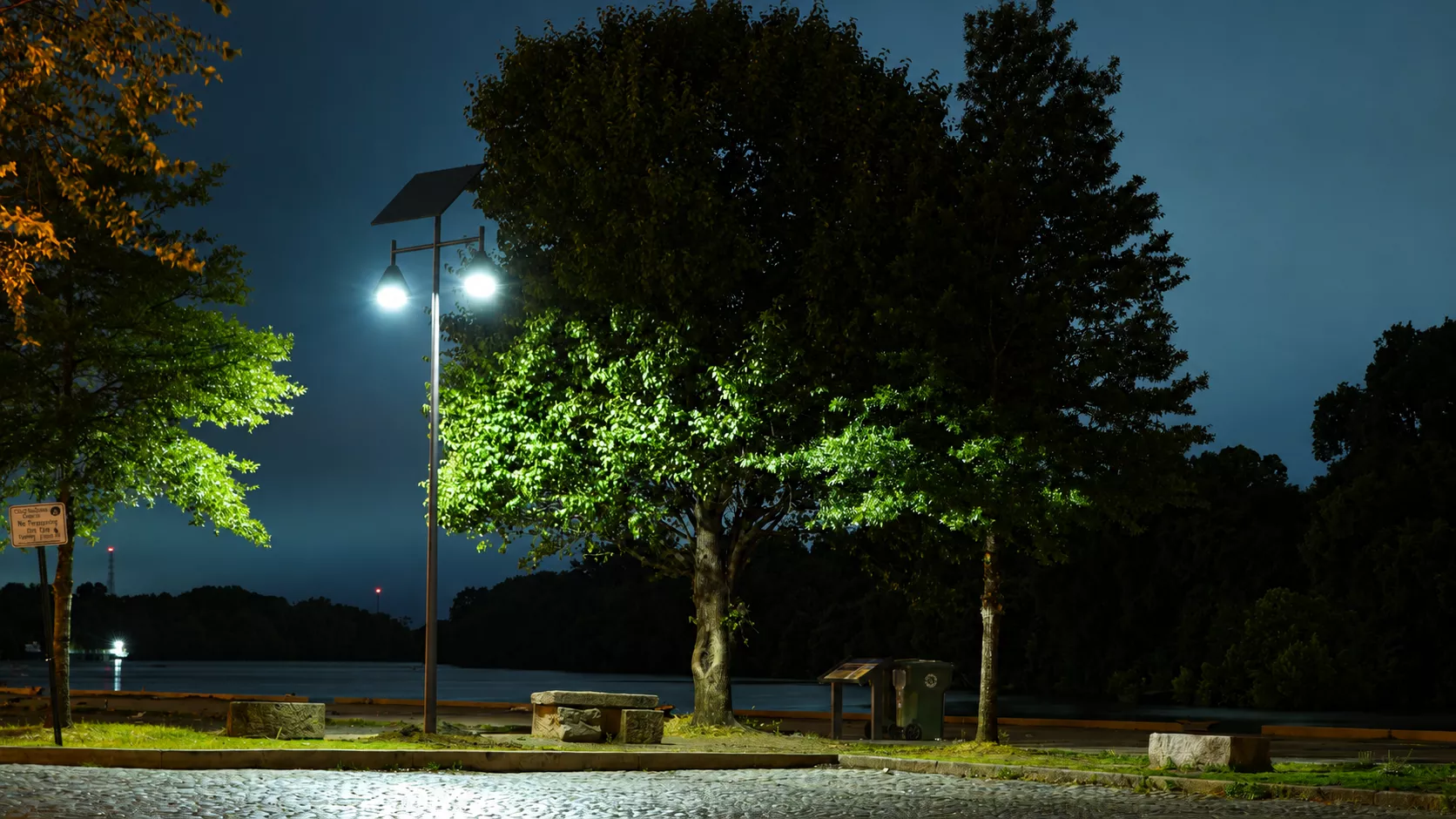
26 off-grid solar lighting systems illuminate pathways, parking areas, and public spaces near Wharf Street, supporting Richmond’s Sail250 celebration while providing lasting lighting infrastructure for the community.

Problem: Preparing Richmond’s Public Spaces for Nighttime Activity
With the Sail250 celebration quickly approaching, the City of Richmond needed to prepare the Wharf Street area for increased nighttime activity. Pathways, parking areas, and surrounding public spaces require reliable illumination to help visitors move comfortably through the site after sunset, while maintaining consistent coverage and minimizing undesirable dark spots.
The project also faced an important constraint: time. Installing new grid-connected lighting could involve trenching, underground cabling, electrical infrastructure, and utility coordination, adding construction steps when the city was working toward a fixed event date. The lighting solution therefore needed to be deployed without making each location dependent on new electrical service.
Beyond the installation timeline, Richmond required a system designed around the way the public space would actually be used. Full cut-off lighting controlled nighttime operation, parking-area visibility, and consistent illumination across pedestrian areas were all important project requirements. With Sail250 approaching, the challenge was not simply adding lights; it was creating an effective nighttime environment while giving the City greater flexibility in how and where the lighting infrastructure could be deployed.
Site Constraints and Project Requirements
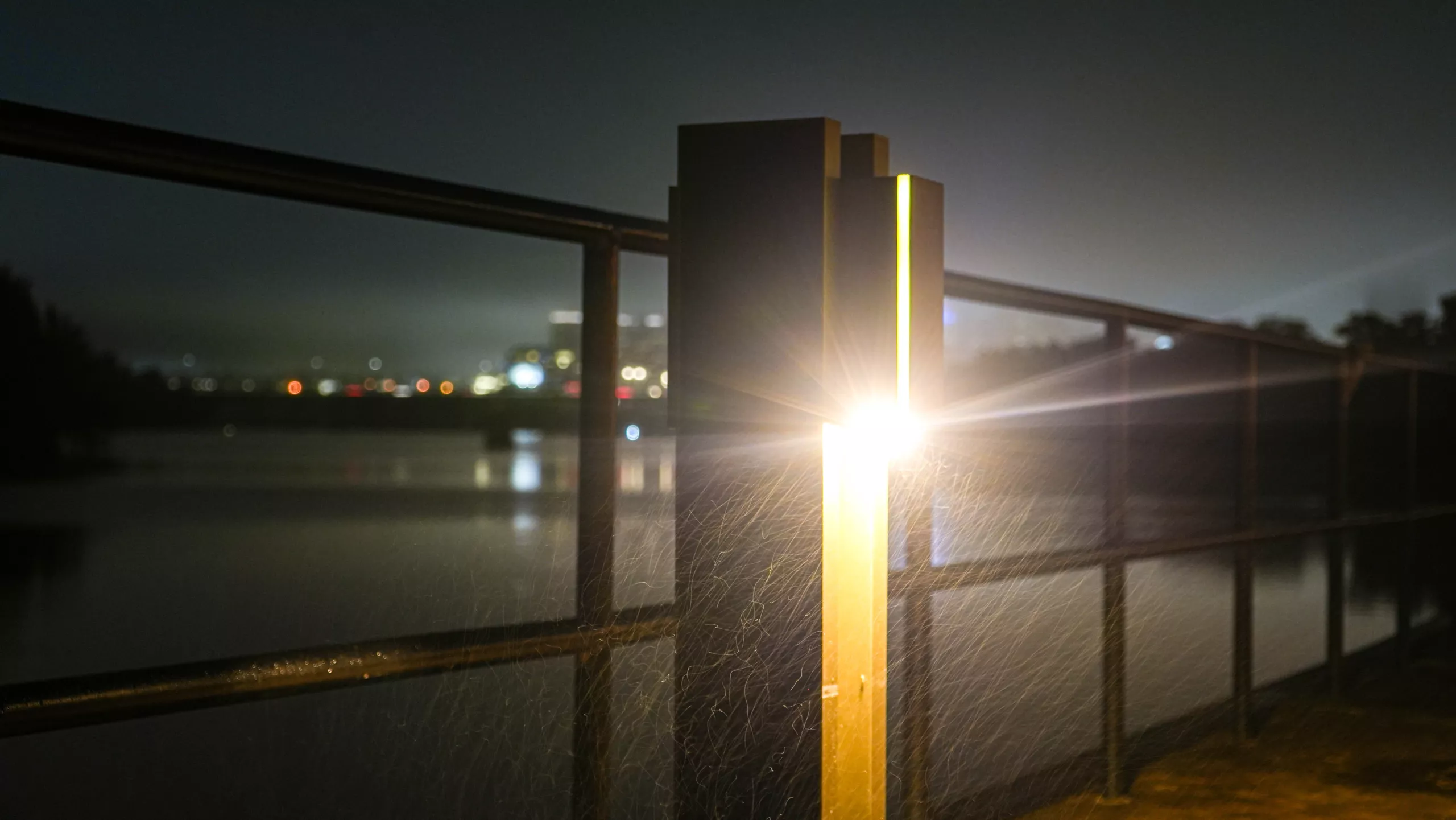
Results:Event-Ready Lighting, Improved Visibility, Lasting Public-Space Value
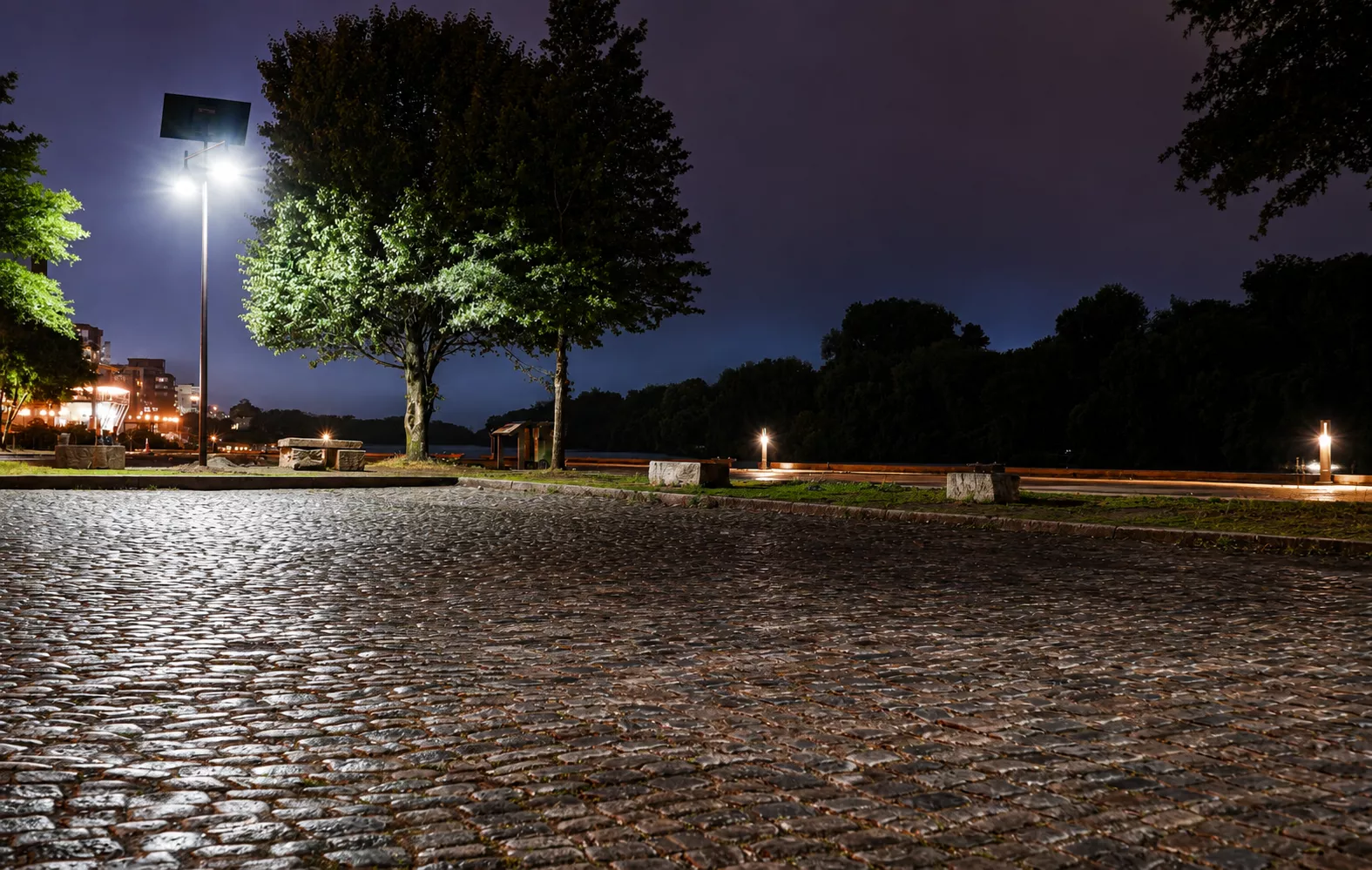
The Richmond solar lighting project delivered immediate value during the Sail250 celebration, providing nighttime illumination across pathways, parking areas, and surrounding public spaces near Wharf Street. With 26 off-grid solar lighting systems in operation, the lighting supported visitor movement after sunset while integrating naturally into the broader nighttime setting of the celebration.
The completed installation improved visibility throughout the areas it was designed to serve, helping create a more welcoming environment for visitors moving between parking, pathways, and public gathering spaces. Because the systems operate 100% off-grid, Richmond gained permanent lighting infrastructure without requiring electrical service at each lighting location. Beyond Sail250, the same installation continues to serve the site’s pathways, parking areas, and public spaces, transforming a time-sensitive event requirement into long-term municipal infrastructure for the Richmond community.
A Replicable Model for Virginia Municipal Public-Space Lighting
Richmond’s Sail250 project demonstrates how a time-sensitive event lighting need can become a long-term municipal infrastructure investment. While the celebration created the immediate need for nighttime illumination, the 26 off-grid solar lighting systems continue to support the pathways, parking areas, and public spaces where they were installed.
For other Virginia municipalities, the Richmond project provides a practical example of how autonomous solar lighting can support public spaces without requiring electrical service at every lighting location. Similar approaches can be considered for:
- Parks, trails, and pathways
- Waterfront and riverfront areas
- Municipal parking areas
- Civic and public gathering spaces
- Festival and special-event locations
By planning beyond the immediate event, communities can use solar lighting to address short-term project requirements while creating grid-independent infrastructure that continues serving residents and visitors after the event is over.
Conclusion:
From Sail250 Celebration to Lasting Richmond Infrastructure
The Richmond Sail250 project shows how off-grid solar lighting can solve an immediate municipal need while continuing to provide value long after an event ends. With 26 solar lighting systems installed near Wharf Street, the City of Richmond was able to support nighttime activity across pathways, parking areas, and public spaces without requiring electrical service at each lighting location.
What began as preparation for a major celebration became a lasting improvement to Richmond’s public environment. The project provides a practical example for other Virginia municipalities considering solar lighting for parks, trails, waterfronts, parking areas, civic spaces, and other community destinations where reliable nighttime illumination and infrastructure flexibility are priorities.