
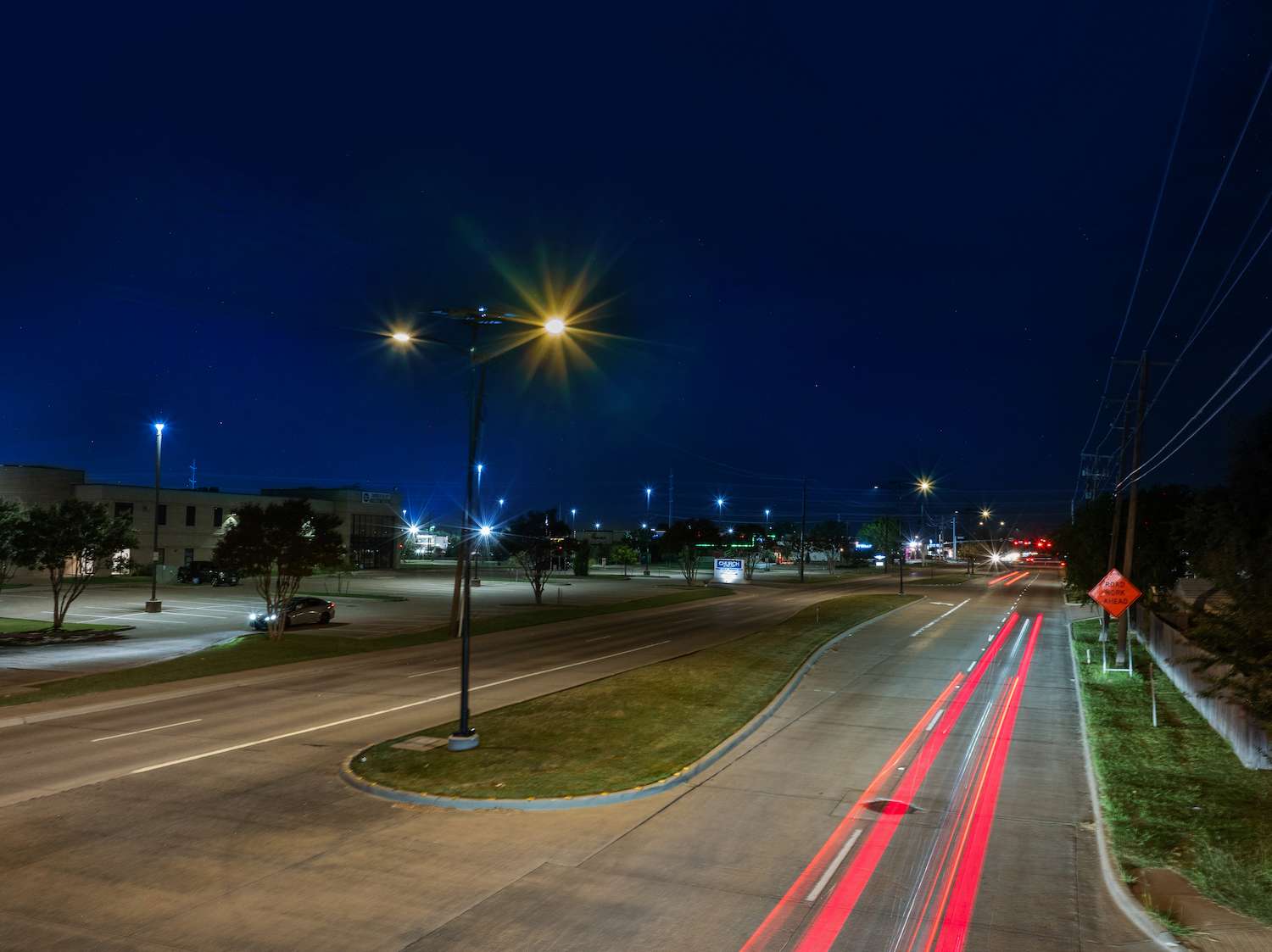
California’s Growing Need for More Resilient Outdoor Lighting
California’s cities, counties, and communities are facing increasing pressure to improve outdoor lighting while balancing public safety, infrastructure resilience, and rising construction costs. From Public Safety Power Shutoffs (PSPS) and wildfire risks to copper wire theft and utility connection delays, public agencies across the state are looking for lighting solutions that can perform reliably under challenging conditions.
Traditional street lighting often depends on extensive trenching, underground electrical cabling, and access to the utility grid. These requirements can raise project costs, extend installation timelines, and make lighting delivery harder. This is especially true in remote locations or areas with ageing infrastructure.
California solar street lighting provides an alternative by operating independently of the electrical grid. Autonomous, off-grid solar lighting systems remove the need for underground power lines. They provide reliable night lighting for roads, parks, paths, parking lots, school campuses, and other public spaces. This approach can help communities improve safety, simplify project delivery, and strengthen infrastructure resilience.
In this article, we will explore California’s top outdoor lighting challenges.
We will also explain how off-grid solar street lighting can help.
It can support municipalities, developers, school districts, tribal communities, and commercial property owners.
Together, they can build safer and more resilient environments.
Copper Wire Theft Is Leaving California Communities in the Dark
Why Copper Wire Theft Is a Growing Concern
Copper wire theft continues to challenge municipalities, public works departments, and property owners across California. Traditional street lighting often uses underground copper cables to connect many light poles. This can make the system more vulnerable to theft and vandalism. When someone steals electrical wiring, lights can go out.This can affect entire sections of roads, parks, parking lots, or walkways.The lights may stay off until the wiring is repaired.
The Impact on Public Safety and Municipal Budgets
Beyond the immediate cost of replacing stolen materials, copper wire theft can increase maintenance expenses, strain municipal budgets, and disrupt essential public services. Dark streets, trails, and public spaces may reduce visibility for pedestrians, cyclists, and motorists while requiring maintenance crews to repeatedly repair damaged infrastructure. These recurring repairs can divert resources away from other critical infrastructure projects.
How Off-Grid Solar Street Lighting Helps
Unlike conventional lighting systems, California solar street lighting works as individual, independent units. It does not rely on long underground electrical cables between poles. Because each light makes and stores its own energy, there is less underground copper wiring that thieves can target. This grid-independent approach can simplify maintenance by limiting damage impact to a single lighting unit, not a circuit.
Practical Scenario
Imagine a city park where repeated copper wire theft has left walking paths and recreational areas without reliable nighttime lighting. Instead of replacing underground electrical wiring after every incident, the municipality could evaluate off-grid solar street lighting to provide independent illumination for key pathways, gathering spaces, and parking areas. By reducing reliance on underground copper cabling, the community can improve public safety while minimizing future disruptions caused by theft.
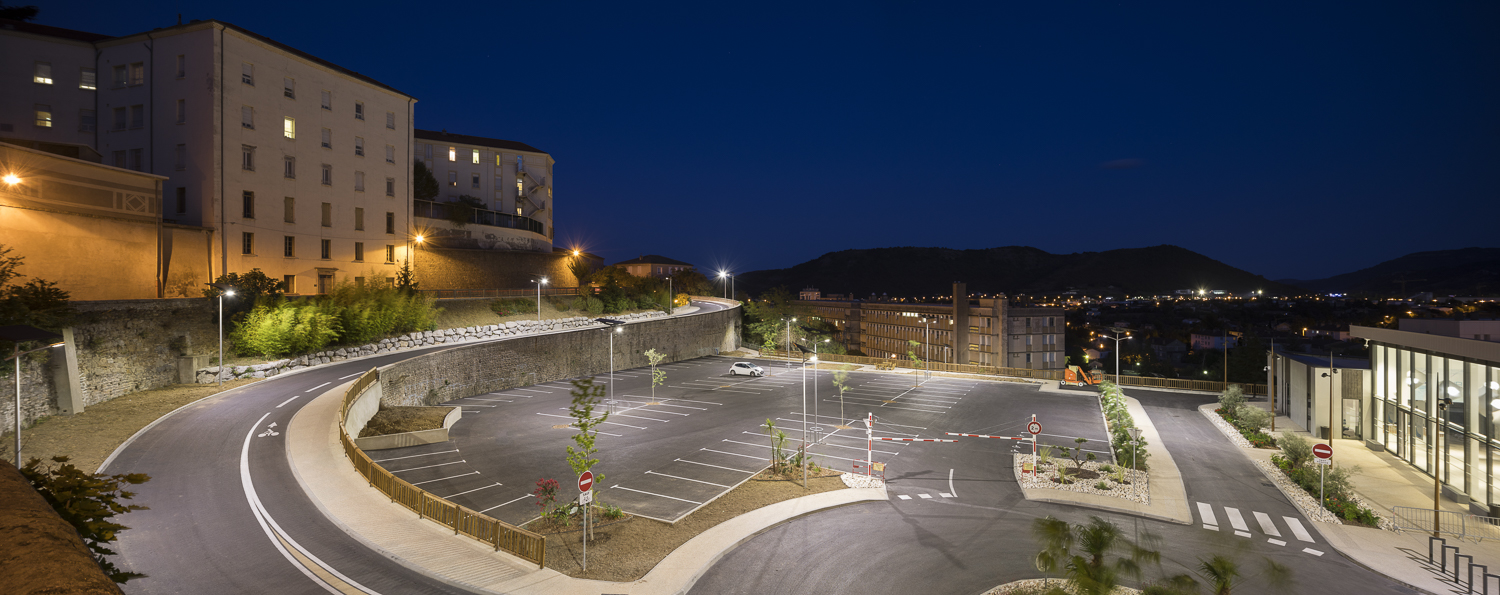
Public Safety Power Shutoffs (PSPS) Demand More Resilient Lighting
Public Safety Power Shutoffs (PSPS) are planned for power outages used by California utilities during periods of high wildfire risk. While these outages help reduce the chance of wildfire ignition, they can also leave critical public spaces without reliable lighting when visibility is needed most.
PSPS outages can affect:
- Roads and intersections
- Parks and trails
- School and university campuses
- Parking lots
- Emergency gathering areas
- Evacuation routes
Unlike traditional grid-powered systems, off-grid solar street lighting operates independently by generating and storing its own energy. This allows California solar street lighting to continue providing nighttime illumination during planned outages, helping improve visibility and support public safety in key locations.
Wildfire Resilience Starts with Reliable Outdoor Lighting
California’s wildfire seasons have increased the need for resilient infrastructure that can support communities before, during, and after emergency events. Wildfires can damage electrical infrastructure, disrupt utility service, and make nighttime visibility more challenging for residents and first responders.
Reliable outdoor lighting plays an important role in emergency preparedness by helping illuminate critical roads, community facilities, evacuation routes, and public gathering areas. Off-grid solar street lighting operates independently of the electrical grid, allowing it to continue providing illumination even when nearby utility infrastructure has been disrupted.
By incorporating California solar street lighting into resilience planning, municipalities and property owners can strengthen public safety while supporting long-term emergency preparedness efforts.
Reducing Trenching Costs and Utility Delays
Installing traditional street lighting often requires extensive trenching, underground conduit, and coordination with utility providers. These steps can increase construction costs, extend project timelines, and disrupt roads, sidewalks, parks, and other public spaces.
Traditional lighting projects often involve:
- Costly excavation and trenching
- Underground conduit and electrical cabling
- Utility coordination and service approvals
- Delays caused by new electrical connections
Off-grid solar street lighting eliminates the need for underground wiring and utility connections by operating as a self-contained lighting system. This allows California solar street lighting projects to be deployed with minimal site disruption, helping municipalities, developers, and public agencies improve outdoor lighting more efficiently while avoiding many of the costs associated with traditional electrical infrastructure.
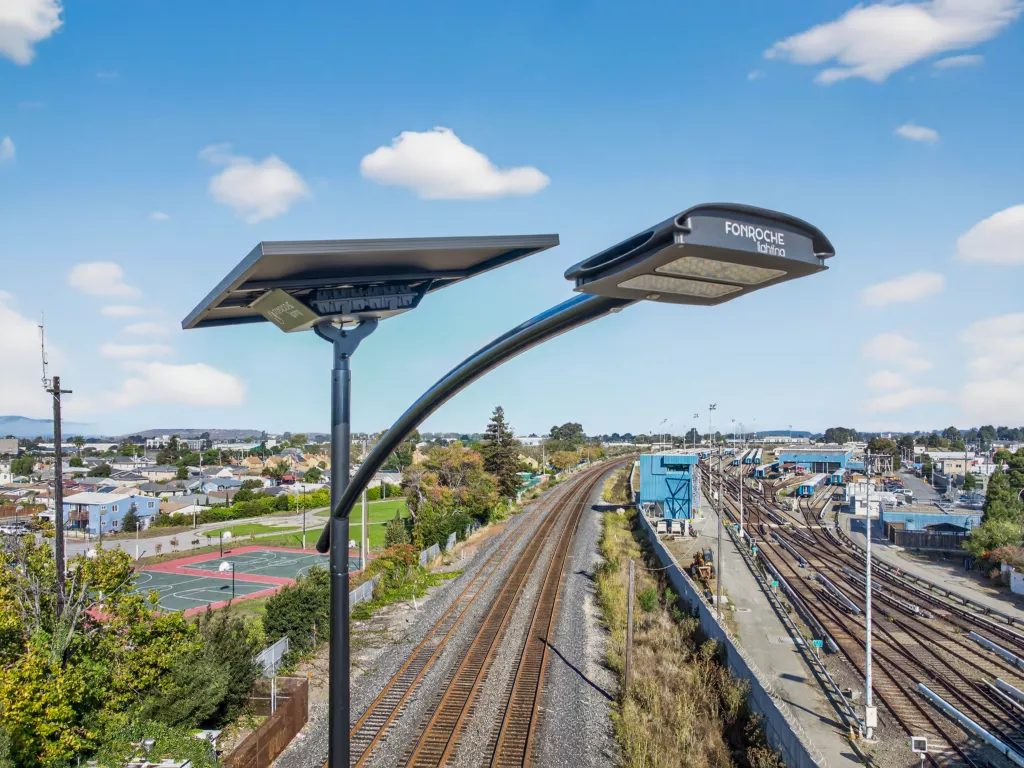
Why California Communities Are Choosing Autonomous Solar Street Lighting
As California communities continue investing in safer and more resilient infrastructure, many are evaluating autonomous solar street lighting as a practical alternative to traditional grid-connected systems. By eliminating the need for trenching, underground wiring, and utility connections, these systems can simplify project planning while providing reliable nighttime illumination.
Key benefits include:
- Reduced maintenance associated with underground electrical infrastructure
- Grid-independent operation during utility outages and PSPS events
- Improved public safety for roads, parks, pathways, and public spaces
- Simplified deployment without extensive electrical construction
- Lower infrastructure complexity for new and retrofit projects
- Long-term resilience for communities planning future infrastructure investments
Whether lighting a roadway, park, school campus, or parking area, California solar street lighting helps municipalities, developers, and public agencies improve visibility while supporting more resilient and sustainable infrastructure planning.
California solar street lighting uses autonomous, off-grid lighting systems powered by solar energy. Each unit generates and stores its own electricity, eliminating the need for utility connections, underground cabling, and trenching while providing reliable nighttime illumination.
Because autonomous solar streetlights generate and store energy on-site, they can continue operating during Public Safety Power Shutoffs (PSPS) without relying on the electrical grid, helping maintain visibility in critical public areas.
No. Off-grid solar street lighting is designed to operate independently, eliminating the need for underground electrical wiring, trenching, and utility connections in many applications.
Yes. Autonomous solar lighting systems do not rely on long underground copper cable runs between light poles, reducing one of the primary targets for copper wire theft in traditional lighting systems.
California solar street lighting can be installed along roads, parks, pathways, parking lots, school campuses, public spaces, remote roads, and other locations where reliable outdoor lighting is needed.
Building a More Resilient Future with California Solar Street Lighting
California communities are facing a unique combination of infrastructure challenges, from Public Safety Power Shutoffs (PSPS) and wildfire risks to copper wire theft, utility delays, and rising construction costs. As municipalities, counties, developers, and public agencies plan for safer and more resilient infrastructure, California solar street lighting offers a practical alternative to traditional grid-connected systems.
By eliminating the need for underground wiring and utility connections, off-grid solar street lighting helps simplify project delivery while providing reliable illumination for roads, parks, pathways, parking lots, school campuses, and other public spaces. As California continues to invest in resilient infrastructure, autonomous solar lighting can play an important role in supporting long-term public safety and sustainability goals. Whether you’re addressing PSPS events, copper wire theft, wildfire resilience, or rising infrastructure costs, Fonroche Lighting America can help you evaluate an autonomous solar lighting solution tailored to your project’s needs. Our team works with municipalities, developers, school districts, Tribal communities, and public agencies to design reliable, off-grid lighting systems for California’s unique infrastructure challenges.
Request a California Solar Lighting Consultation