
How Solar Street Lighting Is Engineered for Reliable Year-Round Performance
Reliable solar LED streetlights require more than combining a solar panel, battery, and LED fixture. For municipal and commercial projects, each component must be engineered as part of a complete energy and lighting system designed around the conditions of the project site.
A solar energy streetlight must balance the solar energy available for collection with battery storage, LED energy demand, and the required hours of nighttime operation. Site conditions also influence how that balance is achieved. When these factors are evaluated together, the system can be sized around the project’s actual lighting requirements and expected year-round operating conditions.
Start With the Solar Resource at the Project Site
Engineering solar LED streetlights begins with understanding how much usable solar energy is available at the actual installation site. Solar exposure can vary based on seasonal conditions, surrounding trees or buildings, terrain, and other features that create shading throughout the day.
Solar-module orientation and placement also influence how effectively the system can capture available energy. For California projects, broad assumptions about statewide sunshine are not enough to determine system performance. The conditions at the specific lighting location must be evaluated. This site-specific solar resource analysis provides the foundation for determining how the solar generation, battery storage, and energy requirements of the complete lighting system should be sized.
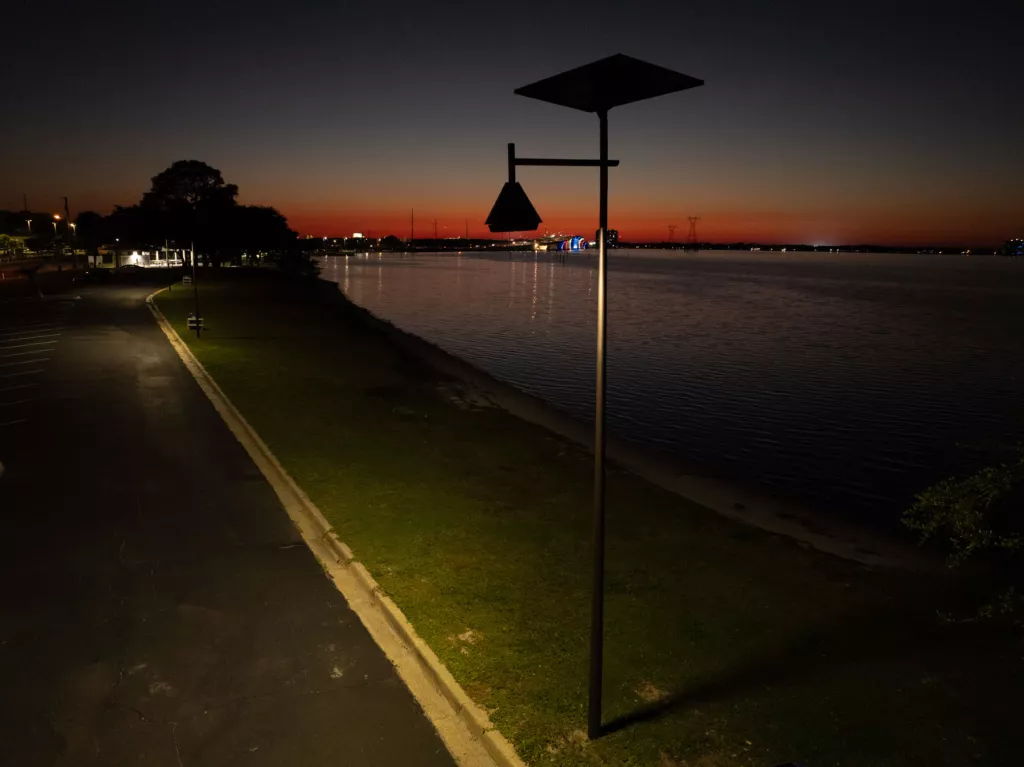
Match Battery Capacity to the Project’s Energy Demand
Once the available solar resource is understood, the next consideration is how that energy will support nighttime operations. Energy collected during the day must be stored for use after sunset, making battery capacity a critical part of a solar energy streetlight system.
Battery sizing should reflect the actual energy demand of the luminaire, required operating hours, and expected seasonal changes in solar availability. However, simply selecting a larger battery does not automatically improve system performance. Storage capacity and solar generation need to be evaluated together, so the energy collected, stored, and consumed remains appropriately balanced around the project’s nighttime lighting requirements.
Size the Complete System, Not Individual Components
Reliable solar LED streetlights depend on how the entire system works together, not on the size or capacity of any single component. Engineering begins with the available solar resources, which influence energy generation and battery storage. Those factors must then support the LED’s energy demand and the required nighttime operating schedule.
Each variable affects the others. Higher lighting requirements increase energy demand, while longer operating periods increase total consumption. Seasonal changes in available solar energy can also affect how much power the system can generate and store. Rather than independently oversizing the solar module or battery, system-level engineering balances generation, storage, lighting demand, and operation around the specific performance requirements of the project.
Lighting Requirements Determine Energy Requirements
The energy requirements of solar LED streetlights begin with the lighting objective. A roadway, parking area, pathway, or public space may require different illumination levels and light distribution based on how the area is used. Roadway or site geometry, mounting height, pole spacing, and luminaire selection all influence the amount of energy required to achieve the intended lighting performance.
These requirements should be established before the solar and battery components are sized. This connects photometric planning directly to energy engineering, helping ensure the system is designed around the application rather than a predetermined fixture.
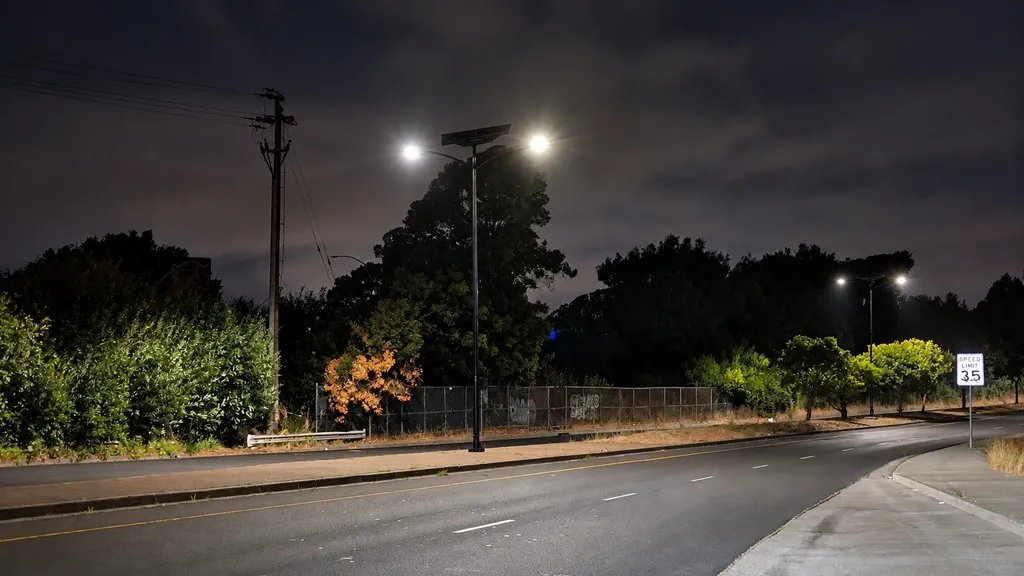
How Lighting Profiles Affect Energy Management
Not every project requires the same light output throughout every hour of nighttime operation. Depending on the application, lighting profiles can be designed around planned operating schedules, expected nighttime activity, and the illumination required during different periods.
These profiles directly influence energy consumption and how stored battery energy is managed throughout the night. However, reducing light output should not be treated simply to conserve energy. Any operating profile must first support the project’s actual lighting requirements. For solar LED streetlights, effective energy management helps align required nighttime performance with the energy available to the system.
Location and Mounting Can Affect Solar Performance
Physical placement is just as important as energy calculations when designing solar LED streetlights. Trees, buildings, nearby structures, and terrain can limit solar exposure or create shading that affects the energy available for collection. Pole placement and solar-module positioning therefore need to account for both current site conditions and potential future obstructions.
A location that provides effective light distribution may not always provide suitable solar access, while the best position for solar exposure may not meet the project’s lighting requirements. Evaluating lighting placement and solar access together helps project teams identify a configuration that supports both illumination needs and dependable solar energy generation.
Questions Project Planners Should Ask a Solar Lighting Provider
Before moving forward with a solar lighting system, project planners should understand how the proposed design was developed. Ask how solar availability was evaluated for the site, how battery capacity and operating hours were determined, and what lighting requirements were used for system sizing. It is also important to understand how shading, pole placement, seasonal conditions, and photometric requirements were incorporated. These questions help reveal whether the proposed system has been engineered around the project’s actual conditions and performance needs.
Frequently Asked Questions About Solar LED Street Lights
Solar LED streetlights can provide year-round lighting when solar generation, battery storage, LED energy demand, and operating schedules are engineered around the conditions of the installation site. Seasonal solar availability, shading, required illumination, and nighttime operating hours should all be considered during system sizing.
Solar streetlights are designed to evaluate both the site’s available solar energy and its lighting requirements. Engineers consider solar exposure, shading, required illumination, pole placement, mounting height, operating hours, battery storage, and expected energy consumption when developing the system configuration.
There is no single sunlight requirement that applies to every solar streetlight project. The amount of usable solar energy depends on the location, seasonal conditions, shading, solar-module placement, and the energy required to operate the light. A site-specific solar analysis helps determine whether available resources can support the project.
Shading can reduce the amount of energy the solar module collects. Trees, buildings, terrain, and nearby structures should therefore be evaluated during system design. Pole and module placement may need to account for these obstructions while still meeting the project’s lighting and photometric requirements.
Municipalities should compare more than solar-panel size or battery capacity. They should evaluate the proposed photometric performance, site-specific solar analysis, battery sizing, operating profile, shading considerations, pole and module placement, and how the complete system has been engineered around the project’s required nighttime performance.
Engineer the System Around the Project
Reliable solar lighting comes from engineering the complete system around the project, not relying on any single oversized component. Solar availability, battery storage, LED energy demand, operating profiles, lighting requirements, and site conditions all need to work together to support the intended nighttime performance.
Planning Solar Street Lighting in California?
Fonroche Lighting America works with municipalities, developers, engineers, and public agencies to evaluate site conditions, solar availability, lighting requirements, and operating needs to develop an autonomous solar lighting solution designed around the specific project.