
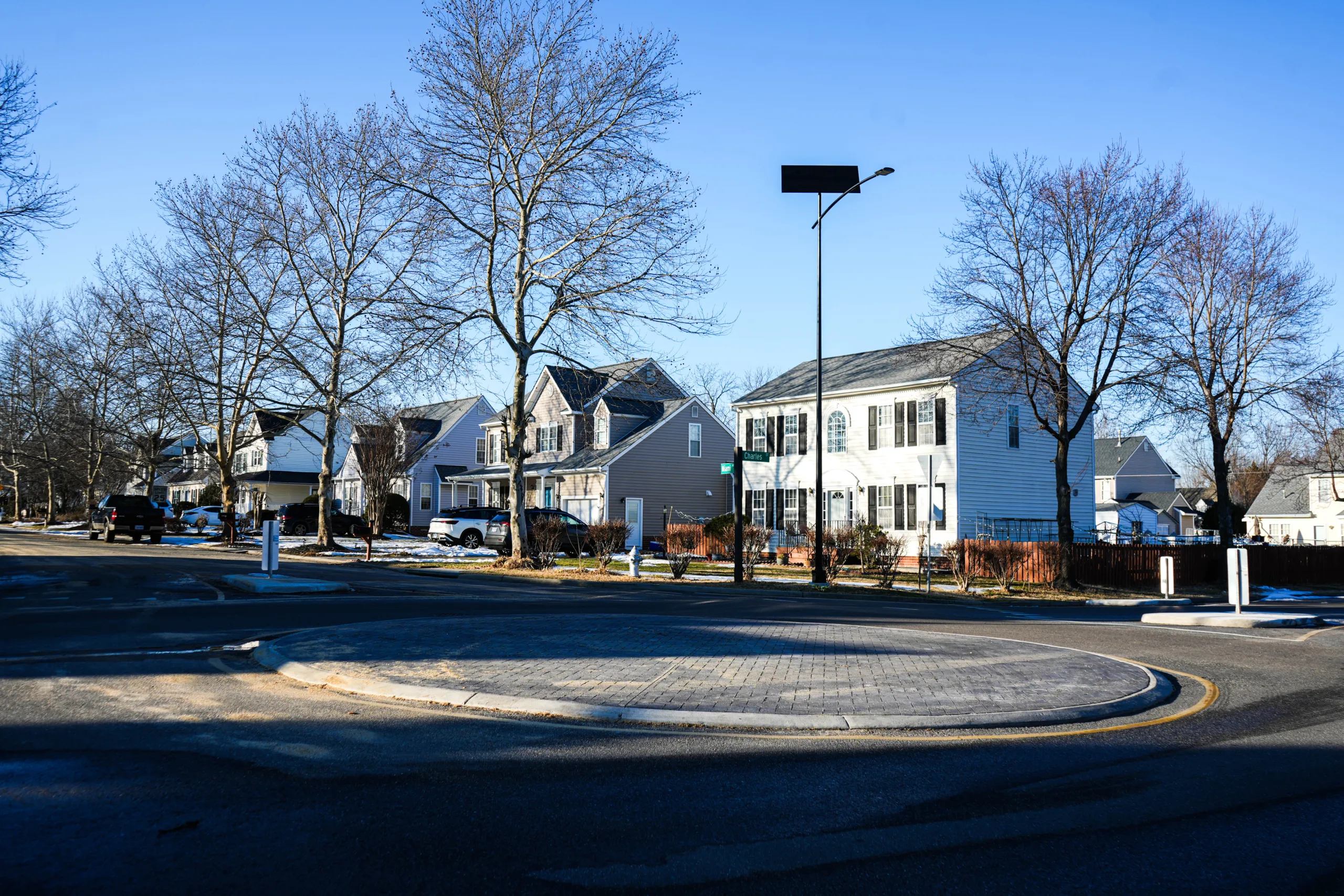
Evaluate What Can Be Reused Before Converting to Solar
Some existing streetlighting installations may be suitable for conversion to solar, but feasibility involves more than attaching a panel to an existing pole. A solar streetlight retrofit requires reviewing the existing installation, pole and foundation suitability, solar exposure, lighting requirements, component compatibility, and whether retaining equipment is practical. For municipalities and commercial property owners looking to convert existing streetlights to solar, these considerations help determine what can be reused and what may need replacement. They also inform future servicing and maintenance needs, helping project teams evaluate the proposed installation beyond its initial conversion.
Assess the Existing Street Lighting Installation
A solar streetlight retrofit starts with understanding the equipment already in place and what the proposed conversion needs to be achieved.
Review Equipment and Infrastructure
Document the poles, foundations, luminaires, mounting arrangements, and electrical connections. Available drawings, specifications, and records of previous servicing or component replacement can help establish the installation condition. This review identifies what may be retained and what needs further assessment before reuse.
Define the Reason for Retrofitting
The goal may be to address unreliable electrical infrastructure, improve light distribution, accommodate longer operating hours, or introduce autonomous operations. These objectives shape the proposed design. Establishing them early helps determine whether converting existing streetlights to solar can meet the site’s requirements and what replacement equipment or future maintenance arrangements may be needed.
Check Pole and Foundation Suitability
Reusing existing infrastructure can be part of a solar streetlight retrofit, but poles and foundations must be assessed for the proposed equipment before they are retained.
Pole Condition and Structural Capacity
Review the pole’s condition, including corrosion, damage, and previous modifications. Solar panels, batteries, and mounting hardware can change the weight and wind loading on the structure. A pole that supports a conventional luminaire is not automatically suitable for a solar configuration. A qualified structural assessment should establish whether it can support the proposed loads.
Foundations and Mounting Requirements
The foundation, anchor bolts, and attachment points must also suit the revised configuration. Available drawings and site inspections can help inform this evaluation. Where capacity or condition cannot be established, further investigation or replacement may be needed. Retaining infrastructure should follow confirmed suitability rather than assuming reuse will reduce installation costs.

Evaluate Solar Exposure at the Existing Locations
An existing pole may be well positioned to illuminate a roadway but receive insufficient sunlight for a solar lighting retrofit. Solar exposure must therefore be evaluated alongside the lighting layout.
Assess Seasonal Sunlight and Shading
Review seasonal solar availability and shading from trees, buildings, and terrain. Consider how shadows change throughout the day and year, particularly when available solar energy is lower. Growing vegetation and future construction may also affect exposure to the installation’s life.
Review Solar-Module Placement
Module orientation and placement influence the energy available for collection. If the existing location cannot support the required operation, the project may need a different configuration, pole relocation, or another lighting approach. Retaining a pole should depend on whether its location supports both illumination requirements and adequate solar access.
Confirm the Required Lighting Performance
Before converting existing streetlights to solar, establish the illumination and light distribution the site requires. A roadway, parking area, or pathway may have different needs based on traffic, pedestrian activity, and surrounding conditions. Mounting height, pole spacing, and luminaire selection influence whether the proposed layout provides suitable coverage.
Even when existing poles are retained, a photometric evaluation should check the performance of the proposed fixtures. Replacement luminaires may distribute light differently from the original equipment, leaving gaps or uneven coverage.
The lighting requirements also determine energy demand. Required output and nightly operating hours must be matched with the energy available from the solar array and battery. Evaluating these factors together helps establish whether the retrofit can meet the site’s needs.
Determine Which Components Can Be Retained
A solar lighting retrofit may retain some infrastructure while requiring replacement of other equipment. Reusing a suitable pole, for example, does not establish that its existing luminaire can operate with the proposed solar power system.
Before retaining a fixture, check:
- Electrical requirements: The luminaire and driver must suit the proposed power supply.
- Connections and controls: Wiring interfaces and control functions must be compatible.
- Energy demand: Consumption must fit the solar generation, battery storage, and operating schedule.
Solar modules, batteries, controls, and lighting equipment should be selected as a coordinated system, with compatible parts identified for future servicing and replacement. Fonroche’s SmartLight solar streetlights offer an integrated system for consideration when evaluating the project’s solar lighting options.
When Retrofitting Is Feasible, and When Replacement Makes Sense
Retrofitting may be practical when existing poles and foundations can support the proposed equipment, solar exposure meets energy needs, and compatible components are available. The retained layout must also deliver the required illumination, with an installation scope that makes reuse worthwhile.
Replacement may make more sense when structures are unsuitable; existing locations receive insufficient sunlight, or substantial changes are needed to achieve acceptable lighting performance. Compare the work required for both options, including installation of access, future maintenance, and component availability.
Our Repair, Retrofit or Replace? A Guide to Upgrading Existing Street Lighting explores these decisions further, helping project teams evaluate whether retaining infrastructure offers practical long-term value.
Frequently Asked Questions About Solar Streetlight Retrofitting
Sometimes. A solar streetlight retrofit may retain existing poles when their condition, structural capacity, foundations, and locations suit the proposed equipment. Solar exposure and lighting coverage must also be evaluated. Reusing poles does not automatically mean existing fixtures or electrical components can remain.
Have a qualified professional assess the proposed configuration against the existing structure. The review should consider pole conditioning, foundation details, anchor bolts, mounting arrangements, and the weight and wind loading of added equipment. Missing records may require further investigation before reuse can be confirmed.
Possibly, if their drivers, electrical specifications, connections, and controls are compatible with the proposed solar system. Their energy consumption and light distribution must also meet the design requirements. Keeping an incompatible fixture can compromise operation, so replacement may be necessary even when poles are retained.
It depends on the extent and timing of shading, and the energy required each night. A site-specific assessment should evaluate seasonal solar access and possible module positioning. If adequate energy cannot be collected, relocation or another lighting approach may be needed.
Consider replacement when existing structures are unsuitable, compatible equipment is unavailable, or the retained layout cannot meet lighting requirements. Compare retrofit costs, installation work, future maintenance, and remaining equipment life with a new system before deciding which option offers practical long-term value.
Plan the Retrofit Around the Existing Installation
A solar streetlight retrofit should bring structural suitability, solar exposure, lighting performance, and component compatibility into one design. Evaluating these factors together helps determine what can be retained, what needs replacement, and whether conversion is practical. Project teams can discuss their existing installation and lighting requirements with Fonroche Lighting America to explore suitable solar lighting options and identify the information needed for further evaluation.