
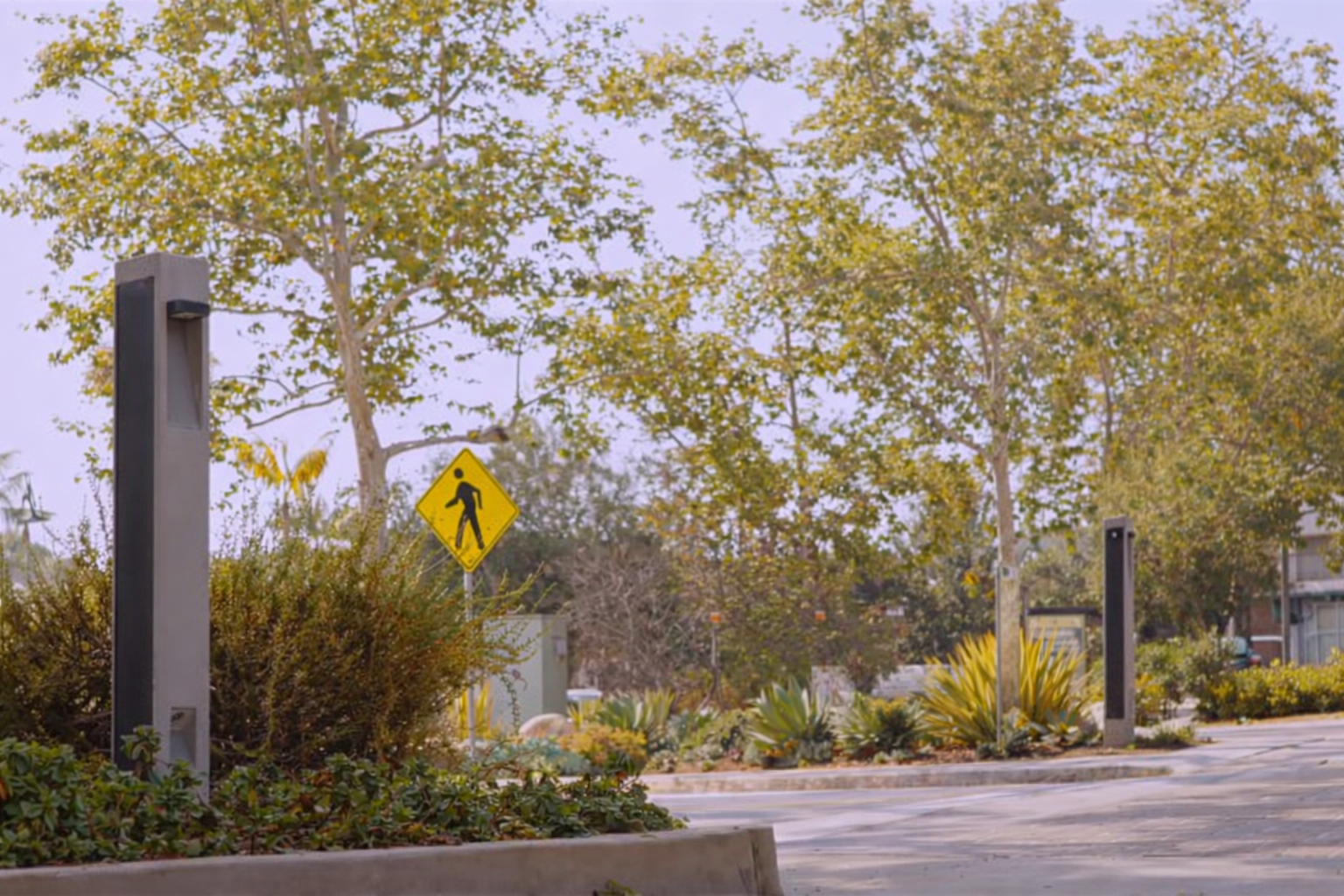
From office campuses and mixed-use developments to healthcare facilities and public spaces, well-planned walkway lighting helps Virginia properties create safer, more accessible, and functional outdoor environments. However, installing outdoor lighting involves more than selecting fixtures. Existing landscapes, underground utilities, tree coverage, and complex property layouts can make conventional electrical installations challenging, particularly when walkways connect multiple buildings or developed outdoor spaces. For property managers, developers, and facility planners evaluating solar walkway lighting in Virginia, independently powered systems offer an alternative worth considering. By assessing pedestrian needs, solar exposure, fixture placement, and long-term maintenance requirements early in the planning process, project teams can determine where commercial solar walkway lighting fits their property layout and operational needs.
Why Walkway Lighting Requires More Than Choosing Fixtures
Effective walkway lighting begins with understanding how people move through a property. On commercial and institutional sites, pedestrian routes often connect parking areas, building entrances, shared amenities, and outdoor gathering spaces. Each location may have different lighting needs depending on how frequently it is used and the activities taking place after dark. For example, a walkway connecting an office building to a parking lot may require functional illumination to help pedestrians navigate the route, while landscaped areas or secondary pathways may benefit from lighting that emphasises direction and wayfinding. Decorative lighting can also contribute to the property’s appearance, but it should not be confused with lighting intended to illuminate walking surfaces. Property managers and facility planners must also consider who uses these spaces. Employees leaving after evening shifts, visitors unfamiliar with the property, and students moving between campus buildings may have different visibility and navigation needs. Defining these requirements early helps project teams establish clear lighting objectives before selecting solar pathway lights or determining fixture locations.
Start with the Walkway Layout and Pedestrian Needs
The physical layout of a walkway plays an important role in determining where lighting should be installed and how it should function. Pathway width, length, curves, and intersections can influence fixture placement, while building entrances, pedestrian crossings, and transitions between outdoor spaces may require additional attention. For commercial and institutional properties, it is important to identify which routes need consistent illumination, and which may only require visual guidance. A primary walkway connecting a parking area to a building, for example, may have different lighting requirements than a landscaped path leading to a shared courtyard. Existing site conditions also shape the lighting plan. Trees, planting beds, changes in elevation, and pedestrian clearance requirements must be considered alongside accessibility and maintenance of access. Across Virginia, these considerations apply to Northern Virginia office campuses, Richmond for commercial properties, mixed-use developments, and educational facilities. Evaluating each property layout helps project teams determine where solar-powered walkway lights can support pedestrian circulation without compromising the surrounding landscape.
Choosing the Right Solar Walkway Lighting Solution
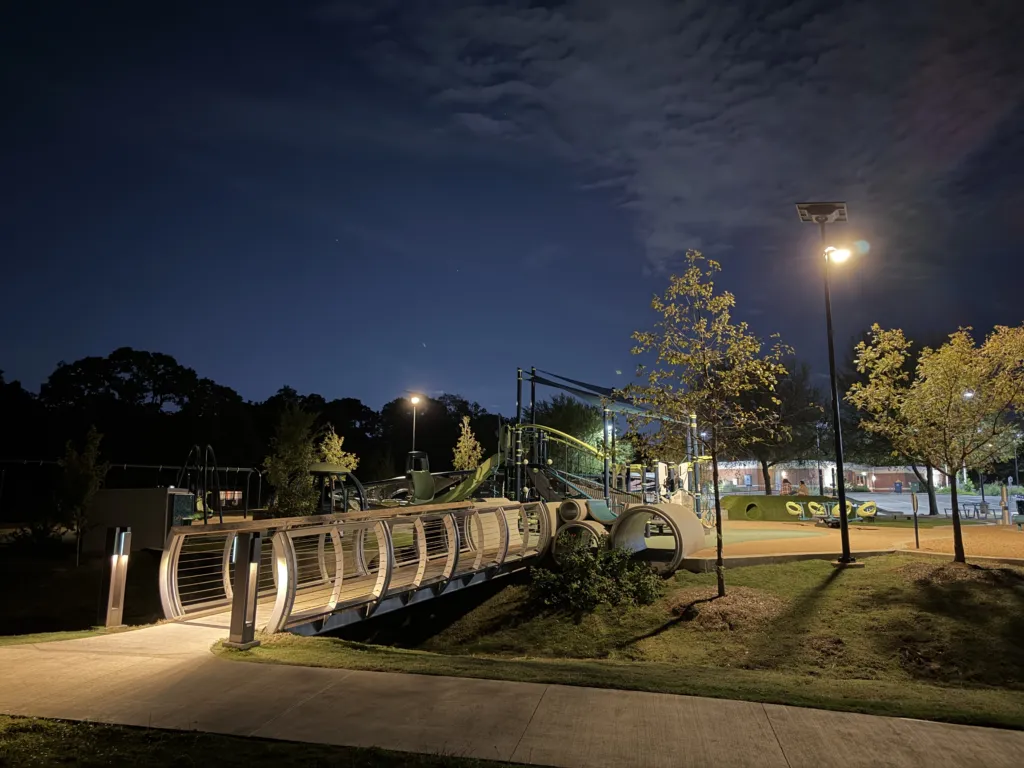
Not every walkway requires the same type of lighting. Selecting an appropriate solution depends on whether the primary objective is to illuminate pedestrian areas, provide visual guidance, or complement the surrounding landscape.
Solar bollards are an option for walkways, building approaches, and landscaped pedestrian routes where ground-level illumination is needed. For projects evaluating commercial solar pathway lighting, NOWATT offers several bollard solutions, including BRUT, FOLLOW, FOLLOW UP, and OKO, allowing project teams to explore fixtures suited to different outdoor environments and design requirements.
Crystal Studs serve a different purpose. Rather than providing broad illumination, these solar-powered markers help define pathways, highlight boundaries, and support visual guidance through outdoor spaces. Some Virginia properties may benefit from combining these approaches. A primary walkway connecting buildings may require functional illumination, while adjacent landscaped routes or pathway edges may benefit from directional markers. The right selection ultimately depends on pedestrian activity, lighting requirements, site conditions, and landscape design. Evaluating these factors helps property managers and designers choose NOWATT solar bollards and Crystal Studs based on how each outdoor space will be used.
Planning Fixture Placement Without Disrupting Existing Landscapes
Installing walkway lighting on an established property requires careful coordination between pedestrian needs and the surrounding landscape. Fixtures should be positioned to support visibility along walking routes while avoiding conflicts with planting beds, tree roots, existing utilities, and pedestrian access. Spacing is another important consideration. Rather than placing lights at fixed intervals, project teams should evaluate walkway dimensions, required illumination, and changes in direction to determine an appropriate layout. Mounting locations, foundation requirements, and access for future servicing should also be reviewed before installation.
For Virginia commercial and institutional properties, solar walkway lighting can offer greater placement flexibility by reducing the need for underground electrical distribution where site conditions allow. This can be particularly useful when adding lighting to established landscapes or developed pedestrian areas. Coordinating early with landscape architects and facility managers helps ensure the lighting layout supports pedestrian circulation while preserving the property’s existing design and infrastructure.
Maintenance and Long-Term Planning for Solar Walkway Lighting
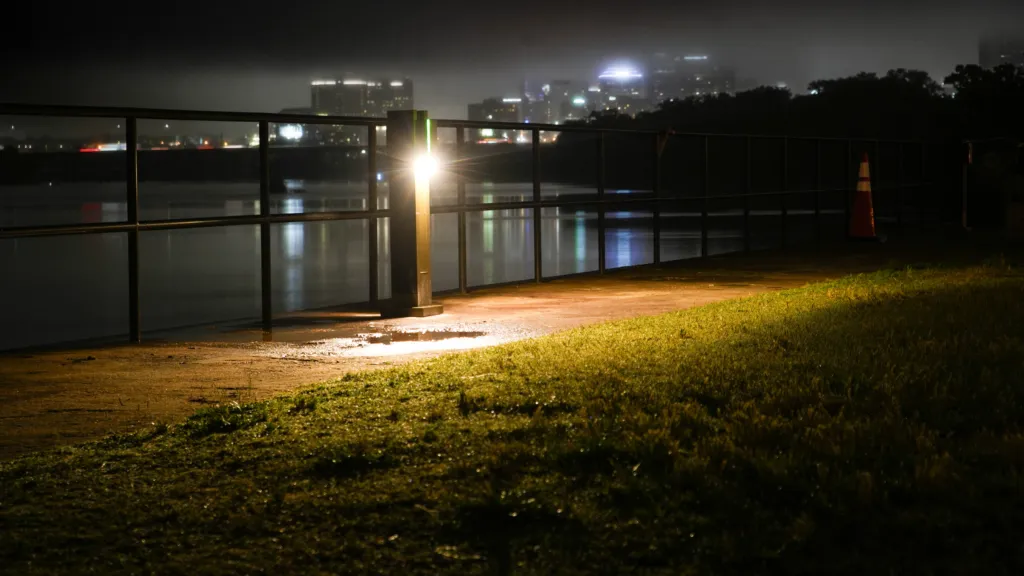
While standalone solar walkway lights reduce dependence on underground electrical connections, they still require long-term maintenance planning. Property managers should account for routine inspections, cleaning, and eventual battery or component replacement to support reliable operation. Maintenance responsibilities should also be established early, particularly for commercial campuses and institutional properties with multiple outdoor lighting areas. For developments planning future expansions, lighting layouts should accommodate potential changes to pedestrian routes and property use. Considering these requirements during the planning stage helps Virginia property owners evaluate the long-term practicality of their solar walkway lighting investment.
Frequently Asked Questions About Solar Walkway Lighting
Commercial solar walkway lighting uses solar panels to generate electricity during daylight hours and stores energy in batteries for nighttime operations. These systems operate independently of the electrical grid and can illuminate pedestrian routes without requiring underground electrical connections between fixtures.
Yes. Solar-powered walkway lights can be suitable for Virginia office campuses, healthcare facilities, educational properties, and mixed-use developments. Their suitability depends on site-specific sunlight availability, seasonal shading, required illumination, operating hours, and the system’s ability to meet project lighting requirements.
There is no universal spacing requirement for solar walkway lights. Appropriate distances depend on fixture light distribution, mounting height, walkway width, and illumination requirements. A site-specific lighting layout and photometric assessment can help determine spacing that supports consistent pedestrian visibility.
Solar bollards are generally better suited to walkways requiring functional illumination, while Crystal Studs provide visual guidance by marking pathway edges or directions. Commercial properties may use both solutions when pedestrian routes require a combination of walking-surface illumination and wayfinding.
Virginia property managers should assess pedestrian traffic, lighting requirements, seasonal sunlight exposure, landscape shading, installation conditions, and maintenance access. They should also consider operating schedules, battery replacement planning, and future property development before selecting a commercial solar pathway lighting system.
Planning Better Pedestrian Spaces Across Virginia
Effective walkway lighting starts with understanding how people move through a property, the level of illumination required, and the conditions that influence installation. For Virginia commercial and institutional projects, evaluating these factors early helps ensure lighting solutions align with pedestrian needs and long-term property plans. Commercial solar walkway lighting offers an alternative to conventional electrical installations, providing greater placement flexibility and reducing the need for underground electrical distribution where site conditions are suitable. Through its NOWATT solar lighting solutions, Fonroche Lighting America offers solar bollards and Crystal Studs for pedestrian-scale lighting applications across commercial developments, institutional campuses, and public spaces.
Planning a walkway lighting project in Virginia? Connect with our team to explore solutions suited to your property’s layout, lighting objectives, and operational requirements.