
Solar Lighting for Virginia Waterfront Promenades and Public Gathering Spaces
Waterfront promenades, pedestrian pathways, and public gathering spaces connect Virginia communities with their coastal environments. Across Norfolk, Virginia Beach, and the wider Hampton Roads region, waterfront parks, public plazas, and landscaped gathering areas need thoughtful lighting to support visibility, wayfinding, and evening use for pedestrians.
However, lighting these environments presents unique challenges. Existing waterfront infrastructure, coastal moisture, drainage conditions, and established landscapes can influence installation decisions and long-term maintenance requirements.
For municipalities and waterfront developers exploring solar waterfront lighting, independently powered fixtures offer a viable alternative. By evaluating pedestrian needs, site exposure, and environmental conditions, project teams can determine where solar pathway lighting may support accessible, functional, and welcoming waterfront public spaces.
Why Waterfront Public Spaces Require a Different Lighting Approach
Unlike conventional pedestrian pathways, waterfront public spaces accommodate a mix of residents, visitors, and recreational users throughout the day and into the evening. Open promenades, seating areas, public plazas, and landscaped gathering spaces each serve different purposes, making a uniform lighting approach less practical.
Primary walking routes may require consistent illumination for pedestrian movement, while secondary gathering areas may benefit from more focused lighting that complements the surrounding landscape and waterfront views.
Environmental conditions add another layer of consideration. Coastal moisture, salt-air exposure, and changing weather conditions can influence fixture selection, placement, and maintenance planning. For Virginia municipalities, effective waterfront lighting must balance functional illumination, public-space aesthetics, and the long-term demands of coastal environments.
Planning Lighting for Waterfront Promenades and Pedestrian Routes
Waterfront promenades often connect multiple destinations, from public parking areas and park entrances to scenic overlooks, recreational facilities, and gathering spaces. Planning solar pathway lights around these connections helps ensure lighting placement reflects how pedestrians move through the waterfront.
Primary walking routes, particularly those connecting frequently used destinations, may require consistent walking-surface illumination. Secondary landscaped paths or connections to viewing areas may benefit from visual guidance and pathway definition.
Transitions between paved promenades, boardwalks, and landscaped walkways also require attention to surface conditions, pedestrian circulation, and fixture placement.
Real-world waterfront applications, such as Fonroche Lighting America’s Madeira Beach project in Florida, can provide useful visual references for Virginia municipalities evaluating pedestrian-scale solar lighting. However, fixture selection should reflect each site’s lighting requirements and environmental conditions.
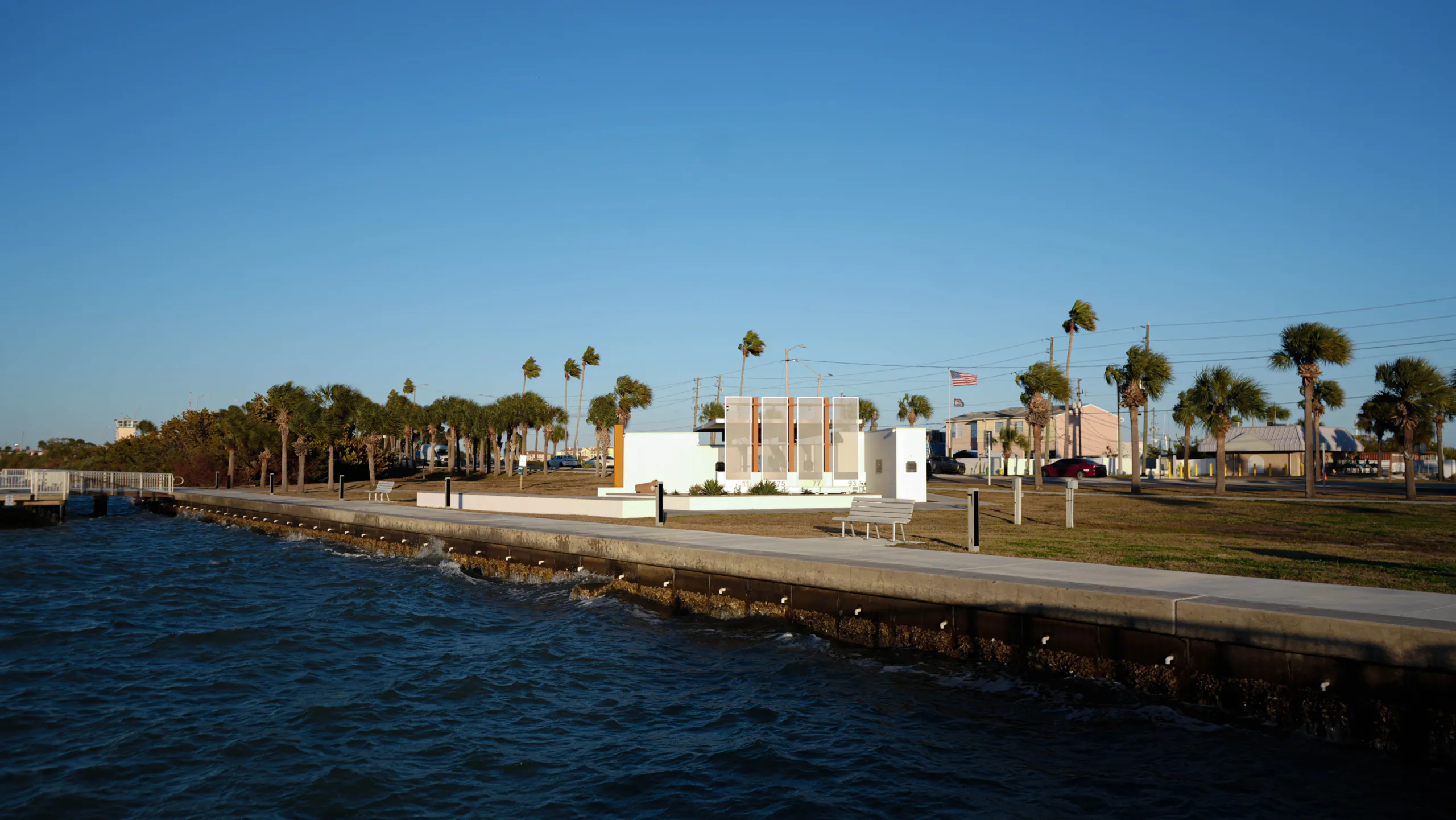
Lighting Waterfront Plazas, Seating Areas and Public Gathering Spaces
Waterfront plazas and public gathering spaces serve different purposes than pedestrian promenades. Visitors may stop to enjoy scenic views, gather near landscaped seating areas, or spend time around waterfront parks and outdoor dining destinations. Lighting should accommodate these activities without overwhelming the surrounding environment.
Pedestrian approaches, seating areas, and promenade rest points may require functional illumination to support movement and visibility. Other locations, such as landscaped boundaries and public viewing areas, may benefit from subtle lighting that defines spaces and provides visual guidance.
For Virginia waterfront communities, fixture placement should also consider glare, particularly near scenic overlooks and open-water views. A thoughtful combination of pedestrian-scale illumination and wayfinding can support public use while preserving the waterfront’s visual character.
Choosing Between Solar Bollards and Crystal Studs for Waterfront Lighting
Different waterfront spaces require different lighting solutions depending on pedestrian activity, visibility needs, and landscape design. Fonroche Lighting America’s NOWATT solar lighting solutions offer options for both functional illumination and visual guidance.
Solar bollards, including BRUT, FOLLOW, FOLLOW UP, and OKO, are designed for pedestrian-scale illumination. They can be considered for waterfront promenades, park pathways, seating areas, and landscaped public spaces where walking-surface visibility is important.
Crystal Studs serve a different purpose. These compact solar lighting elements help define pedestrian routes, mark pathway edges and transitions, and provide visual guidance through public gathering areas. However, they should not replace functional lighting where adequate walking-surface illumination is required.
For Virginia waterfront projects, the appropriate solution depends on lighting requirements, fixture placement, environmental exposure, and the overall public-space design.
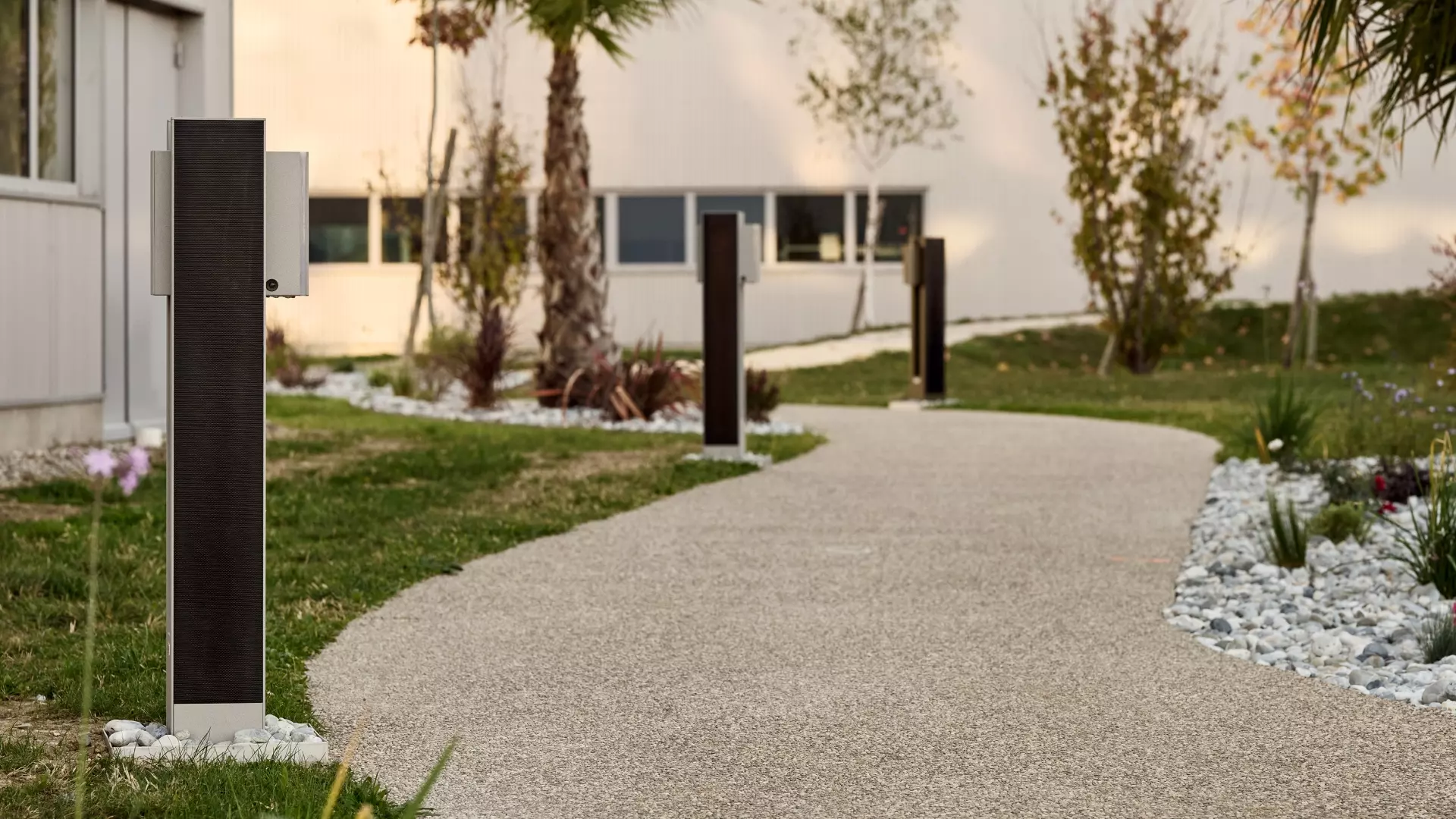
Evaluating Solar Exposure and Environmental Conditions Along Virginia Waterfronts
Open waterfront locations may appear ideal for solar lighting, but unobstructed views do not always guarantee sufficient sunlight. Nearby buildings, trees, waterfront structures, and seasonal changes in sun exposure can affect energy generation and nighttime operating performance.
Environmental conditions also require careful evaluation. Along Virginia’s Hampton Roads coastline, salt-air exposure, coastal moisture, and wind can influence fixture suitability and long-term maintenance needs. Locations vulnerable to tidal flooding or temporary standing water introduce additional concerns involving drainage, installation elevations, and potential water accumulation around fixtures.
Before selecting solar waterfront lighting, municipalities and developers should assess solar availability alongside site-specific environmental risks. Reviewing manufacturer documentation, installation requirements, and product suitability helps determine whether a proposed lighting system can meet the operational demands of its waterfront location.
Planning Fixture Placement and Installation Around Waterfront Infrastructure
Fixture placement along waterfront promenades, boardwalks, and public pathways should support pedestrian movement without interfering with existing infrastructure. Lighting layouts must maintain clear walking routes, accessible circulation, and sufficient space around seating areas, railings, and other public amenities.
Installation planning should also account for mounting surfaces, foundation requirements, and existing underground utilities. Along waterfront locations, drainage patterns, surface elevations, and areas prone to water accumulation can influence where fixtures should be positioned.
Coordination between landscape architects, engineers, and municipal maintenance teams helps identify potential installation conflicts before construction begins.
Where site conditions are suitable, standalone solar pathway lighting can reduce the need for underground electrical distribution, offering greater flexibility when integrating lighting into established waterfront spaces.
Maintenance and Long-Term Planning for Waterfront Solar Lighting
Maintaining solar waterfront lighting requires planning around public activity, environmental exposure, and long-term equipment needs. Lighting schedules should reflect evening pedestrian use and seasonal visitor patterns, particularly along busy promenades and public gathering areas.
Routine inspections and cleaning help identify fixture damage, accumulated debris, and signs of moisture-related deterioration. Municipalities and property managers should also plan for battery and component replacement while ensuring maintenance teams can safely access fixtures without unnecessarily disrupting pedestrian routes.
Although standalone solar lighting reduces reliance on electrical distribution infrastructure, clear maintenance responsibilities and long-term budgeting remain essential for reliable operation in Virginia’s waterfront environments.
What Virginia Waterfront Project Teams Should Evaluate Before Moving Forward
Before selecting solar waterfront lighting, municipalities and developers should review several factors to ensure the proposed system aligns with public-space requirements.
- Pedestrian Needs: Identify routes and gathering areas requiring illumination or visual guidance.
- Site Exposure: Assess sunlight, shading, wind, moisture, and coastal conditions.
- Drainage: Review standing water risks, tidal flooding exposure, and installation elevations.
- Lighting Requirements: Define illumination levels and nighttime operating schedules.
- Installation: Evaluate fixture placement, foundations, accessibility, and existing infrastructure.
- Maintenance: Establish servicing access, ownership responsibilities, and long-term budgets.
Considering these factors early helps integrate solar lighting into broader waterfront infrastructure and public-space planning.
Frequently Asked Questions About Solar Waterfront Lighting in Virginia
Yes. Solar pathway lights can illuminate waterfront promenades, pedestrian routes, and public walkways where site conditions are suitable. Project teams should evaluate required light levels, available sunlight, and coastal environmental exposure before selecting a system.
Solar bollards provide pedestrian-scale illumination for walkways and gathering areas, while Crystal Studs help define pathway edges and guide movement. The appropriate choice depends on whether the location requires functional illumination, visual guidance, or both.
Yes, the selected equipment provided is suitable for those environmental conditions. Municipalities should verify product materials, relevant protection ratings, and manufacturer specifications before installing solar lighting in locations exposed to salt air and coastal moisture.
Municipalities should assess flood exposure, drainage patterns, installation elevations, and foundation requirements. Site-specific engineering and manufacturer guidance are essential for determining fixture suitability, particularly where tidal flooding or temporary standing water may affect equipment.
No. Standalone off-grid solar lighting generally operates without underground electrical wiring between fixtures. However, installations may still require foundations, utility checks, site preparation, and other infrastructure work depending on waterfront conditions and project requirements.
Planning Better Waterfront Public Spaces Across Virginia
Effective waterfront lighting begins with understanding pedestrian movement, public-space activities, and local environmental conditions. Promenades, landscaped pathways, and gathering areas each require lighting solutions suited to their specific functions.
Where site conditions allow, standalone solar lighting can reduce underground electrical distribution requirements while supporting waterfront development.
Through its NOWATT solar lighting solutions, Fonroche Lighting America offers pedestrian-scale lighting options for public and commercial outdoor spaces.
Planning a waterfront lighting project in Virginia? Connect with our team to discuss your project’s requirements.