
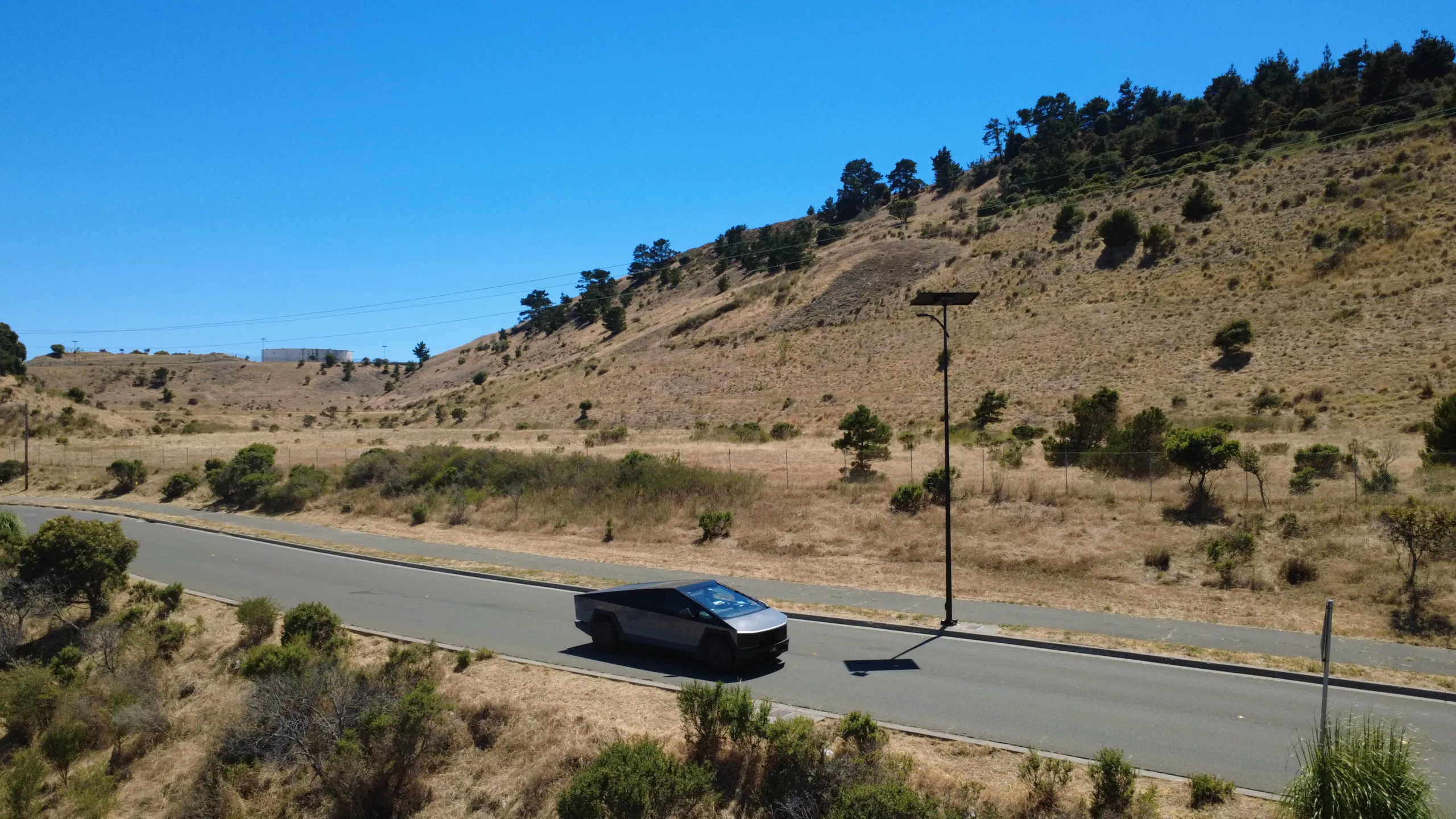
Choosing Solar Street Lighting for California Conditions
Choosing the right solar street lighting in California involves more than selecting a solar panel, battery, and light fixture. Municipalities need to consider how the complete system will perform under the project site’s specific conditions, from available sunlight and local weather patterns to lighting requirements and surrounding infrastructure.
California projects can vary significantly, whether lighting a municipal roadway, parking area, public park, or remote location. Existing grid access, trenching requirements, site constraints, and long-term performance expectations can all influence system design. For municipal solar streetlights, evaluating these factors early helps ensure the system is properly sized and configured for the location, application, and required nighttime lighting performance.
Why California Conditions Matter When Selecting Solar Street Lighting
California’s size and geographic diversity mean solar street lighting systems must be designed around the conditions of the specific project site. A system intended for a coastal community may face different environmental and infrastructure considerations than one installed along an inland roadway or in a remote rural area.
Weather and Environmental Conditions
Heat, wind exposure, wildfire-prone environments, and other local conditions can influence system design. Select and engineer poles, fixtures, solar modules, batteries, and other components to meet the installation site’s requirements rather than using a one-size-fits-all approach.
Solar Availability and Site Conditions
Available sunlight also varies by location and site layout. Proper solar street lighting in California should account for solar exposure, potential shading, required nighttime operation, and energy demand. Site-specific analysis helps ensure the solar array and battery storage are appropriately sized for the project’s lighting requirements.
Grid-Connected vs. Off-Grid Lighting for Municipal Projects
Traditional municipal lighting typically depends on access to electrical infrastructure. Where power is not already available, a project may require trenching, conduit, underground cabling, utility connections, and coordination before the lighting system can operate. For California municipalities, these requirements can add complexity and create significant site disruption, particularly along established roads, parks, and other developed public spaces.
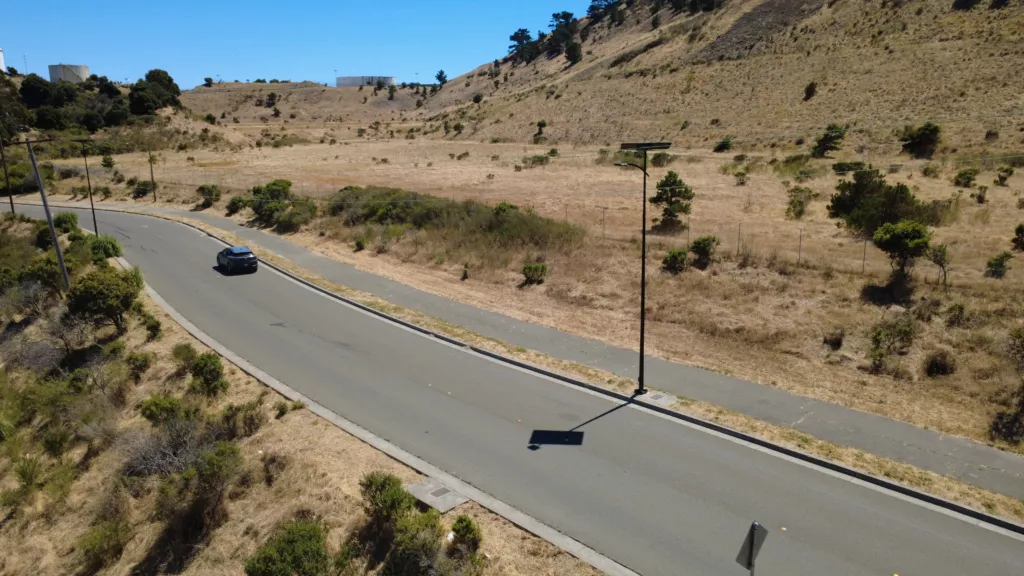
Off-grid solar street lighting in California provides another option. Each lighting system generates and stores its own energy, allowing it to operate independently of the electrical grid without underground power distribution between poles. This can be especially useful for remote roads, new developments, or locations where extending electrical service is difficult.
Where California Municipalities Can Use Solar Street Lighting
Municipal solar streetlights can serve a range of public infrastructure applications across California, particularly where reliable lighting is needed without extending electrical service.
Roads & Intersections
Solar roadway lighting can improve nighttime visibility along local roads, intersections, and corridors where connecting to the grid may be difficult or disruptive.
Parking Lots
Municipal facilities, recreation centers, transit areas, and public parking lots can use off-grid lighting without installing extensive underground electrical infrastructure.
Parks & Public Spaces
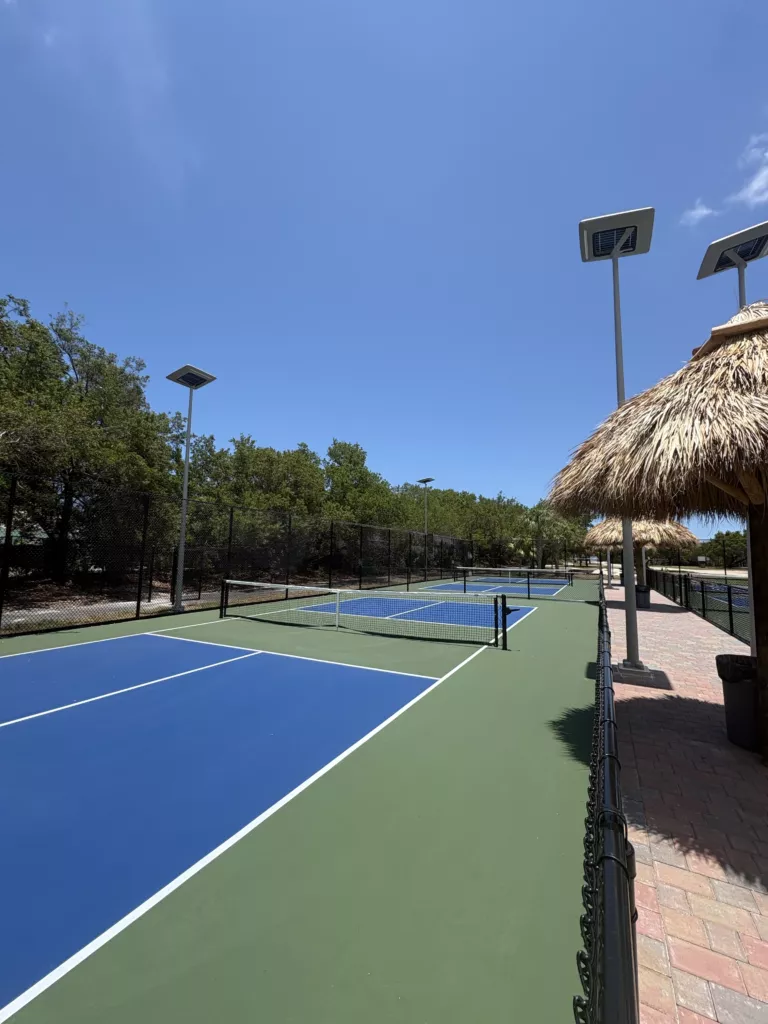
Solar lighting can support pedestrian visibility in parks, recreational facilities, gathering areas, pathways, and other community spaces while minimising disruption to established landscapes.
Remote or Hard-to-Power Locations
For rural roads, Tribal communities, and other locations far from existing electrical infrastructure, off-grid solar street lighting provides an independent option without requiring utility extensions.
What Municipalities Should Evaluate Before Choosing a Solar Lighting System
Selecting municipal solar streetlights requires evaluating the entire system around the site and its lighting objectives rather than choosing individual components in isolation.
Site-Specific Solar Analysis
Available sunlight, seasonal conditions, surrounding trees or buildings, and potential shading should be evaluated to understand how much solar energy can be generated at the installation site.
Battery and Energy Storage
Battery capacity should be sized around the system’s energy requirements and planned operating schedule, helping support reliable nighttime performance when solar conditions vary.
Lighting Requirements
Roadways, parking lots, parks, and pedestrian areas have different lighting needs. Illumination targets, light distribution, mounting height, pole spacing, and the intended application should inform system design.
Poles and Structural Requirements
Pole selection should account for the project location, equipment configuration, and applicable site-specific structural requirements.
Lighting Profiles and Energy Management
Not every application requires the same light output throughout the night. Lighting profiles can adjust output based on expected activity and project requirements, helping balance illumination needs with available stored energy.
Choosing a Solar Street Lighting Manufacturer for a California Project
Choosing a solar street lighting manufacturer in California should involve more than comparing individual products or specifications. Municipalities should evaluate whether a provider can support the complete lighting system from initial site assessment through project planning and implementation.
Important considerations include site-specific solar and energy analysis, battery and system sizing, photometric planning, pole and structural requirements, product documentation, and access to technical support. Experience with municipal and commercial infrastructure is also important because roadways, parking, parks, and public-space projects can have very different performance requirements.
Fonroche Lighting America provides autonomous solar lighting solutions engineered around project-specific conditions. By considering the location, lighting objectives, solar availability, and infrastructure requirements together, municipalities can evaluate a system designed around the actual needs of the project rather than relying on a one-size-fits-all configuration.
Frequently Asked Questions
Municipalities should evaluate site-specific solar conditions, lighting requirements, battery and system sizing, photometric design, structural requirements, operating profiles, and technical support. A solar street lighting system should be designed around the specific location and application rather than selected as a one-size-fits-all solution.
Off-grid municipal solar streetlights do not require a utility power connection. Each system generates and stores its own energy, avoiding the underground electrical cabling and utility infrastructure typically required for grid-connected street lighting.
Solar streetlights should be sized using factors such as available solar energy, shading, seasonal conditions, required illumination, operating schedule, and the energy needs of the lighting system. Site-specific analysis helps determine the appropriate solar generation and battery storage capacity.
Yes. Solar street lighting can be designed for roads, intersections, municipal parking lots, recreation facilities, campuses, and other outdoor applications. The system configuration should be based on the site’s lighting requirements, available solar exposure, and project conditions.
Municipalities should consider the manufacturer’s system-engineering capabilities, solar and energy analysis, photometric planning, battery sizing, structural considerations, documentation, technical support, and experience with municipal or commercial infrastructure projects.
Yes. Because off-grid solar street lighting generates and stores its own energy rather than relying on utility electricity, it can operate independently during grid outages, provided the system has been properly engineered and has sufficient stored energy for the required operating profile.
Planning Solar Street Lighting for California’s Infrastructure
California’s diverse communities and infrastructure require solar lighting systems designed around the conditions of each project. From municipal roads and parking areas to parks and remote locations, successful projects begin with understanding the site, required lighting performance, available solar resources, and existing electrical infrastructure.
For municipalities evaluating solar street lighting in California, a site-specific approach can help determine whether autonomous, grid-independent lighting is appropriate for both current needs and long-term infrastructure planning.