
Commercial Solar Landscape Lighting: A Planning Guide for Public and Commercial Spaces
Commercial landscape lighting should begin with how people use the space, not with a fixture. Parks, campuses, hospitality properties, mixed-use developments, and other public or commercial spaces may need lighting to support pedestrian movement, improve nighttime visibility, define pathways and gathering areas, and complement the surrounding landscape.
For these projects, commercial solar landscape lighting provides another approach to illuminating outdoor areas without automatically extending electrical infrastructure throughout the site. Before selecting a system, project teams should consider the intended use of the space, lighting objectives, existing infrastructure, site conditions, and how the lighting will integrate with the surrounding environment.
Start With the Purpose of the Space
Every outdoor space has different lighting priorities. A public park may need clear pedestrian routes between entrances and recreational areas, while a campus or commercial property may prioritize wayfinding, gathering spaces, and transitions between buildings and parking areas. Landscape features and the desired nighttime experience can also influence where and how lighting is used.
For this reason, pathway solar lights should not simply be installed at predetermined intervals. Placement should reflect how people actually move through and use the site. Establishing the lighting objectives first helps project teams determine the appropriate fixture type, placement, and lighting approach for each area.
Where Commercial Solar Landscape Lighting Can Be Used
Commercial solar landscape lighting can support a range of pedestrian-focused environments where lighting needs vary by how the space is used.
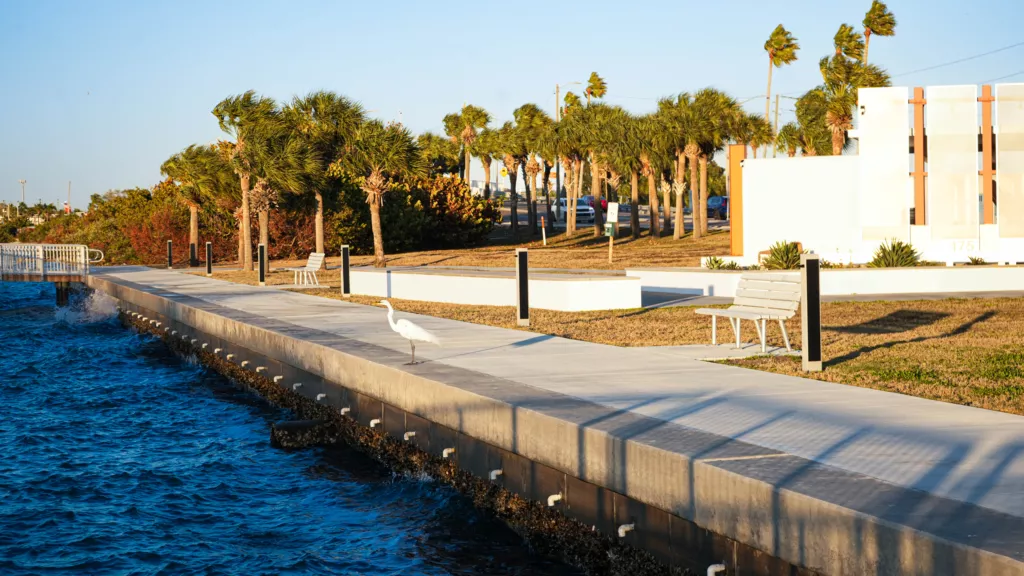
Parks and Pathways: Pathway solar lights can illuminate walking routes, trail connections, recreational areas, entrances, and gathering spaces while integrating with the surrounding landscape.
Campuses and Public Spaces: Schools, universities, municipal properties, and civic spaces may use solar lighting to support pedestrian connections between buildings, facilities, and shared outdoor areas.
Hospitality and Mixed-Use Developments: Walkways, courtyards, landscaped areas, building approaches, and connections between amenities can benefit from lighting designed around pedestrian movement and the character of the property.
Commercial Properties: Solar landscape lights can support entrances, pedestrian routes, landscaped areas, and connections between parking and buildings. In these settings, commercial-grade solutions can serve a different purpose than decorative garden path lights typically associated with residential landscapes.
Consider How Pedestrians Move Through the Site
Effective pathway lighting should follow the way people actually move through space. Project teams should identify primary walking routes, pathway intersections, changes in direction, entrances and exits, and connections between parking areas and buildings. Steps, transitions, and gathering points may also require specific consideration depending on the site.
Rather than treating every section of a pathway the same, lighting placement should respond to the intended use of each area. Understanding pedestrian movement helps planners identify where visual guidance is most important after dark and develop a lighting layout that supports navigation throughout the property.
Balance Lighting Performance with the Character of the Landscape
Landscape lighting should provide the required illumination without feeling disconnected from the space around it. Fixture scale, mounting height, and light distribution should be considered alongside landscape architecture, surrounding buildings, and pedestrian activity. The appearance of fixtures during daylight can also matter in highly visible public and commercial settings.
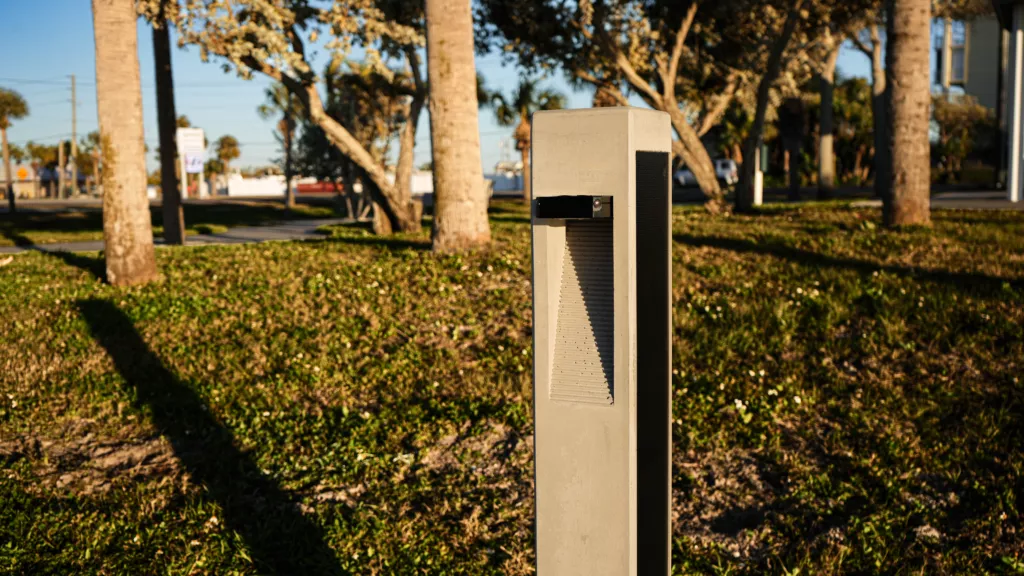
A park, university campus, hotel property, and mixed-use development may each have different expectations for nighttime lighting and visual integration. This makes fixture selection an important part of site planning. Solar bollards and other pedestrian-scale lighting solutions can provide options where lower mounting heights and integration with the landscape are priorities.
Evaluate Existing Electrical Infrastructure Before Trenching
Before selecting a lighting approach, project teams should evaluate what electrical infrastructure already exists at the site. Some properties may have accessible power nearby, while others could require new trenching, conduit, cabling, electrical connections, and restoration of pavement or landscaped areas.
For established parks, campuses, and finished commercial properties, this additional construction can become an important planning consideration. Rather than assuming solar or grid-connected lighting is automatically the better option; planners should compare the complete installation requirements for the site, including how each approach could affect existing landscapes and hardscapes.
Solar Exposure Still Needs to Be Evaluated
Landscape environments can create unique challenges for solar access. Tree canopies, surrounding buildings, and other sources of shade may limit the sunlight available at a proposed lighting location. Landscape growth can also change these conditions over time as trees and vegetation mature.
For this reason, solar-module placement and site orientation should be considered alongside the lighting layout. The ideal position for a pathway fixture may not always provide suitable solar exposure. Evaluating current and potential future shading helps project teams balance solar access with the location where pedestrian lighting is actually needed.
Choose the Lighting Type for the Application
Landscape lighting can require different fixture types depending on the space and lighting objective. Solar bollards can provide pedestrian-scale illumination along pathways, plazas, entrances, and landscaped areas. For projects where visual guidance is needed closer to the walking surface, low-profile solutions such as solar studs can help define routes, edges, and transitions without introducing taller fixtures.
Other locations may require broader illumination, greater mounting heights, or coverage beyond the immediate pathway. In those cases, a larger solar lighting system may be more appropriate. Fonroche’s NOWATT landscape lighting solutions include pedestrian-scale options for these types of applications, while other Fonroche systems address larger-area lighting needs. Product selection should ultimately follow the required lighting performance and characteristics of the site.
Plan for Maintenance and Long-Term Site Changes
Landscape conditions can change long after lighting is installed. Growing vegetation and expanding tree canopies may affect solar exposure, while future landscaping, property development, or pathway modifications can change how an area is used. Fixture placement should therefore consider both current conditions and how the site may evolve.
Project teams should also consider access for routine inspection, cleaning, and other maintenance needs when planning the layout. Treating commercial solar landscape lighting as long-term site infrastructure helps ensure that fixture placement, solar access, and maintenance accessibility remain practical as the surrounding property changes over time.
Frequently Asked Questions About Commercial Solar Landscape Lighting
Commercial solar landscape lighting can be used in parks, pathways, campuses, hospitality properties, mixed-use developments, commercial properties, and public spaces where site conditions, solar exposure, and lighting requirements support the application.
Yes, pathway solar lights can be suitable for park walkways, trail connections, entrances, gathering areas, and other pedestrian spaces when the system is designed around the site’s lighting needs and available solar exposure.
Autonomous solar pathway lights generate and store their own energy for operation, eliminating the need for a grid connection and associated underground electrical wiring between the lighting system and utility power.
They may, but shading must be evaluated. Tree canopies can reduce available solar energy, so solar exposure, module placement, and potential vegetation growth should be considered before determining fixture locations.
Solar bollards used in commercial and public spaces are selected around defined pedestrian lighting and site requirements. Garden path lights are a broader category that can include smaller decorative or residential products that may not be designed for the same applications or performance requirements.
Design Landscape Lighting Around the Space
Successful commercial solar landscape lighting starts with understanding the space before selecting the fixture. Pedestrian movement, illumination requirements, landscape design, existing electrical infrastructure, solar exposure, aesthetics, and long-term site conditions should guide the lighting approach. Fonroche Lighting America can work with project teams to evaluate these factors and identify an autonomous solar lighting solution suited to the application and surrounding environment.