
Solar Pathway Lighting for Parks, Campuses and Public Spaces
Pathway lighting should begin with how people use a space after dark. Parks, campuses, trails, waterfronts, plazas, and other public areas may need lighting to improve pedestrian visibility, define routes, support wayfinding, or identify entrances, transitions, and gathering areas.
Because these needs vary by location, pathway solar lights should be selected around the intended lighting function rather than the fixture alone. Some areas require functional illumination across the walking surface, while others may primarily need route guidance. Effective solar pathway lighting starts by defining what pedestrians need to see and how they are expected to move through space.
Where Solar Pathway Lighting Can Be Used
Solar pathway lighting can support a variety of pedestrian-focused environments, but the lighting approach should reflect how each space is used after dark.
Parks and Recreational Areas: Walking paths, entrances, connections between amenities, gathering areas, and recreational spaces may require different levels of pedestrian lighting.
Campuses: Pathway solar lights can support connections between buildings, parking areas, residence areas, common spaces, and other campus facilities.
Trails and Waterfronts: Trail connections, waterfront walkways, access points, and transitions may benefit from lighting that provides functional illumination, route guidance, or a combination of both.
Plazas and Public Spaces: Civic spaces, mixed-use developments, pedestrian corridors, gathering areas, and building approaches can use pathway lighting to support movement and help define pedestrian routes after dark.
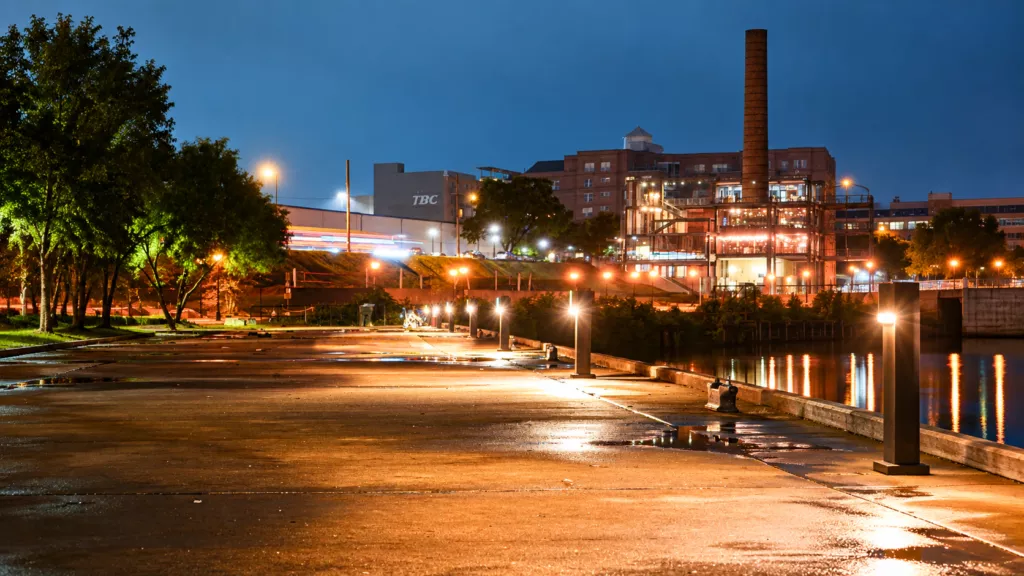
Functional Illumination and Route Guidance Are Different Needs
Not every pathway lighting project is trying to accomplish the same thing. Functional illumination provides light across the walking surface and surrounding pedestrian areas, helping users see the space they are moving through. Route guidance, by contrast, uses visible points of light to define the direction of a pathway, identify edges or transitions, and help pedestrians understand where the route continues.
Some locations may require functional illumination; others may primarily need route guidance, and certain projects may benefit both. Route guidance should not be treated as a replacement where functional illumination is required. Defining the lighting objective first helps project teams determine which type of solar pathway lighting is appropriate for each part of the site.
When Solar Bollards May Be Appropriate
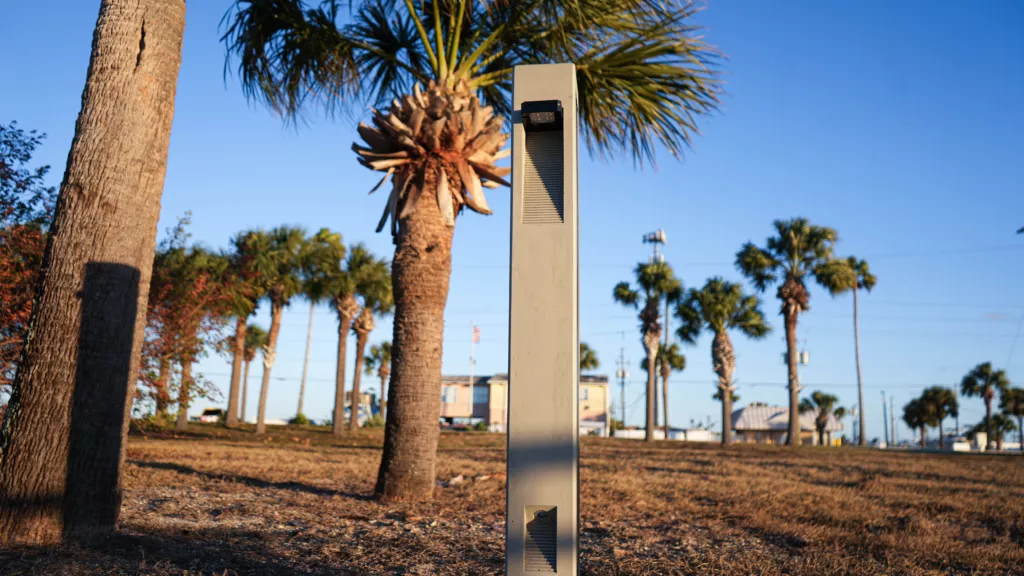
Solar bollards can be a good fit where a project requires functional illumination at a pedestrian scale. Their lower mounting height allows light to be distributed across nearby walking areas while keeping the fixture integrated with the surrounding landscape. This can make them suitable for pathways, entrances, plazas, gathering areas, and landscaped spaces where taller lighting systems may not match the intended site design.
For parks, campuses, and other public spaces, bollards can help illuminate pedestrian routes while maintaining a lower-profile presence within the landscape. The appropriate placement and light distribution should still be determined by the specific lighting requirements of the site.
Where Crystal Studs Can Support Route Guidance
Crystal studs can support route guidance where a low-profile lighting approach is preferred. Positioned closer to the walking surface, they can act as visual markers that help define pathway edges, indicate changes in direction, highlight transitions, and reinforce the route through a pedestrian space.
This approach can be useful in parks, plazas, waterfronts, and other locations where taller fixtures may not suit the surrounding environment. However, crystal studs should not automatically be considered a replacement for functional pathway illumination. Their role depends on what pedestrians need to see and the lighting objective established for the site.
Some Projects May Need Both
Some pedestrian environments may benefit from combining different lighting functions within the same project. Solar bollards can provide broader pedestrian-scale illumination where visibility across the walking surface is needed, while crystal studs can help define routes, edges, or transitions through visual guidance.
This does not mean both solutions are necessary for every pathway. Different sections of the same site may have different lighting needs. Product selection should therefore be based on the function required at each location rather than applying a single fixture type throughout the entire project.
Consider Pedestrian Movement Before Fixture Placement
Fixture placement should follow how pedestrians move along a route rather than relying only on uniform spacing. Main walking paths, intersections, changes in direction, entrances and exits, connections to parking areas, building approaches, and gathering points may each create different lighting needs.
Trail and pathway transitions also deserve attention, particularly where users need to recognise that a route changes or continues in a new direction. By mapping these movement points first, project teams can determine where functional illumination or route guidance is most useful and position pathway solar lights accordingly.
Evaluate the Pathway and Its Surroundings
Pathway lighting should be planned around both solar exposure and the surrounding environment. Tree canopies, buildings, waterfront vegetation, and landscaped areas can create shade where lighting is needed, so fixture placement should consider whether adequate solar access is available.
The lighting should also fit the character and use of the space. Fixture scale, mounting height, light distribution, surrounding architecture, and daytime appearance may differ between a waterfront walkway, university campus, municipal park, or civic plaza. Evaluating these factors together helps project teams position pathway solar lights where they can support pedestrian needs while fitting naturally within the site.
Frequently Asked Questions About Solar Pathway Lighting
Start with what pedestrians need from the lighting. If the goal is to illuminate the walking surface and nearby areas, solar bollards may be appropriate. If the primary need is to define a route, edge, or transition, low-profile guidance lighting such as crystal studs may be considered.
Pathway solar lights can be used along park walkways, campuses, trails, waterfronts, plazas, building approaches, and other pedestrian routes where site conditions and available solar exposure support the application.
Potentially, but tree canopy and shading need to be evaluated. The location where lighting is needed may not always receive adequate solar exposure, so fixture placement and solar access should be considered together.
Not necessarily. Fixture placement should reflect pedestrian movement, lighting requirements, intersections, entrances, transitions, and other locations where illumination is needed rather than relying solely on uniform spacing.
Yes, when the project requires different lighting functions. Solar bollards can provide pedestrian-scale illumination, while crystal studs can support route definition and visual guidance in other parts of the site.
Match the Lighting Solution to the Pathway
Effective solar pathway lighting starts with understanding what pedestrians need from space after dark. Functional illumination, route guidance, pedestrian movement, solar exposure, and surrounding site conditions should guide the lighting approach. Because solar bollards, crystal studs, and other pathway solar lights serve different purposes, the right solution should be selected around the specific function required at each location. Fonroche Lighting America’s NOWATT solutions provide options for pedestrian-focused spaces, helping project teams match the lighting approach to the pathway and its intended use.