
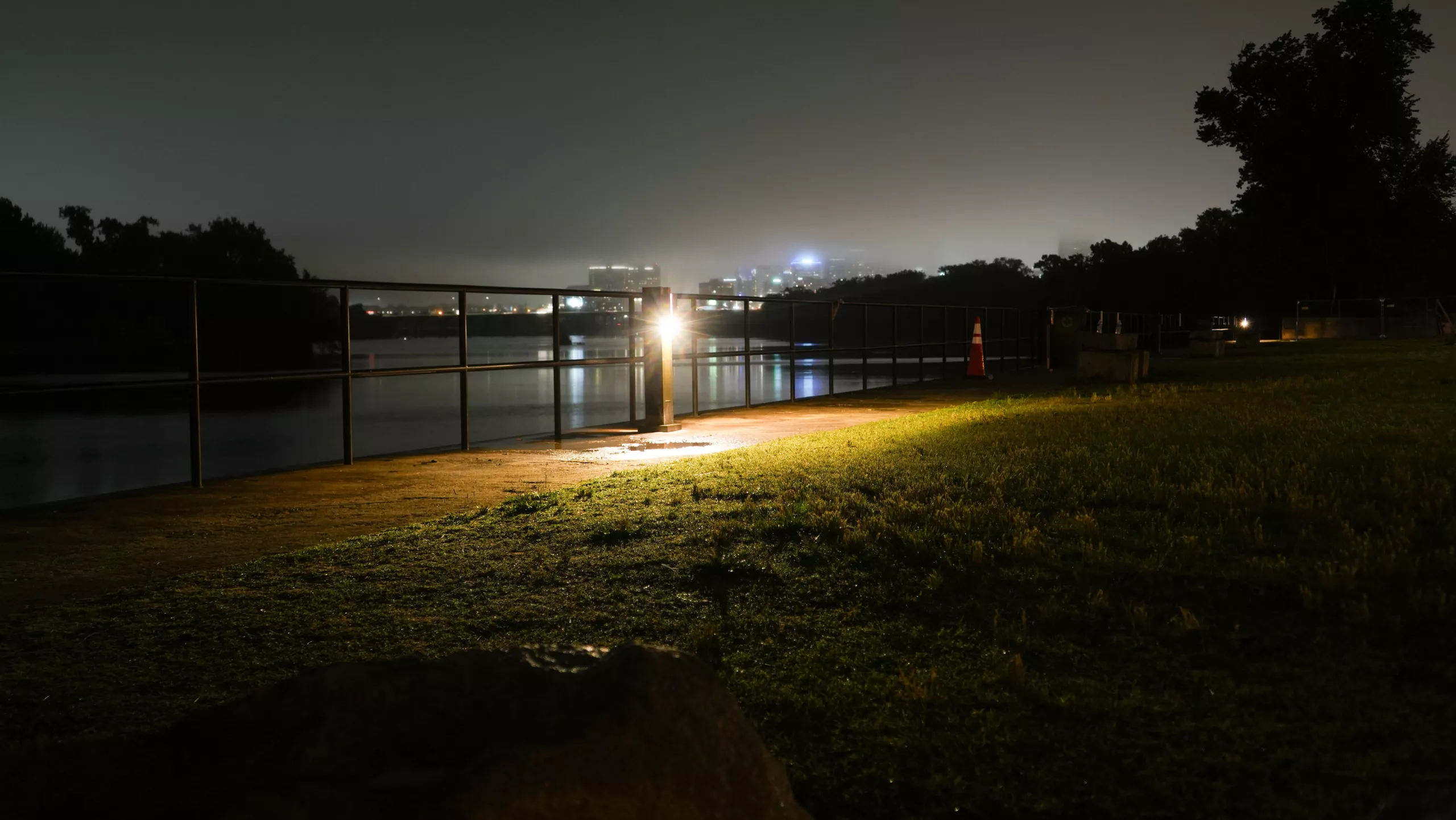
Commercial Solar Landscape Lighting for Virginia Developments & Properties
Across Virginia, mixed-use developments, corporate campuses, residential communities, healthcare facilities, and hospitality properties are creating outdoor spaces that need to remain accessible and easy to navigate after dark. Pedestrian lighting plays an important role in connecting entrances, parking areas, buildings, amenities, and landscaped walkways throughout these properties.
However, adding lighting can become more complicated when projects require new electrical connections, underground cabling, or trenching through finished landscapes and hardscapes. Construction phasing and changing site plans can create additional challenges as developments continue to expand.
This gives developers and property owners another approach to consider. By operating independently from the electrical grid, solar lighting can support pedestrian areas without requiring electrical service at every lighting location, providing greater flexibility when planning new, existing, or evolving commercial properties.
Why Commercial Properties Need a Different Approach to Outdoor Lighting
Commercial properties often contain multiple outdoor environments, each with different lighting needs. A mixed-use development may connect residences, retail spaces, restaurants, and parking areas, while corporate campuses and healthcare facilities may need clearly defined pedestrian routes between buildings, entrances, and parking.
HOAs and hospitality properties introduce additional needs around shared amenities, landscaped walkways, gathering areas, and guest circulation. In each case, the way people move through the property after dark should influence where and how lighting is used.
Rather than planning outdoor lighting primarily around where electrical infrastructure is already available, commercial projects can start with where pedestrians need visibility, guidance, and connections between destinations. This creates a more site-focused approach to commercial outdoor lighting.
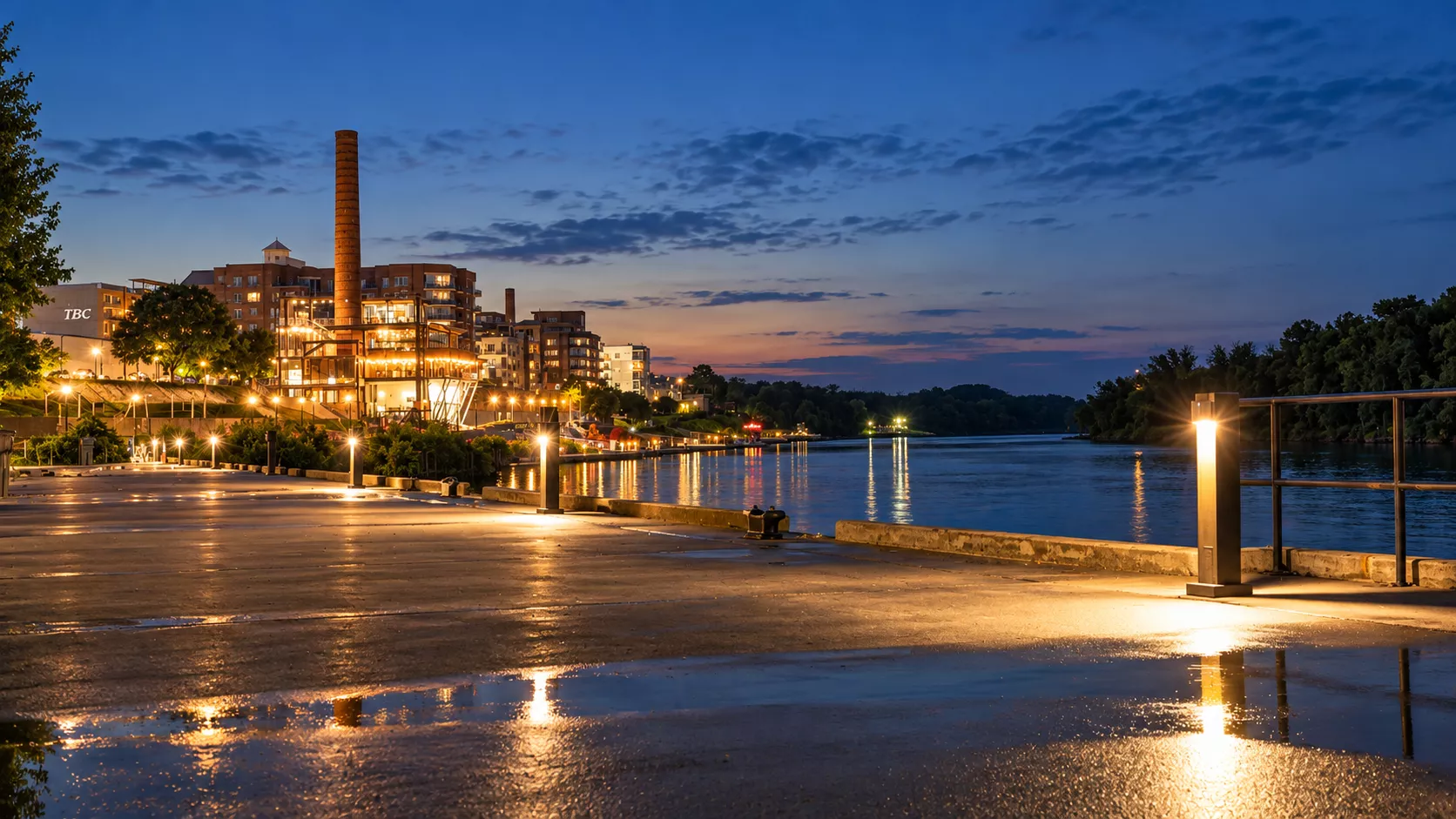
The Infrastructure Behind Commercial Landscape Lighting
The infrastructure behind a lighting project can be just as important as the fixtures themselves. Traditional commercial landscape lighting may require trenching, underground cabling, electrical connections, and utility extensions to bring power to each lighting location.
For existing Virginia properties, this can become more complicated. Sidewalks, paved areas, mature landscaping, and other finished spaces may already be in place, making it more disruptive to add electrical infrastructure after construction is complete.
Off-grid commercial solar landscape lighting changes the planning approach by removing the need for an electrical connection at each fixture. Instead of designing primarily around access to power, project teams can evaluate lighting locations based on pedestrian needs, site conditions, solar exposure, and the layout of the property.
Where Commercial Solar Landscape Lighting Fits in Virginia
Commercial properties across Virginia have different pedestrians, landscapes, and outdoor lighting needs. Commercial solar lighting in Virginia can support these environments by providing lighting for pathways, entrances, gathering areas, and connections between buildings and amenities.
- Commercial Developments
Office properties, business campuses, and mixed-use developments often include pedestrian routes connecting buildings, parking areas, landscaped spaces, and shared amenities. Commercial solar pathway lighting can support these connections while giving project teams more flexibility in where pedestrian lighting is considered. - Residential Developments & HOAs
Residential communities and HOAs may need lighting around sidewalks, community entrances, clubhouses, recreation areas, and landscaped common spaces. Solar pathway lights and solar bollards can support pedestrian visibility and wayfinding throughout these shared environments. - Retail Centres & Outdoor Dining Spaces
Shopping plazas, retail developments, restaurants, and outdoor dining areas depend on comfortable pedestrian connections between parking, storefronts, entrances, and gathering spaces. Solar landscape lighting can help define these routes while becoming part of the property’s outdoor environment. - Schools & Educational Campuses
School districts and educational facilities often include pathways connecting buildings, parking areas, recreation spaces, and campus amenities. Solar landscape and pathway lighting can provide another option for addressing these pedestrian areas based on the site’s layout and lighting requirements.
Solar Lighting for Properties That Grow and Change
Commercial developments rarely remain exactly as they were originally planned. New buildings, amenities, parking areas, and pedestrian routes may be added as a property expands, while later phases can create lighting needs that were not part of the initial site design.
These changes can become more challenging once sidewalks, landscaping, and other finished areas are already in place. Extending electrical infrastructure to new lighting locations may require additional construction through completed portions of the property.
Off-grid solar lighting gives Virginia developers another option for adapting to these changes. Because fixtures do not depend on an electrical connection at every location, lighting can be evaluated around new pedestrian routes, amenities, and expansion areas as the development evolves.
Illumination or Guidance? Choosing the Right Approach
Commercial properties can include pathways, entrances, landscaped areas, gathering spaces, bicycle routes, and pedestrian connections, each with different lighting needs. Fonroche’s solar bollard and pathway lighting range provides several options that can be considered based on how each part of the property functions after dark.
- BRUT
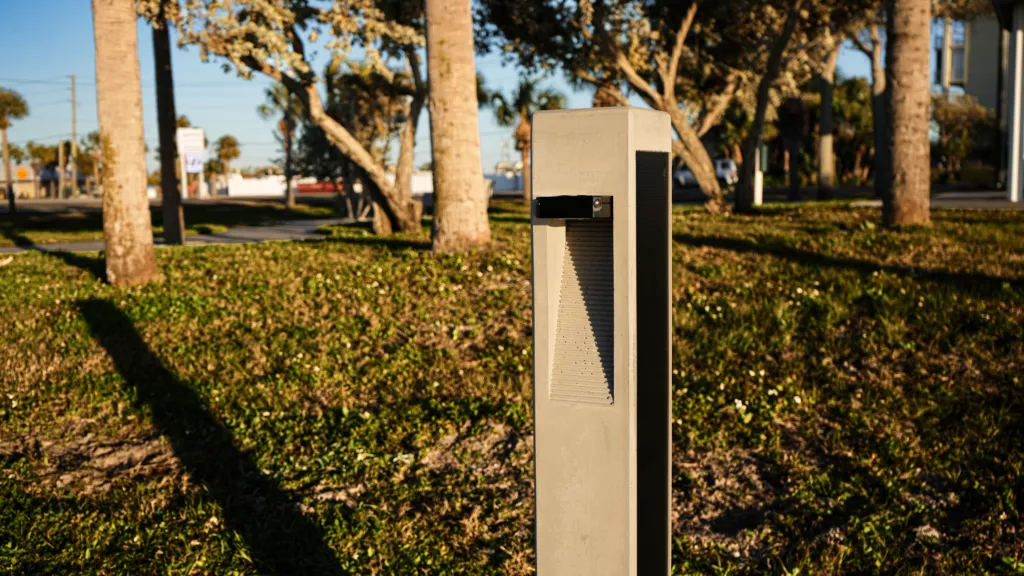
BRUT is a solar bollard option for pedestrian-focused environments such as commercial walkways, landscaped areas, plazas, campuses, entrances, and shared outdoor spaces where lighting needs to integrate naturally with the surrounding landscape. - FOLLOW
FOLLOW provides another solar bollard option for pedestrian areas and pathways. It can be considered for commercial properties where lighting is needed along walkways and other outdoor circulation areas while maintaining a pedestrian-scale fixture. - FOLLOW UP
FOLLOW UP expands the range of solar bollard options available for commercial landscape projects, giving developers and property teams another fixture choice when planning lighting around pathways, landscaped environments, and shared outdoor areas. - OKO
OKO can be considered for pedestrian and landscaped environments where project teams want solar lighting integrated into the overall outdoor design. This makes it relevant for commercial developments, campuses, hospitality environments, and other public-facing properties. - CRYSTAL STUD
CRYSTAL STUD serves a different purpose from the bollards. Its low-profile format focuses on route definition and visual guidance, making it relevant for pedestrian pathways, bicycle routes, crossings, edges, and other circulation areas.
What Virginia Commercial Buyers Should Consider Before Choosing Solar Lighting
Choosing commercial solar landscape lighting in Virginia should begin with understanding the property and how people will use it after dark. Developers, property owners, and facility teams should evaluate the site before deciding which lighting approach or fixture makes sense. Pedestrian activity and lighting objectives should come first. Consider where employees, residents, customers, or visitors travel after dark and whether those areas require pedestrian illumination, route guidance, or a combination of both.
Solar exposure and site conditions matter just as much. Trees, buildings, landscaping, sidewalks, and other surrounding features can influence where solar lighting can be positioned and how the system should be planned.
Project teams should also evaluate existing electrical infrastructure. If power is already available where lighting is needed, that may influence the project’s approach. Where electrical service would need to be extended, project teams should consider the additional trenching, cabling, and site work involved.
Future expansion and design requirements matter for commercial properties that may continue to evolve. New buildings, amenities, pathways, or development phases can change lighting needs, while fixture selection should also complement the property’s architecture and landscape.
Finally, maintenance access should be considered during planning, so fixtures remain accessible for future inspection and service.
By evaluating these factors together, Virginia commercial buyers can choose a lighting approach based on the property’s actual needs rather than applying the same solution across every outdoor space.
Commercial Solar Landscape Lighting FAQs
Yes. Commercial solar landscape lighting can be considered for mixed-use developments, business campuses, residential communities, retail properties, schools, hospitality spaces, and other commercial environments. The right solution depends on pedestrian activity, lighting objectives, available solar exposure, landscape conditions, and the property’s overall layout.
Off-grid solar pathway lights do not require an electrical connection at each lighting location. This can reduce the need for underground electrical cabling and trenching, making solar worth considering existing landscapes, completed developments, or areas where extending electrical infrastructure would complicate the project.
Yes. Solar bollards can be evaluated for walkways, entrances, plazas, landscaped areas, residential developments, campuses, and other pedestrian-focused spaces. Virginia project teams should select bollards based on the required illumination, available solar exposure, site layout, landscape design, and how pedestrians use the area after dark.
Solar bollards provide pedestrian-scale illumination around pathways and outdoor spaces. Crystal Studs serve a different purpose, using a lower-profile format for route definition and visual guidance. A commercial property may use either approach, or both, depending on the different lighting needs across the site.
Developers should evaluate pedestrian activity, lighting objectives, solar exposure, existing electrical infrastructure, landscaping, future expansion, fixture design, and maintenance access. Starting with these site-specific factors helps determine whether commercial solar landscape lighting is appropriate and which type of solution best fits the property.
Planning a Commercial Outdoor Lighting Project in Virginia?
Every commercial property presents different lighting, site, and design considerations. Whether you’re developing a new property, expanding an existing site, or evaluating lighting for pedestrian and landscaped areas, Fonroche Lighting America can help determine which NOWATT solar lighting solution best fits your project. Talk with our team about your Virginia commercial lighting project and explore the right approach for your site.