
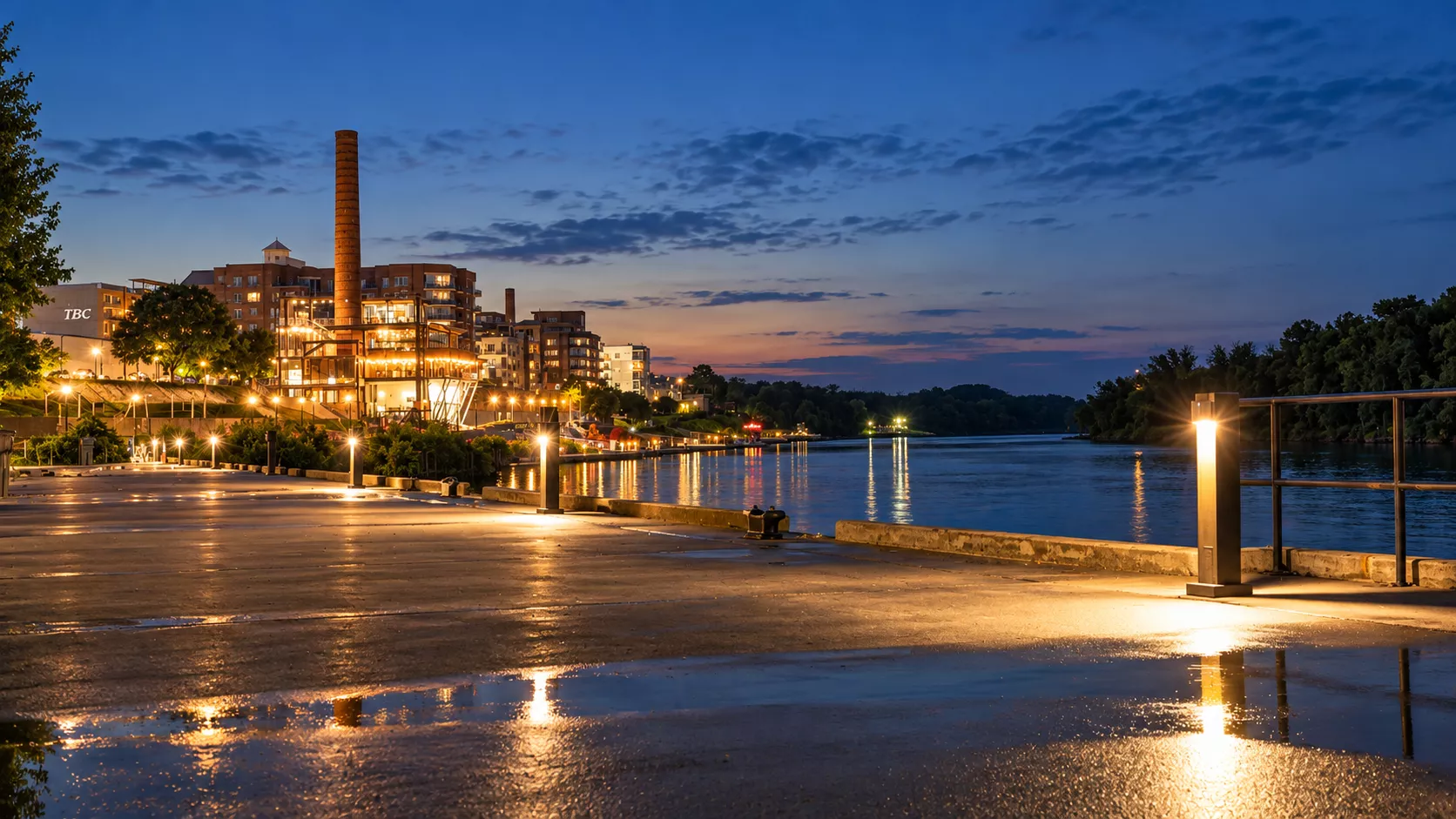
How Solar Landscape Lighting Is Transforming Outdoor Spaces Across Virginia
From parks and trails to campuses, waterfronts, and commercial developments, Virginia communities are exploring new ways to create safer, more functional, and better-connected outdoor spaces.
Across Virginia, parks, trails, campuses, waterfronts, downtowns, and mixed-use developments are creating more places for people to walk, gather, and spend time outdoors. As these spaces grow, lighting plays an important role in improving visibility, wayfinding, accessibility, and nighttime usability.
At the same time, project teams must consider existing landscapes, electrical infrastructure, installation, maintenance, and future development. Solar landscape lighting gives Virginia communities another approach to consider when planning outdoor spaces around these evolving needs.
Landscape Lighting Is About More Than Illumination
Landscape lighting does more than brighten an outdoor space. It can improve pedestrian visibility, support wayfinding, and make parks, pathways, campuses, and public spaces easier to navigate after dark.
Thoughtful lighting also supports walkability, accessibility, and a space’s character. By considering how people move through an environment, lighting can become part of creating outdoor spaces that are functional, comfortable, and welcoming.
How Virginia’s Outdoor Spaces Create Different Lighting Needs
Virginia’s outdoor spaces serve very different purposes, which means lighting should be planned around how each environment is actually used. A busy downtown plaza, for example, has different visibility and design requirements than a wooded trail, waterfront walkway, or university campus.
Trails and greenways may benefit from subtle lighting that helps people follow the route while preserving the character of the surrounding landscape. On campuses, lighting often needs to create clear pedestrian connections between buildings, parking areas, courtyards, and gathering spaces.
Downtown plazas and mixed-use developments present another challenge. These spaces may remain active in the evening, so lighting needs to support pedestrian movement while also complementing architecture, landscaping, and the overall atmosphere of the development.
Waterfronts, boardwalks, and riverwalks require their own approach, where pedestrian visibility must be balanced with the surrounding environment and the experience of the space.
For Virginia planners, the goal isn’t simply to add more light. It’s to determine what people need from the lighting in each environment and design around that purpose.
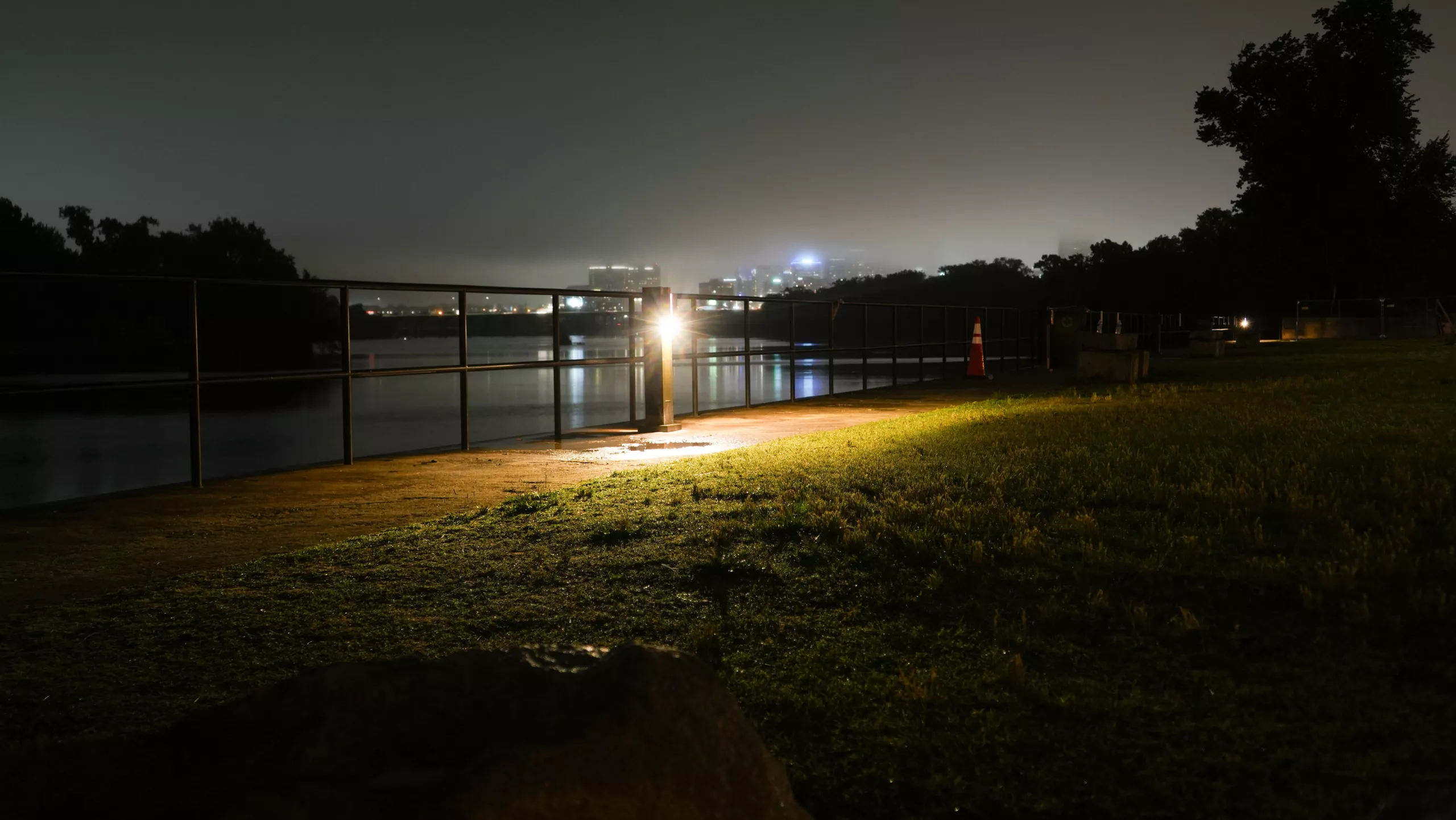
Why Solar Landscape Lighting Changes the Planning Conversation
Solar landscape lighting changes more than how an outdoor fixture receives power. Because off-grid systems can operate independently, project teams can plan lighting around where illumination or guidance is needed rather than only around access to existing electrical connections.
This can provide greater flexibility when lighting pathways, landscaped areas, campuses, public spaces, or developments completed in phases. Without the same dependence on underground electrical distribution between fixtures, projects may also reduce the amount of trenching and site disruption associated with extending power through an outdoor space.
For planners and developers, this creates a different way to approach the project. Fixture placement can be considered alongside pedestrian movement, landscape design, solar exposure, and future growth from the beginning.
In the right application, solar doesn’t simply change how a light is powered; it can change how the entire outdoor lighting project is planned.
Different Outdoor Spaces Need Different Lighting Solutions
Outdoor spaces don’t all require the same type of lighting. Some areas need pedestrian-scale illumination, while others benefit more from subtle guidance and route definition. The Nowatt range allows project teams to choose an approach based on how people move through and use the space.
Solar Bollards
Nowatt solar bollards provide pedestrian-scale lighting for pathways, parks, campuses, plazas, waterfronts, and landscaped environments. Their design allows lighting to become part of the surrounding space rather than relying on larger traditional lighting structures, making them particularly relevant where both visibility and landscape integration matter.
Crystal Studs
Crystal studs serve a different purpose. Their low-profile design can help define routes, edges, crossings, bicycle paths, and pedestrian areas where guidance is more important than illuminating a wider surrounding area. They can also complement bollards within projects that have multiple lighting needs.
Choosing the Right Lighting Approach for Your Project
The right outdoor lighting strategy starts with understanding how the space will actually function after dark. A heavily used campus walkway may require consistent pedestrian illumination, while a trail or landscaped area may need more subtle guidance to define the route.
Project teams should also evaluate existing electrical infrastructure, available solar exposure, surrounding trees and buildings, and whether installation could disturb established landscaping. Future matter as well, a campus, park, or mixed-use development that may expand should consider how lighting needs could change over time.
Maintenance of access and the visual character of the space should also influence the decision. Ultimately, site conditions, user needs, and the purpose of the lighting should drive product selection rather than applying the same solution to every project.
Designing Better Outdoor Spaces Across Virginia
Virginia’s parks, trails, campuses, waterfronts, and developments each present different lighting needs. As these environments continue to evolve, successful lighting plans should consider how people use the space alongside its landscape, infrastructure, and long-term development.
Solar landscape lighting provides another option for addressing those needs, while Nowatt solar bollards and crystal studs offer different approaches to pedestrian illumination and guidance based on the individual project.
Solar Landscape Lighting Questions for Virginia Projects
From parks and trails to campuses and commercial developments, explore common questions Virginia project teams may have when evaluating solar landscape lighting for outdoor spaces.
Solar landscape lighting uses solar energy to power outdoor fixtures independently of the electrical grid. Depending on the application, it can provide pedestrian illumination, route guidance, or accent lighting for pathways, parks, campuses, plazas, and other outdoor environments.
Commercial solar landscape lighting can be considered for parks, trails, campuses, healthcare facilities, waterfronts, public plazas, mixed-use developments, and commercial properties. The appropriate solution depends on the site’s solar exposure, pedestrian activity, lighting objectives, and surrounding environment.
Solar bollards provide pedestrian-scale illumination from a vertical fixture and can help light pathways and surrounding areas. Crystal studs offer a lower-profile approach focused more on route definition and visual guidance along trails, crossings, bicycle paths, and pedestrian routes.
Yes. Solar landscape lighting can be evaluated for parks, greenways, and trails where lighting is needed for pedestrian visibility or guidance. Fixture selection and placement should consider how the space is used, available solar exposure, surrounding vegetation, and the desired lighting effect.
Start with the site’s purpose, pedestrian activity, solar exposure, existing infrastructure, landscaping, and lighting objectives. Project teams should also consider fixture placement, maintenance access, future development, and whether the space requires illumination, route guidance, or a combination of both.
Planning an Outdoor Lighting Project in Virginia?
Every outdoor space has different lighting needs. Whether you’re planning a park, trail, campus, waterfront, public space, or commercial development, Fonroche Lighting America can help evaluate your site and determine which Nowatt solution best aligns with your project’s lighting objectives.