
Choosing the Right Solar Pathway Lighting for Florida Projects
Choosing the right solar pathway lighting for a Florida project requires more than selecting an attractive fixture. Municipalities, public works departments, landscape architects, civil engineers, developers, school districts, universities, resorts, HOAs, and commercial property owners must evaluate how the site is used, how much illumination is needed, what environmental pressures are present, and how the system will be maintained over time.
Florida projects often face conditions that make traditional wired lighting difficult or expensive. Coastal corrosion, heavy rain, flood-prone landscapes, hurricane season, utility delays, mature tree canopies, sensitive landscaping, and high trenching costs can all affect the feasibility of a conventional electrical installation. In the right application, commercial solar pathway lighting can provide reliable pedestrian-scale illumination without underground wiring, utility extensions, or dependence on the electrical grid.
Fonroche Lighting America's NOWATT family offers autonomous solar lighting options for pathways, parks, campuses, waterfronts, resorts, commercial landscapes, and public spaces. Products such as BRUT, FOLLOW, FOLLOW UP, OKO, and Crystal Studs give project teams different ways to address visibility, wayfinding, architectural integration, and pedestrian safety. The right choice depends on the site, not on a one-size-fits-all product recommendation.
Start With the Project's Lighting Objective
Before comparing solar bollards, pathway fixtures, or embedded lighting, define what the lighting must accomplish. A waterfront promenade may need continuous pedestrian guidance with controlled glare. A university path may need stronger visibility during evening class changes. A resort walkway may prioritize guest comfort, architectural appearance, and low-maintenance operation. A park trail may need illumination only at entrances, intersections, bridges, and parking connections.
Common objectives include improving route visibility, reducing dark gaps, identifying ramps and grade changes, supporting safer movement between parking and buildings, extending the usable hours of parks and trails, and limiting light spill toward nearby homes, waterways, or habitat areas. Once these goals are clear, it becomes easier to choose between a low-profile bollard, a taller pathway fixture, or a complementary solution such as Crystal Studs.
Evaluate Florida Site Conditions Early
Solar lighting performance depends on the complete system: the solar panel, battery, LED output, controls, mounting method, and available solar exposure. Site evaluation should happen before a fixture is selected, especially in Florida locations with tree cover, coastal exposure, irrigation, standing water, or future landscape growth.
Project teams should confirm whether the solar collection area receives adequate sunlight year-round, whether nearby buildings or trees cast shade, and whether salt spray, tidal flooding, or irrigation overspray could affect the installation. They should also evaluate soil conditions, mounting requirements, maintenance access, drainage, wind exposure, and local lighting restrictions.
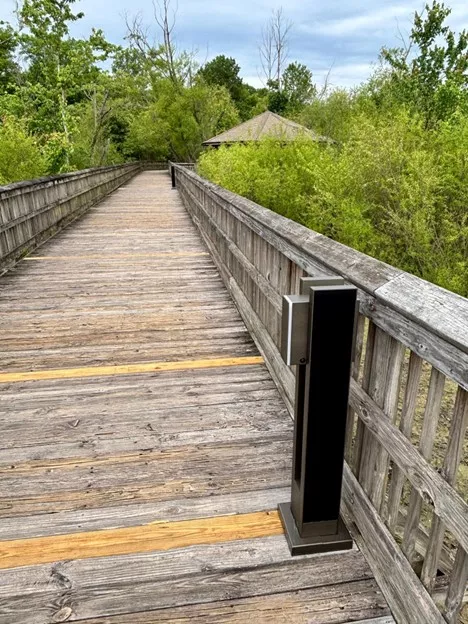
A shaded walkway beneath mature live oaks may require a different design than an open waterfront trail. In heavily shaded areas, a product with an integrated solar panel may not receive enough energy. A different panel configuration, a taller fixture, or another lighting approach may be more appropriate. In open parks, boardwalk approaches, campuses, and new developments, autonomous solar lighting may be a strong fit when utility access is limited, or trenching would disrupt the site.
Plan for Coastal, Flood-Prone, and Storm-Exposed Locations
Coastal Florida projects require particular attention to corrosion, moisture, wind exposure, and maintenance after storms. Marina walkways, waterfront parks, beach access routes, boardwalks, fishing areas, and resort paths may benefit from autonomous lighting because it avoids long electrical runs through sensitive or difficult terrain. However, equipment selection must reflect the environment.
Review housing materials, fasteners, finishes, seals, lens durability, foundation requirements, and the expected exposure to salt air and water. Low-profile solar bollards can integrate well into a waterfront setting, but they may not be ideal where flooding, vegetation, crowd movement, or impact risk could interfere with performance. Taller pathway fixtures may be better where broader distribution, higher mounting, or better visibility over landscaping is needed.
Hurricane resilience should be treated as a project design consideration rather than an unsupported product claim. The foundation, mounting method, site exposure, and complete engineered configuration all influence performance. Project teams should verify applicable structural and environmental requirements for the specific site.
Choose Between Solar Bollards, Taller Pathway Lights, and Crystal Studs
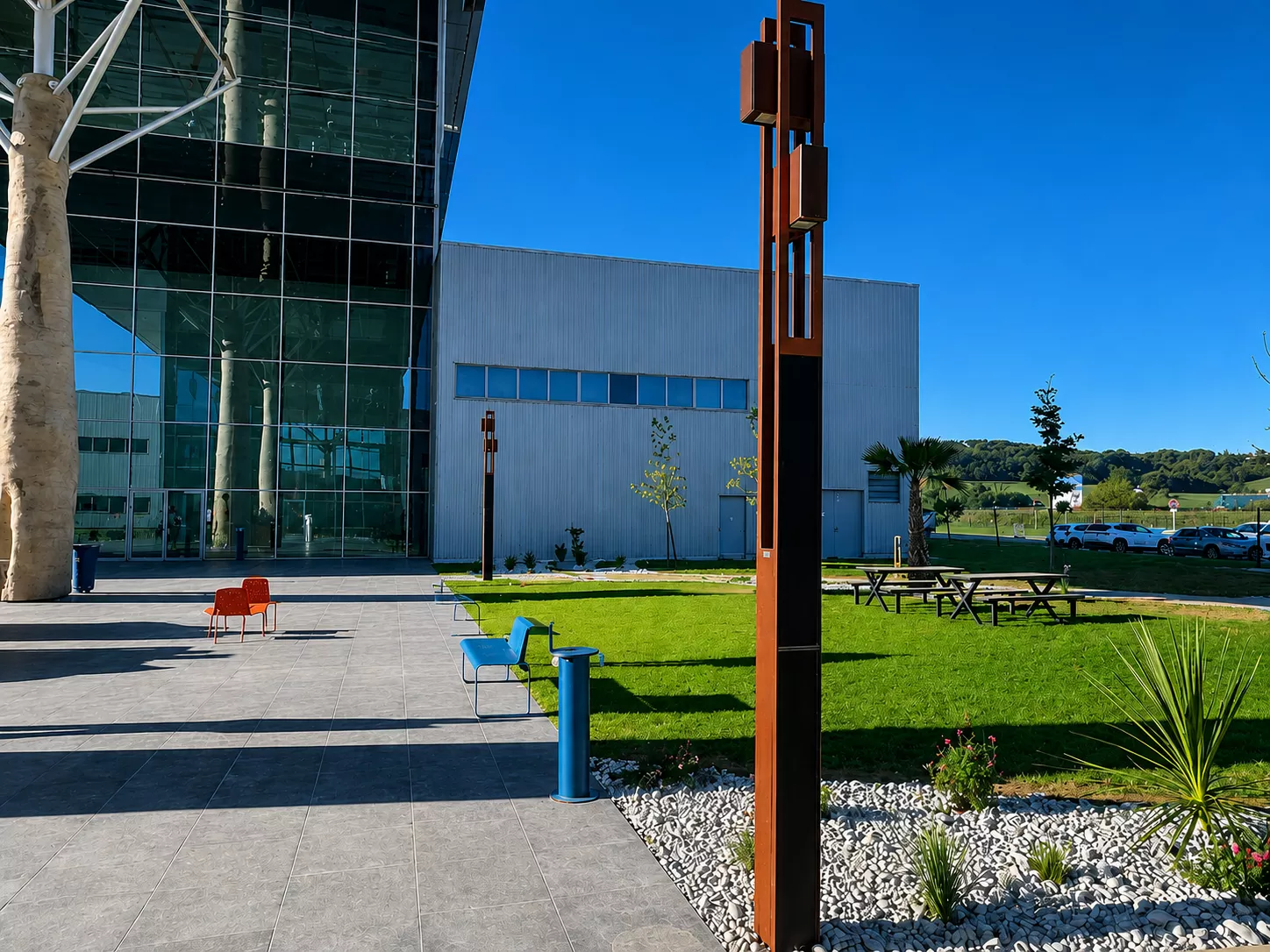
Solar bollards are often selected where pedestrian-scale guidance and architectural appearance are priorities. NOWATT BRUT and OKO can support parks, plazas, landscaped paths, waterfront routes, courtyards, resorts, commercial developments, and HOA common areas where low-profile lighting complements the surrounding design. Bollards can reduce visual clutter and provide a more intimate scale, but teams should consider flood exposure, plant growth, vandalism, and the required light distribution.
Taller solutions such as FOLLOW and FOLLOW UP may be better where a project needs broader illumination, improved visibility over landscaping, or more flexibility in solar collection and mounting height. These options can suit public parks, school and university walkways, municipal sidewalks, mixed-use developments, parking-to-building connections, and wider shared-use paths.
NOWATT Crystal Studs can complement bollards and pathway fixtures by defining route edges, crossings, entrances, and wayfinding points without adding another vertical fixture. They may be useful where embedded visual guidance is appropriate, but the specific application, surface, accessibility requirements, and local standards should be reviewed before selection.
Match the Design to Pedestrian Activity and Risk Points
A lightly used landscaped path should not be evaluated the same way as a boardwalk, transit connection, campus corridor, or mixed-use district with evening activity. Higher-traffic routes generally require greater attention to spacing, consistency, glare control, conflict points, and the visibility of people approaching intersections or changes in direction.
Important locations include trailheads, park entrances, crosswalk approaches, curb ramps, parking transitions, transit stops, building entrances, outdoor seating areas, stairs, docks, bridges, and areas where pedestrians, cyclists, carts, or service vehicles interact. A well-designed system focuses light where it is most useful rather than simply placing fixtures at equal distances without considering how people move through the site.
Evaluate Solar Autonomy and Operating Strategy
Autonomy is the ability of a solar lighting system to continue operating through periods of reduced solar charging. Florida projects should account for seasonal rain, cloudy weather, storm conditions, winter solar availability, and shading. The system should be sized around expected nightly operating hours, required output, dimming schedules, motion controls, battery capacity, and the amount of solar energy available at the site.
Fonroche Lighting America's Power 365™ technology is part of the company's approach to managing stored energy and supporting autonomous operation. Product selection and system configuration should still be based on verified project conditions, lighting requirements, and engineering review. Not every pathway needs full output from dusk to dawn. Some locations may use programmed dimming or adaptive controls, while others may require consistent illumination during defined operating hours.
Consider the Value of Trench-Free Installation
Traditional pathway lighting can require conduit, electrical service, utility locates, pavement cuts, landscape restoration, and coordination with existing underground systems. In established parks, campuses, waterfronts, historic areas, and completed developments, that work can be disruptive and costly.
Autonomous solar lighting may simplify deployment where electrical service is unavailable, utility extensions are delayed, trenching would affect roots or irrigation, or a project must be installed in phases. It can also help reach remote trail segments, boat ramp approaches, parking connections, and public spaces that might otherwise remain unlit. Solar does not eliminate the need for foundations, spacing calculations, and maintenance access, but it can reduce dependence on grid infrastructure and utility scheduling.
Build Maintenance and Lifecycle Planning Into the Decision
The best pathway lighting system is one the owner can maintain. Project teams should review battery access and replacement planning, cleaning requirements for solar collection surfaces and lenses, vegetation trimming, coastal corrosion inspections, fastener checks after major storms, control settings, replacement-part availability, and technician access. Lifecycle cost includes more than electricity. It also includes labor, service visits, landscaping coordination, replacement components, outage response, and the operational impact of a poorly performing route. Municipalities and school districts may benefit from standardising product families across multiple sites, while resorts and commercial properties may prioritise architectural consistency alongside practical access to services.
Plan for Future Expansion
Florida parks, campuses, commercial developments, and trail systems are often built in phases. A scalable lighting strategy should allow future fixtures to be added without redesigning the entire project. Consistency in fixture family, color temperature, mounting height, controls, and maintenance procedures helps avoid a patchwork of unrelated solutions.
Scalability is particularly valuable for municipal trail networks, multi-phase residential developments, university master plans, resort expansions, school district upgrades, and waterfront revitalization projects. Autonomous lighting can make phased growth easier because each unit can operate independently when properly designed for its location.
How to Evaluate Solar Pathway Lighting for Your Florida Project
The best solution depends on the project's goals, site conditions, pedestrian activity, and environmental factors. Parks, trails, campuses, waterfronts, commercial developments, and public spaces each have different lighting requirements. Evaluating sunlight exposure, pathway layout, accessibility, maintenance expectations, and future expansion plans helps determine whether solar bollards, pathway lights, Crystal Studs, or a combination of solutions is the most appropriate choice.
Yes, solar bollards can be an effective option for coastal pathways, boardwalks, parks, and waterfront developments when they are designed for outdoor environments and selected with local site conditions in mind. Coastal projects should consider factors such as salt air, humidity, wind exposure, corrosion resistance, and long-term maintenance requirements when selecting outdoor lighting systems.
Crystal Studs help improve pedestrian visibility by clearly defining walkways, crossings, intersections, and shared-use paths. They provide visual guidance for pedestrians, cyclists, and drivers while complementing other lighting systems. Crystal Studs are commonly used alongside solar bollards or pathway lighting to improve wayfinding in areas where clear route definition is important.
High-quality autonomous solar lighting systems are designed to store energy and continue operating through periods of limited sunlight. Performance depends on factors such as battery capacity, local weather conditions, solar resource availability, and system design. Proper engineering and sizing are essential to ensure reliable operation throughout Florida's changing weather conditions
Yes. Solar pathway lighting is commonly used in parks, recreational trails, educational campuses, public plazas, residential communities, and commercial developments where improving pedestrian safety and visibility is a priority. Because these systems operate independently of the electrical grid, they can often simplify installation by reducing the need for trenching and underground utility work.
Successful pathway lighting projects begin with a comprehensive site assessment. Key considerations include pedestrian traffic patterns, accessibility requirements, sunlight availability, environmental conditions, desired illumination levels, maintenance expectations, and future expansion plans. Evaluating these factors early helps project teams select lighting solutions that align with both current needs and long-term infrastructure goals.
Choosing the Right Fonroche Solution
The right commercial solar pathway lighting system should match the physical environment, pedestrian use, design intent, and ownership plan. NOWATT BRUT and OKO can support low-profile pedestrian and landscape applications. FOLLOW and FOLLOW UP can serve projects that need taller, more visible, or broader-distribution fixtures. Crystal Studs can add route definition and wayfinding in appropriate applications. A qualified project review should determine solar exposure, required illumination, spacing, controls, mounting, environmental exposure, and maintenance expectations before a final recommendation is made. This project-first approach helps Florida municipalities, developers, parks departments, schools, resorts, and commercial owners select a system that fits the place rather than forcing the place to fit the product.
Planning a Florida Pathway Lighting Project?
Explore Fonroche Lighting America's NOWATT solar bollards and pathway lighting products, review verified Florida case studies such as the Patriot Park Seawall installation in Madeira Beach, and speak with the Fonroche team about site conditions, lighting goals, and the right autonomous solar lighting approach for your project.