
Comparing Street Lighting Options in California
Planning a street lighting project in California involves more than selecting poles and luminaires. Municipalities, developers, and public works teams must also consider how the system will receive power, what infrastructure will be required, and how installation could affect the surrounding site.
Existing electrical service, trenching and cabling requirements, utility coordination, construction disruption, and site conditions can all influence that decision. Where grid infrastructure is readily accessible, conventional lighting may be practical. In locations where extending electrical service becomes difficult or disruptive, off-grid solar-powered streetlights in California provide an alternative that generates and stores energy independently at the lighting location.
How Off-Grid and Grid-Connected Street Lighting Differ
The fundamental difference between these lighting approaches is how electricity reaches the light and the infrastructure required to support it.
Grid-Connected Street Lighting
Grid-connected streetlights receive electricity through utility infrastructure. Depending on the location, installation may require electrical service, trenching, conduit and underground cabling, connections between lighting locations, and coordination with the utility provider. Where this infrastructure already exists, connecting new lighting may be relatively straightforward.
Off-Grid Solar Street Lighting
Off-grid systems generate and store energy directly at each lighting location using solar generation, battery storage, a luminaire, and an energy management system. Because each system operates independently, underground electrical distribution between lights is not required.
Project teams considering this approach should also evaluate site conditions and system sizing when choosing solar street lighting in California.
Comparing the Total Cost of Street Lighting Infrastructure
The cost of a street lighting project extends beyond the price of the fixture itself. For California municipalities and developers, existing infrastructure and the amount of construction required can significantly affect the overall project scope.
Grid-connected lighting may involve trenching and excavation, conduit, electrical cabling, utility connections, electrical work, and restoration of pavement or landscaping. When electrical service already exists near the project site, many of these requirements may be limited.
Off-grid solar street lighting has a different cost structure. Projects typically include solar generation equipment, battery storage, the luminaire, pole and foundation, system engineering, and installation. Because the system operates independently, it does not require underground electrical distribution between lighting locations.
A meaningful cost comparison should therefore consider the complete infrastructure required for each approach, particularly when new electrical service would otherwise need to be extended to the site.
Installation, Trenching and Site Disruption
Installation requirements can have a major impact on how a street lighting project affects the surrounding site. When new electrical infrastructure is needed, trenching conduit and cabling may require work across existing roads, sidewalks, parking lots, parks, or landscaped areas. Project teams must also account for existing underground utilities, and the disruption of construction could create disruptions in active public spaces.
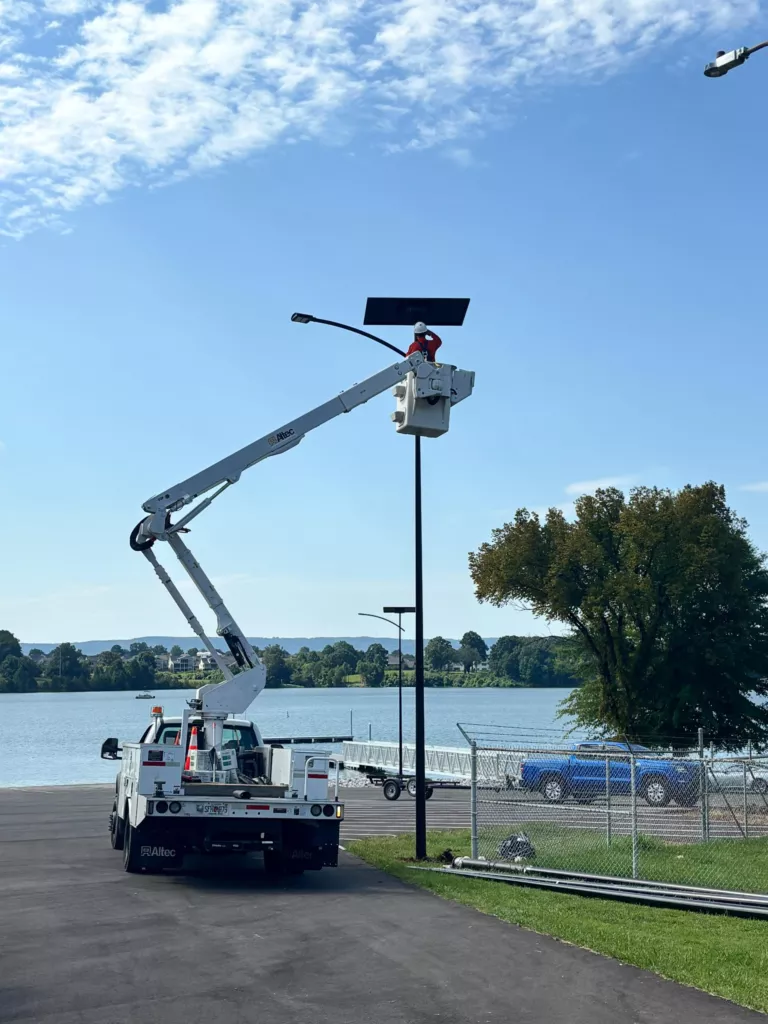
Off-grid solar-powered streetlights take a different installation approach because they do not require underground electrical distribution between lighting locations. Each light generates and stores its own energy at the site. This can reduce the amount of excavation and surface restoration required, making autonomous lighting particularly relevant for projects where extending electrical power would involve substantial site work or disruption.
Grid Dependence and Resilience in California
Grid-connected streetlights rely on electrical service, which means their operation can be affected when utility power is interrupted. This is particularly relevant in California, where utilities may implement Public Safety Power Shutoffs (PSPS) during certain high-risk wildfire conditions to reduce the risk of electrical infrastructure contributing to a fire. Wildfires and other emergencies can also lead utilities to de-energise affected power lines.
Autonomous solar streetlights approach this differently. By generating solar energy and storing it in an integrated battery system, the lighting operates independently of utility electricity during normal operation. This grid independence does not make solar streetlights immune to emergencies, but it removes reliance on an active utility connection, an important consideration for California communities evaluating more resilient outdoor lighting infrastructure.
Where Each Street Lighting Approach Makes Sense
The right lighting approach depends on the available infrastructure, site conditions, and the project’s long-term priorities.
Grid-Connected Lighting May Make Sense When:
Grid-connected lighting can be practical when electrical service is already nearby; existing conduits or infrastructure can be used, and only limited trenching is necessary. It may also fit projects where utility connection is straightforward and independent operation isn’t a primary requirement.
Off-Grid Solar Lighting May Make Sense When:
Off-grid solar lighting becomes particularly relevant where electrical service is unavailable or difficult to extend; significant trenching would otherwise be required, or utility coordination could add complexity. It can also suit locations where minimizing disruption to existing roads and landscapes is important.
Across California, these conditions can occur along rural and Tribal roads, parks, parking areas, campuses, and remote public infrastructure. See Where California Solar Street Lighting Makes the Biggest Impact for a closer look at these applications.
Think Beyond Installation: Long-Term Planning
Street lighting decisions should account for how the infrastructure will be managed over its full service life, not only how it will be installed. Project teams should consider ongoing maintenance requirements, utility dependence, access to underground infrastructure, and how components will be serviced or replaced over time.
The future needs matter as well. A roadway, park, campus, or development may expand or change, affecting where additional lighting is required. Evaluating future expansion, site changes, and long-term operating requirements early helps municipalities plan lighting as a long-term infrastructure investment rather than simply a fixture purchase.
Frequently Asked Questions
Not necessarily. Total project cost depends on existing electrical infrastructure, trenching, utility connections, equipment, installation, and site conditions. Where extensive electrical infrastructure must be added, off-grid solar can eliminate some of those requirements and should be evaluated against the complete cost of a grid-connected project.
Off-grid solar streetlights do not require trenching for underground electrical distribution between lighting locations. However, site preparation, foundations, and other installation work may still be necessary depending on the pole, system design, and conditions of the project site.
Yes. Autonomous solar streetlights generate and store their own energy and do not depend on utility electricity for normal operation. Their ability to provide the required nighttime lighting depends on appropriate system sizing, available stored energy, operating profiles, and site conditions.
Properly designed systems account for variations in solar conditions through site-specific solar analysis, battery storage, energy management, and system sizing. The solar array and battery should be configured around the location, lighting requirements, operating schedule, and expected solar resources.
They can be particularly useful for remote roads, rural corridors, Tribal communities, parks, parking areas, campuses, and other sites where electrical service is unavailable or difficult to extend, or where trenching and new underground electrical infrastructure would significantly complicate the project.
Choosing the Right Street Lighting Infrastructure
Choosing between grid-connected and off-grid street lighting depends on the conditions and priorities of each project. Where electrical infrastructure is readily available, and installation requires minimal additional work, grid-connected lighting may be practical. In locations where utility extensions, extensive trenching, remote access, or grid dependence create challenges, off-grid solar offers an alternative. Evaluating existing infrastructure, installation requirements, resilience needs, and long-term operations together can help California project teams select an approach suited to the site.
Comparing Lighting Options for a California Project?
Fonroche Lighting America can work with your team to evaluate site conditions, lighting requirements, existing infrastructure, and project objectives to determine whether an autonomous solar lighting system is appropriate for your application.