
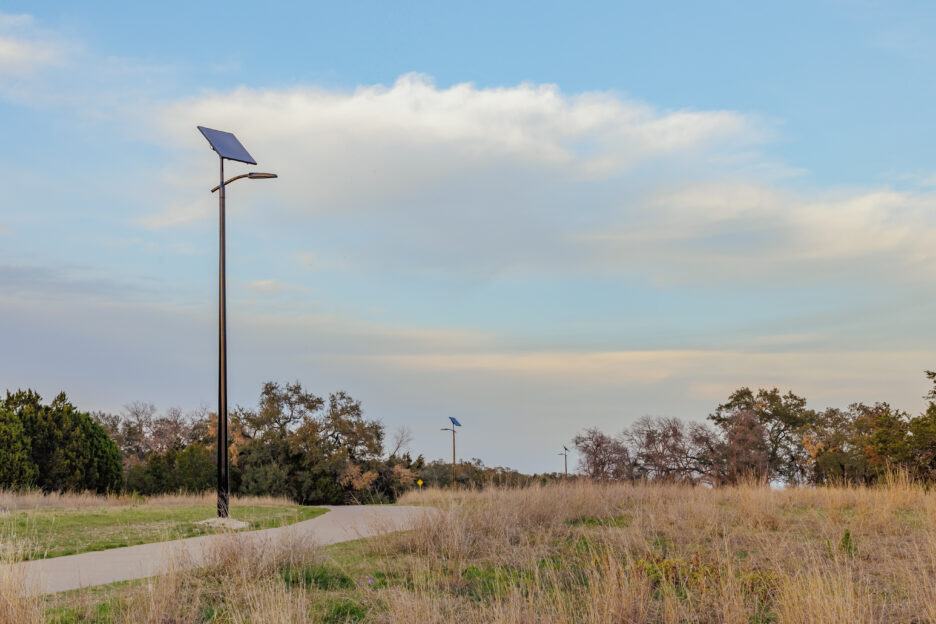
Lighting That Protects the Night Sky
As more cities prioritize sustainability and environmental stewardship, public lighting is being reevaluated through a new lens—not just in terms of efficiency, but also its impact on ecosystems and the night sky. Artificial light at night, when poorly managed, can disrupt wildlife, obscure stars, and create unintended health and safety concerns. This is why Dark Sky compliance has become a critical consideration for developers, planners, and park managers alike.
For solar lighting to be part of a long-term, environmentally responsible solution, it must do more than operate off-grid—it must also respect the natural rhythms of the night. That’s where systems designed with optics, shielding, and smart controls—like those used in Fonroche solar lighting—play a vital role.
In this article, we’ll explore how solar lighting can support Dark Sky goals, minimize light pollution, and help cities illuminate responsibly—without sacrificing safety, visibility, or design.
Table of Contents
What Are Dark Sky Regulations—And Why Do They Matter?
Dark Sky regulations are designed to minimize light pollution, protect nocturnal ecosystems, and preserve the visibility of the night sky. These guidelines, often shaped by organizations like the International Dark-Sky Association (IDA) and adopted by municipalities, aim to reduce unnecessary artificial light through smarter fixture design and responsible lighting practices.
There are three primary types of light pollution that regulations seek to reduce:
- Skyglow: The halo effect over urban areas caused by upward-directed light scattering in the atmosphere.
- Glare: Excessive brightness that causes visual discomfort or impairs night vision, particularly for drivers and pedestrians.
- Light trespass: Light spilling into areas where it isn’t wanted—such as into homes, wildlife habitats, or across property lines.
To be Dark Sky compliant, lighting systems must typically meet criteria such as:
- Fully shielded fixtures (no light above 90° from nadir)
- Low correlated color temperature (CCT), often 3000K or below
- Targeted light distribution that avoids uplight and spill
- Dimmed or adaptive lighting schedules to reduce brightness during low-traffic hours
How Fonroche Solar Lighting Meets Dark Sky Goals
Not all solar lights are suitable for Dark Sky-sensitive environments. In fact, many consumer-grade or retrofit solar fixtures contribute to the very problems Dark Sky regulations aim to prevent—scattering light upward, using harsh color temperatures, or illuminating beyond intended zones.
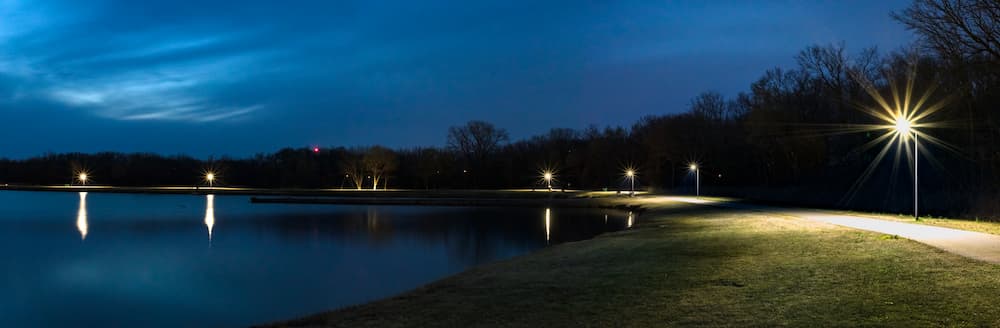
Fonroche takes a different approach by designing its solar lighting systems with precision optics, low-glare lenses, and smart lighting profiles that prioritize environmental responsibility alongside performance.
Here’s how Fonroche systems support Dark Sky compliance:
- Fully shielded luminaires
Fonroche fixtures are engineered with optics that direct all light downward, minimizing skyglow and eliminating uplight. - Warm color temperatures (2200K–3000K)
Warmer LED color temperatures reduce blue light emissions, which are particularly disruptive to wildlife and circadian rhythms. - Custom optics and beam control
Lighting is carefully distributed to illuminate paths and active areas—without spilling into natural habitats or neighboring properties. - Adaptive lighting profiles via Power 365
Systems dim automatically during low-traffic hours, preserving energy and reducing unnecessary brightness late at night. - Photometric design included in every project
Fonroche performs detailed lighting studies for each site to ensure compliance with local dark sky ordinances and illumination standards.
Because Fonroche’s systems are off-grid and programmable, they give cities and developers the flexibility to meet environmental lighting goals without compromising safety or accessibility.
The Benefits of Dark Sky-Friendly Solar Lighting
Adopting lighting systems that comply with Dark Sky principles does more than protect the view of the stars—it contributes to healthier ecosystems, stronger community engagement, and smarter energy use. When cities and developers invest in lighting designed to minimize light pollution, they support a range of long-term benefits.
Key advantages include:
- Wildlife preservation
Many species—especially birds, amphibians, and insects—rely on natural darkness for navigation, reproduction, and feeding. Shielded, low-temperature lighting helps reduce ecological disruption in parks, wetlands, and trail corridors. - Improved human health
Harsh blue light at night can interfere with human circadian rhythms, affecting sleep quality and overall well-being. Warm-toned, directed lighting offers safer illumination without physiological side effects. - Energy efficiency
Dark Sky-compliant lighting often requires fewer lumens and less energy. Combined with Fonroche’s smart dimming and solar autonomy, this results in dramatically lower operational impact. - Community satisfaction
Residents are more likely to support park lighting projects when they see intentionality—fixtures that illuminate only what’s needed, where it’s needed, and when it’s needed. - Regulatory alignment
Many municipalities now require Dark Sky compliance for new park and trail lighting. Starting with compliant systems like Fonroche’s helps avoid costly redesigns or retrofits later.
Ultimately, Dark Sky-aligned solar lighting doesn’t mean less light—it means better light, tailored to people, places, and the planet.
Lighting That Respects the Environment and Community
For cities and developers committed to sustainability, choosing solar lighting isn’t just about going off-grid—it’s about doing it responsibly. Systems that minimize light pollution, protect natural habitats, and support healthy public spaces are no longer optional—they’re becoming the standard for ethical, future-ready infrastructure.
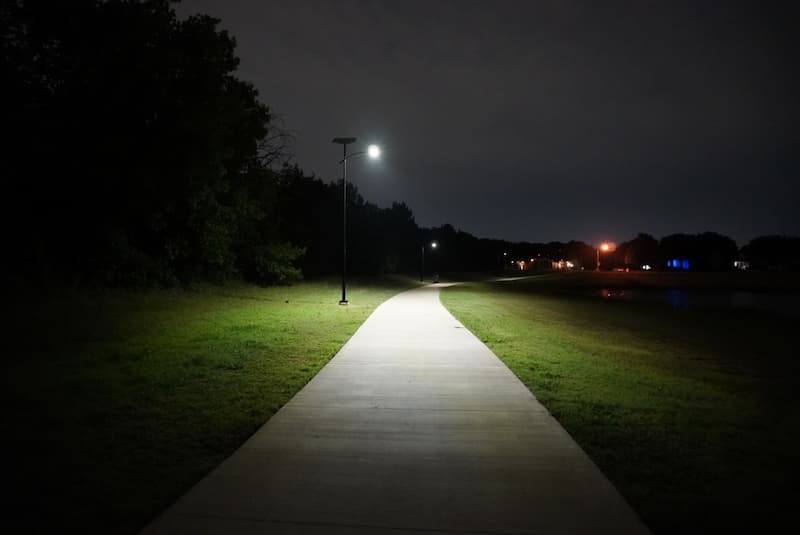
Fonroche solar lighting aligns with these priorities by combining off-grid independence with carefully engineered optics, adaptive controls, and project-specific lighting design. Whether lighting a trail through a nature preserve, a neighborhood park, or a cultural greenway, these systems help communities stay safe—without compromising the night sky.
Looking to illuminate your parks or public spaces with purpose? Fonroche Lighting America can help you plan, model, and implement solar solutions that meet Dark Sky goals and community expectations—sustainably, and without the grid.