
Solar Landscape Lighting in Georgia: Enhancing Parks, Gardens and Beautiful Outdoor Spaces
Thoughtful Lighting That Complements Georgia’s Outdoor Landscapes
Across Georgia, municipalities, landscape architects, and commercial property owners are creating outdoor spaces that remain inviting after sunset. Thoughtful landscape lighting enhances the appearance of parks, gardens, courtyards, and public spaces while supporting their nighttime use.
For projects considering commercial solar landscape lighting in Georgia, the challenge is balancing visual appeal with practical illumination and preserving existing landscapes. Off-grid solar lighting offers an alternative without extending traditional electrical infrastructure, allowing designers to explore lighting solutions that complement each environment’s unique character.
Why Landscape Lighting Matters After Dark
Extend the Character of Outdoor Spaces into the Evening
After sunset, thoughtful lighting helps outdoor spaces maintain their character while creating a welcoming atmosphere for visitors. In Georgia’s parks, gardens, and plazas, carefully positioned fixtures can highlight landscaped pathways, architectural features, and natural surroundings without overwhelming the environment.
A botanical garden may benefit from subtle, warm illumination that complements its natural setting, while a commercial courtyard may require more defined lighting around seating areas and entrances.
The goal is to enhance the landscape’s existing beauty, using balanced illumination rather than excessive brightness.
Enhance the Appearance of Georgia’s Parks, Gardens and Public Spaces
Match Lighting to Each Landscape’s Character
Different outdoor environments benefit from lighting that reflects their design and purpose. In Georgia’s botanical gardens, subtle illumination can complement natural features and walking routes, while municipal parks need welcoming entrances and gathering areas.
University courtyards in Athens may benefit from fixtures that complement surrounding architecture, while Atlanta’s commercial plazas can incorporate contemporary solar bollards alongside paved walkways and seating areas.
Hotels and resorts can create inviting garden pathways, while Savannah’s waterfront promenades may benefit from low-glare lighting that preserves scenic views.
The right solar landscape lighting should complement each space’s materials, architecture, and natural surroundings.
Balance Functional Illumination with Landscape Aesthetics
Create Comfortable Lighting Without Overillumination
Effective landscape lighting combines practical visibility with thoughtful design. In Georgia’s gardens, courtyards, and public walkways, appropriate light levels help visitors navigate while preserving the surrounding atmosphere.
Warm lighting can complement natural materials and greenery, while neutral tones may suit contemporary architecture. Fixture height, proportions, and placement also influence how a space looks after dark.
Controlled light distribution helps minimize glare and unwanted light spill into neighboring properties and natural areas. Rather than illuminating every feature equally, designers can highlight selected pathways, seating areas, and architectural details while maintaining the landscape’s intended character.
Choosing NOWATT Solar Bollards for Different Landscape Styles
Fonroche’s NOWATT solar bollard collection combines off-grid lighting with distinctive materials and designs, allowing landscape architects to select fixtures that complement their surroundings.
BRUT- Contemporary Concrete Design
Constructed from fibre-reinforced concrete, BRUT features a minimalist appearance and natural finishes. Its robust design complements urban plazas, modern parks, and commercial courtyards featuring stone or concrete architecture.
OKO- Natural Wood for Landscaped Environments
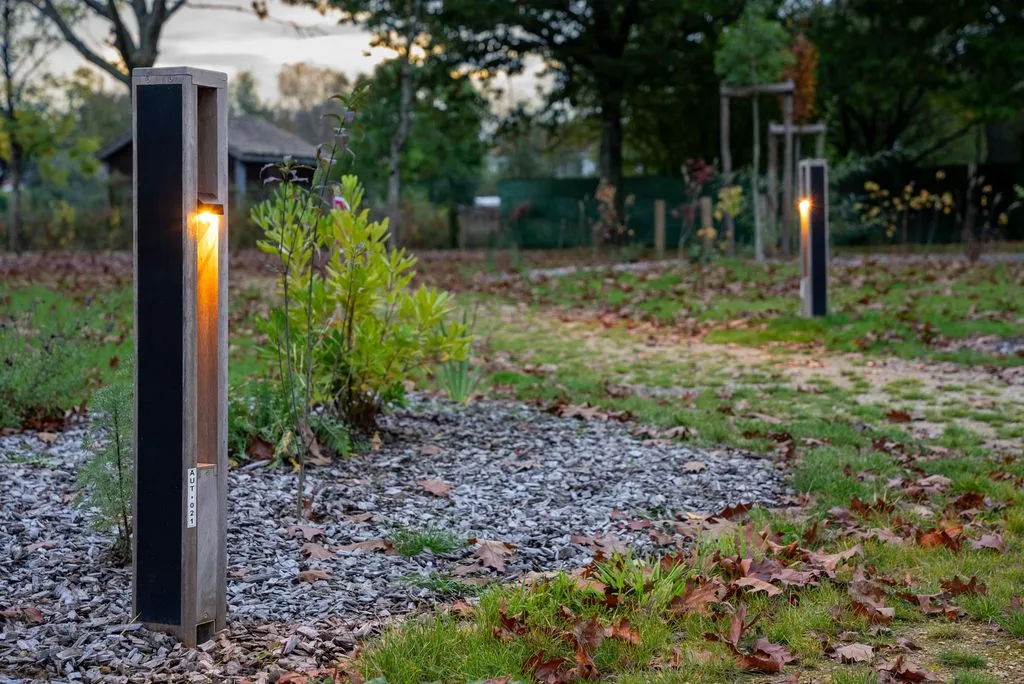
Made from iroko wood, OKO introduces warmth and organic texture into outdoor settings. Its natural appearance suits botanical gardens, resort grounds, and landscaped pathways where preserving the environment’s character is important.
FOLLOW- Modern Aluminum for Public Spaces
With its slim, geometric aluminum design and range of finishes, FOLLOW complements contemporary civic plazas, university campuses, and commercial walkways.
Each design offers a different aesthetic, allowing Georgia project teams to balance architectural integration, pedestrian illumination, and landscape character.
Use NOWATT Crystal Studs for Subtle Landscape Accents
Enhance Pathways with Discreet Ground-Level Lighting
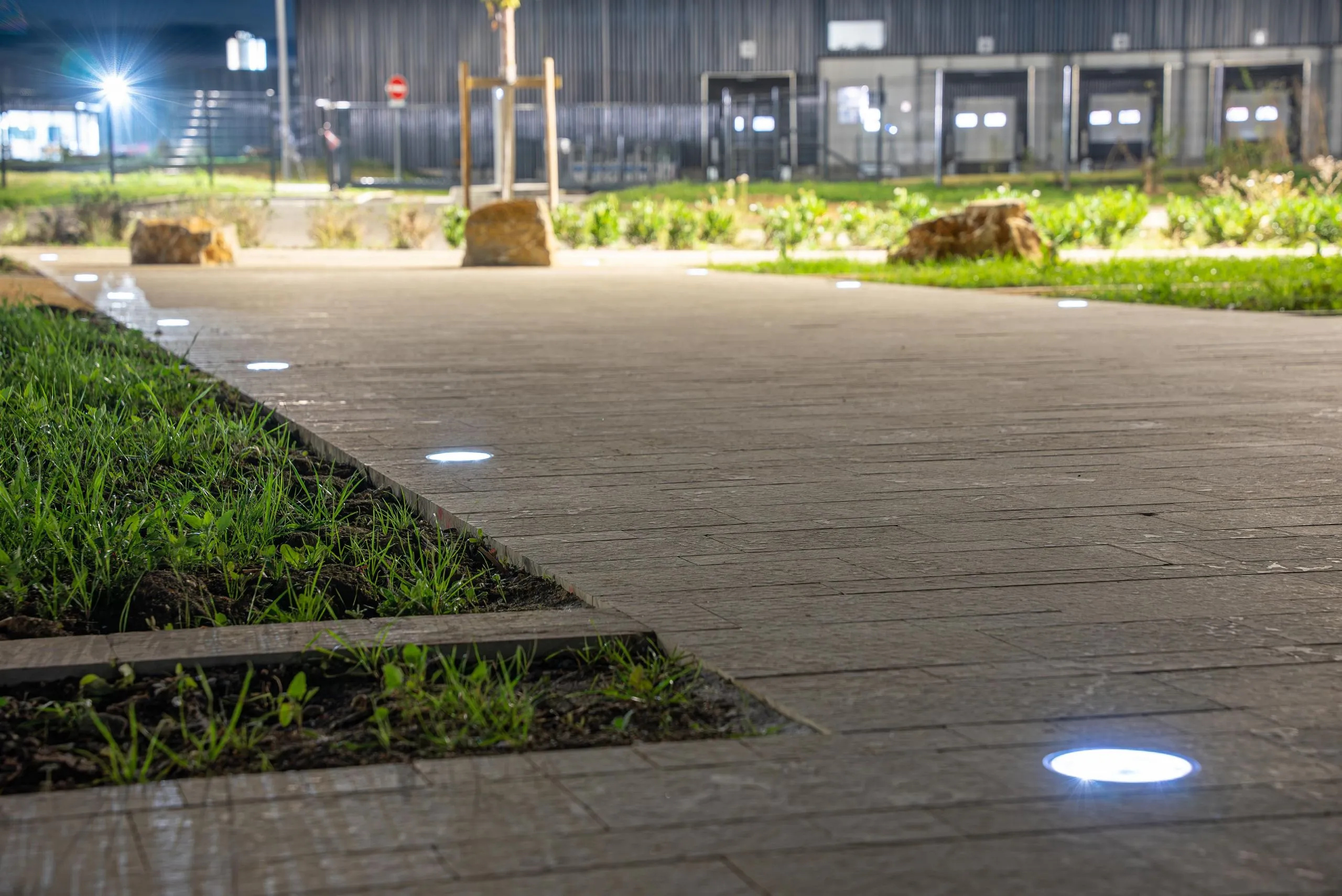
NOWATT Crystal Studs are recessed solar markers that integrate into paved surfaces, adding subtle lighting accents to garden walkways, plazas, and courtyards. Their low-profile design helps define pathway edges, highlight landscape transitions, and guide pedestrians without introducing prominent fixtures.
With programmable colors, brightness, and lighting effects, Crystal Studs can complement the atmosphere of different outdoor environments. When combined with NOWATT solar bollards, they create a layered lighting approach that balances decorative guidance with pedestrian illumination.
Crystal Studs enhance visual guidance but do not replace functional pathway lighting where broader visibility is required.
Integrate Solar Lighting Without Extensive Trenching or Cabling
Preserve the Landscape During Installation
Installing conventional lighting in established Georgia parks and gardens often requires excavation for underground electrical cables, potentially disturbing lawns, planted areas, and paved pathways.
Off-grid solar landscape lighting avoids these electrical connections, helping preserve existing landscapes while reducing installation disruption.
For commercial courtyards, landscaped properties, and public gathering spaces, this approach allows lighting to be introduced without extensive electrical infrastructure work.
However, proper installation planning remains essential. Solar bollards and crystal studs may still require surface preparation, mounting, or foundation work.
Evaluate Solar Exposure and Landscape Conditions
Balance Landscape Design with Solar Performance
Attractive fixture placement must also support reliable solar operation. In Georgia’s parks and gardens, mature tree canopies, seasonal vegetation, nearby buildings, and architectural structures can limit sunlight reaching solar panels.
Landscape designers should evaluate solar exposure at each proposed installation point while accounting for future planting and tree growth. Waterfront promenades and exposed locations may also require consideration of wind, moisture, and environmental conditions.
Balancing aesthetic placement with adequate sunlight helps support nighttime lighting requirements. Where heavy shading limits solar generation, adjusting fixture locations or exploring alternative configurations may be necessary to maintain the landscape’s appearance and functionality.
Frequently Asked Questions About Solar Landscape Lighting in Georgia
Commercial solar landscape lighting can enhance botanical gardens, municipal parks, university campuses, civic plazas, resorts, commercial courtyards, and waterfront walkways. Suitability depends on the space’s intended use, required illumination, available sunlight, and surrounding environmental conditions.
Each NOWATT bollard offers distinct design characteristics. BRUT’s concrete construction complements contemporary plazas; OKO’s natural wood suits landscaped gardens, and FOLLOW’s aluminum design fits modern walkways. Selection should consider architectural style, lighting requirements, surrounding materials, and environmental exposure.
Yes. Carefully positioned solar bollards can illuminate selected areas while controlled light distribution helps minimize glare and unwanted spill. NOWATT Crystal Studs provide subtle ground-level accents, allowing designers to highlight pathways and landscape features without overwhelming the surrounding environment.
Off-grid solar bollards avoid underground electrical cabling and utility connections, reducing the need for extensive trenching through established landscapes. However, installation may still require mounting, foundation work, or surface preparation depending on the fixture and existing site conditions.
Property owners should evaluate landscape design, required illumination, sunlight availability, and seasonal shading. Fixture materials, installation requirements, and architectural compatibility also matter. Long-term planning should include vegetation management, cleaning, maintenance access, and the availability of replacement components.
Bring Landscape Design and Solar Lighting Together
Enhance Outdoor Spaces with Thoughtful Solar Lighting
Successful landscape lighting should make Georgia’s outdoor spaces both attractive and functional after dark. Selecting fixtures that complement surrounding architecture, materials, and vegetation is just as important as evaluating illumination, solar exposure, and installation requirements.
Fonroche Lighting America’s NOWATT solar bollards and Crystal Studs offer distinctive lighting options for municipalities and commercial properties seeking to enhance outdoor environments while preserving their landscape’s character.