

Understanding the Cost of Solar Lighting for City Parks
As cities seek to expand access to safe, well-lit public spaces, solar lighting has emerged as a compelling solution. It’s sustainable, grid-independent, and can be deployed in areas where traditional wired lighting is too costly or disruptive. But for municipal planners and budget committees, one question comes up early in the conversation:
How much does solar park lighting actually cost—and how do you plan for it?
The answer depends on a range of factors, from park size and layout to lighting levels and environmental conditions. Unlike traditional lighting, which often includes utility trenching and recurring energy bills, solar systems concentrate cost upfront—but offer long-term savings and flexibility that traditional systems often can’t match.
In this article, we’ll explore what drives the cost of solar lighting for city parks, how to approach budgeting for installation, and why cities are increasingly choosing solutions like Fonroche for dependable, low-maintenance illumination that pays off over time.
Table of Contents
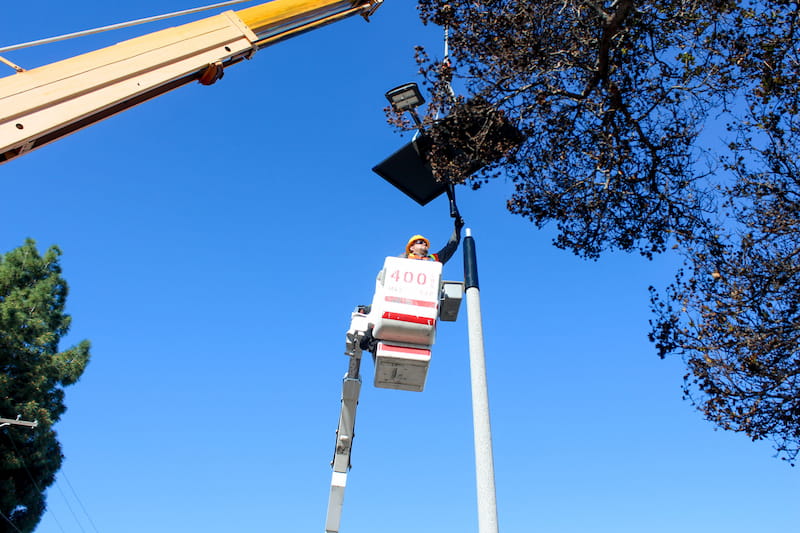
What Drives the Cost of Solar Park Lighting?
There’s no one-size-fits-all cost for solar lighting—especially when it’s designed for public infrastructure. The price of a system depends on site-specific variables that affect performance, layout, and design. Cities budgeting for solar should consider the following cost drivers:
Key factors include:
- Lighting requirements
How bright should the space be? A walking trail may require lower illumination levels than a sports court or playground. The number of fixtures and their spacing are based on use, safety goals, and regulatory standards. - Geographic location and solar access
Areas with frequent cloud cover or dense tree canopies may require larger PV panels or enhanced battery storage, affecting material costs. Fonroche systems, for example, use real-world climate data and solar modeling to size each installation appropriately. - Fixture design and mounting
Bollards, poles, or in-ground lights all vary in cost based on design complexity and installation needs. Decorative options can elevate the park aesthetic—but typically add to material and fabrication costs. - Soil conditions and mounting method
While solar eliminates trenching costs, the type of foundation used (screw piles, ballast mounts, etc.) will influence installation pricing. - Smart controls and remote monitoring
Cities investing in smart infrastructure may opt for lighting systems with adaptive dimming, usage tracking, or remote diagnostics—features that add upfront cost but reduce long-term operational expenses.
Because Fonroche customizes every project through a technical feasibility study, cities receive systems designed for local conditions and long-term performance—ensuring that what’s installed performs consistently without overspending on unnecessary capacity.
Comparing Solar vs. Grid-Tied Lighting Costs
At first glance, solar lighting can seem more expensive than traditional wired systems—but that comparison only holds if you look at initial fixture costs alone. When you factor in trenching, utility bills, and long-term maintenance, solar often emerges as the more cost-effective solution over time—especially for parks and public spaces.
| Cost Category | Solar Lighting | Grid-Tied Lighting |
| Installation | No trenching or wiring; fast surface-mount options | Requires trenching, conduit, and utility coordination |
| Energy Use | Self-powered (no monthly bills) | Ongoing utility costs, subject to rate hikes |
| Maintenance | Minimal; long-life batteries and LEDs | Grid failures, wiring issues, fixture replacements |
| Timeline | Fast to deploy (no grid delays) | Longer lead times due to utility coordination |
| Flexibility | Easily relocated or added | Fixed infrastructure with limited adaptability |
In many cases, cities using Fonroche systems report significant lifecycle cost reductions by avoiding trenching, permits, and recurring utility charges. And because every system is engineered to local conditions, there’s no paying for capacity you don’t need—or underestimating what you do.
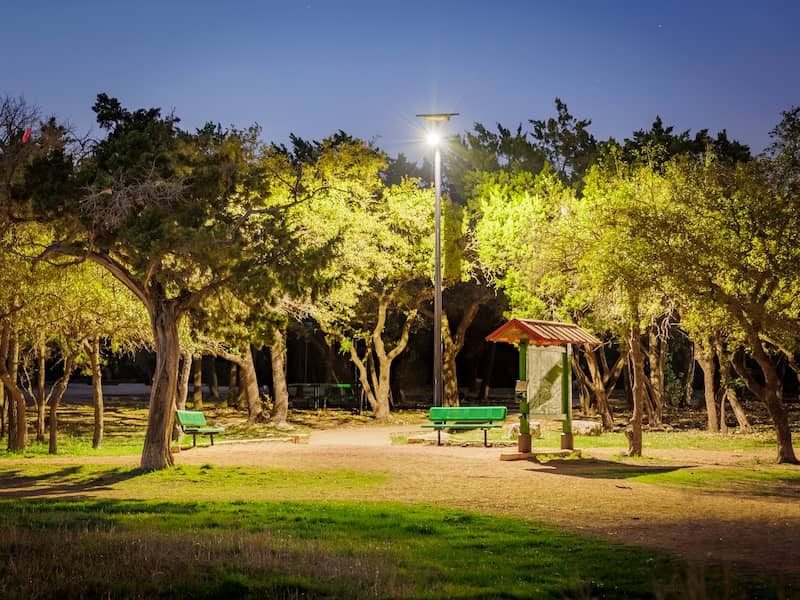
Budgeting for Long-Term Value
For municipalities working within tight capital budgets and long planning horizons, the best investments are those that offer both immediate impact and long-term savings. Solar lighting systems—especially when engineered for durability and performance—fit both criteria.
Fonroche’s approach helps cities budget with confidence by:
- Eliminating hidden installation costs like trenching, permitting delays, and site restoration
- Minimizing long-term maintenance, thanks to smart energy management and climate-tested components
- Providing scalable, project-specific designs that align with available funding or phased rollouts
- Supporting funding eligibility for grants tied to sustainability, equity, and resilience
Whether you’re illuminating a single trail or building out a multi-phase park master plan, solar lighting offers a way to extend access, improve safety, and reduce costs—without waiting on the grid or overextending your team.
Planning your next park lighting upgrade? Connect with a Fonroche Team Member to help assess your goals, and deliver reliable, grid-free solutions that align with both your budget and your values.