

What Maintenance Do Solar Lighting Systems Really Require?
For municipalities investing in infrastructure, long-term maintenance is as important as upfront cost. Parks, trails, and public walkways need lighting that works consistently—without draining operational budgets or overwhelming public works teams. That’s why solar lighting is often evaluated not just for its sustainability, but for how it performs over time with minimal upkeep.
While early solar products required frequent service or battery replacements, today’s systems—especially infrastructure-grade solutions like Fonroche—are engineered for years of autonomous operation. But how much maintenance is really required? And what should cities expect over the life of the system?
This article explores the maintenance considerations behind solar lighting systems, what makes some solutions truly low-maintenance, and how Fonroche’s design philosophy minimizes service needs while maximizing reliability.
Table of Contents
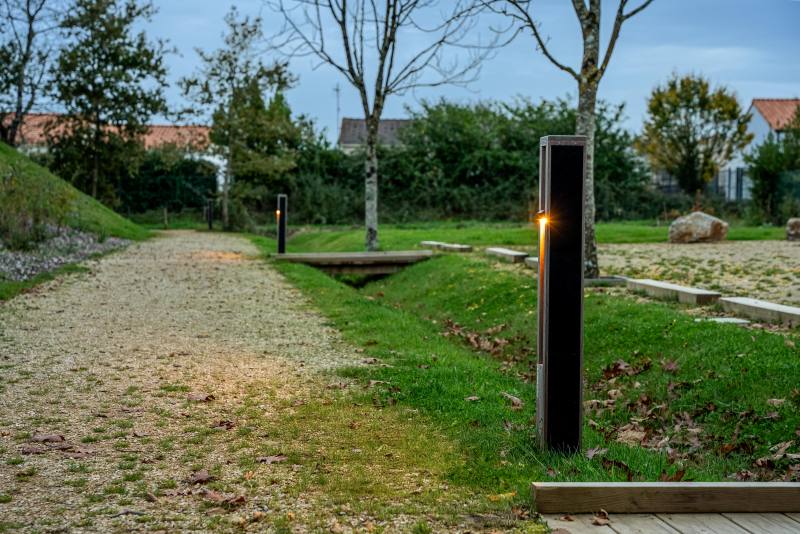
The Anatomy of a Low-Maintenance Solar Lighting System
Not all solar lights are built the same—and when it comes to maintenance, the difference is in the details. Low-maintenance systems are engineered from the ground up to minimize intervention, even in challenging environments. For public-sector buyers, this means fewer service calls, lower lifecycle costs, and more predictable performance.
Key characteristics of a low-maintenance solar lighting system include:
- Enclosed, tamper-resistant designs
All components—including batteries, controls, and wiring—are sealed and protected from vandalism, moisture, and pests. - Long-life batteries
Fonroche uses Nickel-Metal Hydride (NiMH) batteries designed for durability and long service life, without the thermal risks associated with lithium-ion. These batteries are also highly recyclable and tested to perform in extreme climates. - No external controllers or wiring
Fully integrated systems reduce points of failure and eliminate the need for underground cables or exposed components. - Self-regulating energy management
Fonroche’s Power 365 system balances charging, storage, and lighting output to extend battery health and reduce unnecessary strain on system components.
Together, these design elements make Fonroche lighting systems well-suited for city parks, remote trails, and high-traffic urban zones where reliability and minimal disruption are key.
What Municipalities Can Expect Over Time
When evaluating solar lighting for public infrastructure, it’s important to set accurate expectations—not just for how the system performs on Day One, but how it holds up over the course of years. The goal for municipalities isn’t perfection; it’s predictability and durability with as little intervention as possible.
With infrastructure-grade solar systems like those from Fonroche, cities can expect:
- No routine maintenance required for the first several years
The system is designed to operate autonomously, with components sized and tested to outlast seasonal variability and environmental stress. - Battery service or replacement after extended use
Battery systems are engineered for long life, but depending on climate and usage patterns, may eventually need servicing—typically after several years of operation. - Minimal to no fixture-level failures
Solid-state LEDs, sealed enclosures, and advanced thermal management reduce the likelihood of part failures due to weather, impact, or wear. - Remote alerts for early issue detection
With Fonroche Connect, facility managers can detect battery degradation, performance dips, or atypical power consumption before they lead to outages.
Importantly, Fonroche systems are designed to reduce field interventions—not rely on them. This gives public works departments the confidence to scale solar lighting across more sites, without adding operational burden.
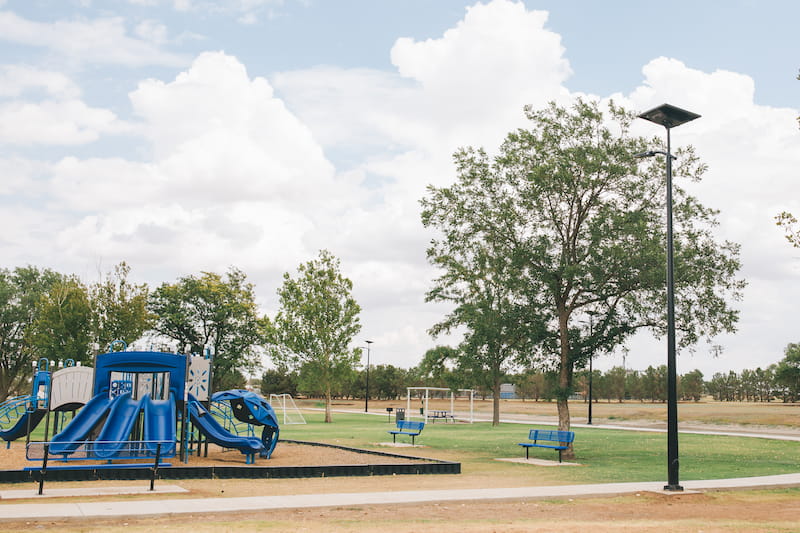
Reliable Lighting Without the Long-Term Burden
In a landscape where city resources are stretched and infrastructure must prove its worth over decades—not just deployment cycles—low-maintenance technology isn’t a luxury. It’s a necessity.
Fonroche solar lighting systems are built with this reality in mind. Through rugged design, long-life batteries, and smart energy management, they reduce the need for scheduled maintenance, minimize unexpected failures, and give municipalities a reliable alternative to grid-tied systems.
Whether lighting a remote trail, a neighborhood park, or an urban pathway network, cities can adopt solar lighting that performs predictably—with fewer work orders, fewer truck rolls, and more confidence in the outcome.