

From Early Experiments to Essential Infrastructure
In just a decade, solar street lighting has evolved from small pilot projects into a core component of modern infrastructure planning. As municipalities confront rising energy costs, strained electrical grids, climate mandates, and growing expectations for public safety, solar lighting is emerging as the solution capable of meeting all of these pressures at once.
The conversation around street lighting has fundamentally changed. It’s no longer about whether solar can replace traditional lighting—it’s about how cities can deploy it smarter, faster, and more sustainably. New technologies, evolving design standards, and updated policy frameworks are accelerating innovation across the sector.
As we look toward 2026, the next chapter of solar street lighting will be defined by integration: how energy management, digital intelligence, and resilient design come together to build lighting systems that do more than illuminate. These systems will help cities operate more efficiently, reduce ongoing costs, and adapt to shifting environmental and infrastructure conditions. Fonroche Solar Lighting is leading this transition by demonstrating what reliable, grid-free lighting looks like at scale.
Table of Contents
Smarter, Stronger, and More Sustainable: The 2026 Design Priorities
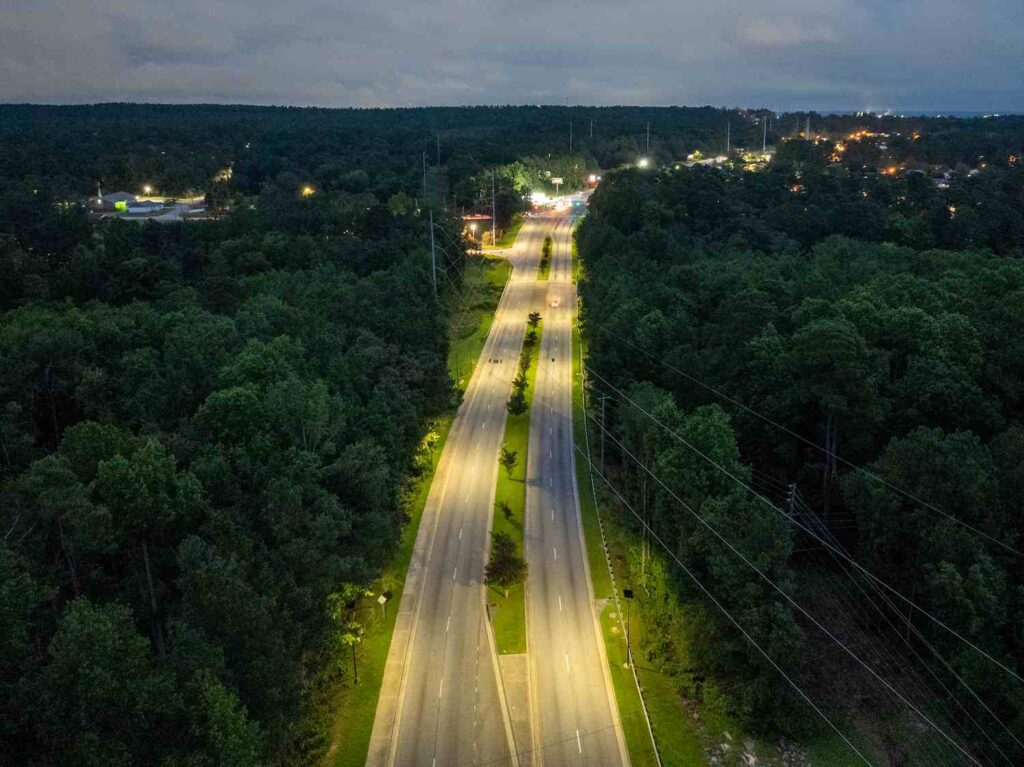
As solar street lighting becomes increasingly mainstream, the expectations placed on these systems are rising. In 2026, cities are prioritizing lighting solutions that deliver high reliability, infrastructure resilience, and long-term sustainability—not just energy savings. The next generation of solar lighting is being shaped around several clear design principles.
Energy Management
Solar lighting systems now rely on advanced controllers that manage energy storage and output dynamically. Adaptive algorithms respond to real-time conditions—changing weather, daylight variation, and human activity—to ensure consistent illumination. Platforms like Fonroche’s energy management technology exemplify this shift toward intelligent, autonomous lighting.
Longer Lifespans and Fewer Failure Points
Components such as batteries, optics, and structural assemblies are being designed for extended service life. Cities are seeking systems that minimize routine intervention, helping reduce operational strain on maintenance crews. Solar lighting’s independence from underground wiring also eliminates many traditional failure points.
Design for Circularity and End-of-Life Planning
Sustainability now includes end-of-life considerations. Municipalities are requesting systems that use recyclable materials, modular components, and transparent documentation for reuse or recovery. Circular design principles are becoming embedded in lighting procurement standards.
Trenchless, Low-Impact Installation
With construction costs rising, trenchless and grid-free installation is a growing priority. Solar systems that require no excavation or electrical connection allow cities to deploy lighting faster and with far less disruption to roads, sidewalks, and natural areas.
Together, these trends point to a future where solar street lighting—especially fully autonomous systems like Fonroche’s—provides a more adaptable, stable, and sustainable alternative to grid-tied infrastructure.
The Policy Drivers Behind Solar Adoption
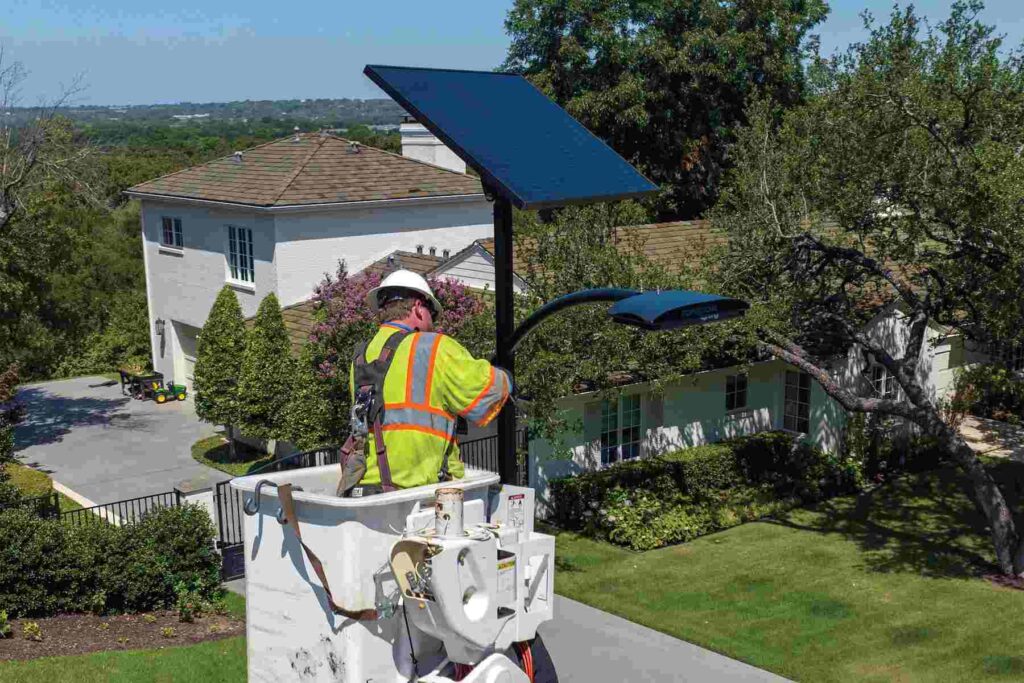
Policy is becoming one of the strongest drivers for solar street lighting adoption. What began as an attractive option for reducing operational costs is now reinforced by climate policy, infrastructure standards, and public safety frameworks.
Climate and Carbon Reduction Mandates
Cities working toward Net Zero and carbon-neutral targets are turning to solar lighting as a measurable, low-carbon option for essential infrastructure. Grid-free systems immediately reduce emissions associated with electricity consumption.
Federal and State Funding Incentives
Many grants now prioritize renewable, resilient infrastructure. Solar lighting aligns naturally with funding criteria that emphasize emissions reduction, climate adaptation, and long-term operational savings.
Resilience Planning and Disaster Preparedness
Grid outages caused by storms, fires, and extreme weather can leave communities without lighting for extended periods. Autonomous solar systems offer uninterrupted lighting during emergencies, supporting safe access and continuity of operations—an increasingly important requirement in municipal planning.
Safety and Accessibility Goals
National initiatives like Vision Zero highlight the importance of effective lighting for reducing pedestrian and cyclist injuries. Solar expands where lighting can be installed, enabling upgrades in areas where trenching is cost-prohibitive or where grid capacity is limited.
Environmental and Wildlife Regulations
Light pollution and habitat protection regulations are influencing how cities illuminate public spaces. With targeted optics and programmable controls, solar lighting offers a practical way to meet compliance requirements while delivering high-quality visibility.
Collectively, these policy shifts are helping to normalize solar as a practical, future-ready component of municipal infrastructure. Fonroche’s grid-free systems align naturally with these emerging standards.

Lighting the Future of Public Infrastructure
Solar street lighting has moved decisively beyond early adoption. By 2026, it is becoming a practical and reliable tool for cities striving for sustainability, resilience, and long-term cost stability. Municipalities are prioritizing solutions that are adaptable, durable, and compatible with broader environmental and safety goals.
As policies evolve and technologies advance, solar lighting stands out for its ability to operate independently of the grid, minimize maintenance requirements, and perform consistently through changing climate conditions. The next phase of progress will focus on richer integration—smarter controls, enhanced energy intelligence, and design approaches that serve both people and ecosystems.
Looking ahead, solar street lighting—anchored by systems like Fonroche Solar Lighting—is poised to play a central role in how communities illuminate their streets, pathways, and public spaces. Reach out to a Team Member today; your future projects will be lit responsibly, reliably, and increasingly without the grid.