
Solar Lighting for Virginia HOA Amenities: Community Walkways, Recreation Areas and Shared Spaces
Community walkways, recreation areas, and shared outdoor spaces play an important role in how residents experience their neighborhoods. Across Fairfax County, Loudoun County, and Prince William County, established HOA communities manage walking paths, neighbourhood parks, landscaped entrances, and gathering areas that serve residents throughout the day and evening.
However, improving outdoor lighting in these communities can be challenging. Existing utilities, mature landscaping, and ongoing neighborhood activities may complicate conventional electrical installations and require careful coordination. For HOA boards and property managers exploring solar pathway lighting in Virginia, independently powered fixtures offer an alternative worth considering. Evaluating how residents use shared amenities, along with installation conditions and long-term maintenance responsibilities, helps communities determine where solar lighting may support their outdoor spaces.
Why HOA Communities Have Different Outdoor Lighting Priorities
Unlike commercial properties, HOA communities must consider the needs of residents across different age groups and mobility levels. Outdoor lighting requirements can vary depending on how frequently shared spaces are used and the activities taking place after dark.
For example, a neighborhood walkway connecting homes to a clubhouse may require regular evening illumination, while landscaped common areas or seasonal recreation amenities may have different lighting needs.
Community associations must also balance functional lighting with neighborhood aesthetics, resident expectations, and available maintenance budgets. Proposed improvements may require HOA board approval, resident input, or coordination with property management teams before installation.
For Virginia residential communities, defining these priorities early helps ensure solar lighting for HOA communities aligns with how shared amenities are used, maintained, and funded.
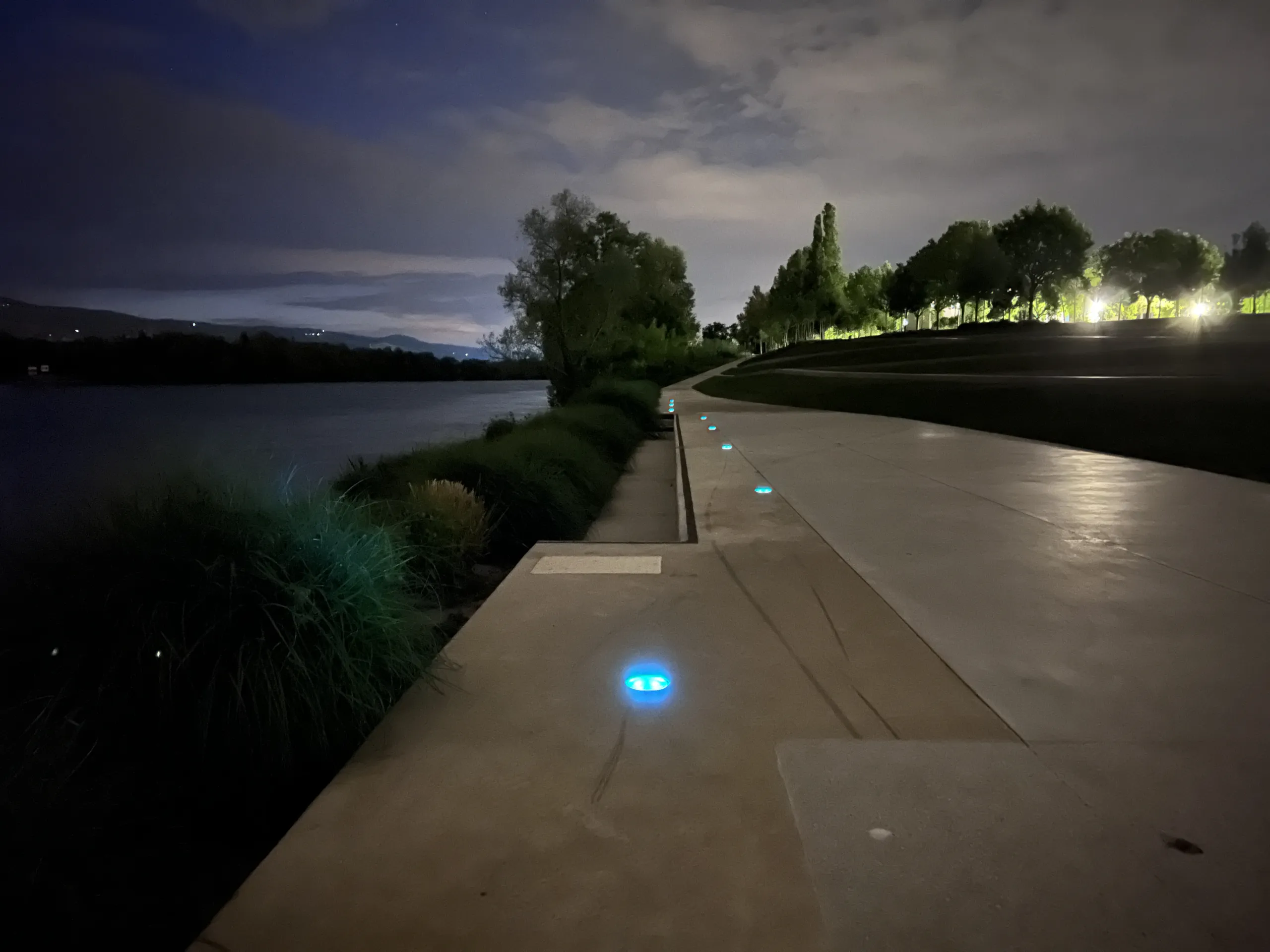
Planning Solar Lighting for Community Walkways and Pedestrian Connections
Community walkways connect residential streets with everyday destinations such as clubhouses, mailboxes, parking areas, and recreation facilities. Planning solar pathway lighting begins with identifying which routes residents use most frequently, particularly during evening hours.
Primary pedestrian connections may require functional illumination to help residents navigate walking surfaces, while secondary landscaped pathways may benefit from lighting that emphasizes direction and wayfinding. Existing neighborhood lighting should also be considered to identify areas where additional illumination may be needed.
Walkway width, intersections, changes in direction, and pedestrian access can influence fixture placement and lighting requirements. For established Virginia communities, these considerations help HOA boards prioritize improvements based on actual resident activity.
For additional guidance on evaluating pedestrian routes and lighting layouts, explore How to Plan Solar Walkway Lighting for Virginia Commercial and Institutional Properties.
Lighting Recreation Amenities and Shared Community Spaces
Shared recreation areas serve different purposes within HOA communities, making it important to match lighting to how each space is used. Clubhouse entrances, outdoor gathering areas, and walking routes around pools or recreation facilities may require functional illumination to support pedestrian movement after dark.
Neighborhood parks, playground surroundings, and landscaped seating areas may have different lighting needs. In these locations, solar landscape lighting can help illuminate pedestrian connections or define pathways while complementing the surrounding environment.
However, pedestrian-scale lighting should not be confused with specialized illumination required for sports courts, swimming pools, or active recreation facilities. For Virginia HOA communities, evaluating each amenity individually helps property managers determine where functional walkway lighting, visual guidance, or landscape-oriented fixtures are appropriate without applying the same solution throughout the neighborhood.
Improving HOA Lighting Without Disrupting Established Landscapes
Installing outdoor lighting in established HOA communities requires careful planning to minimize disruption to residents and shared spaces. Mature trees, planting beds, irrigation systems, and underground utilities can complicate conventional electrical installations, particularly when lighting is needed along existing sidewalks and landscaped pathways.
For residential communities across Northern Virginia, construction activities may also affect pedestrian access, community amenities, and daily neighborhood routines.Where site conditions are suitable, standalone solar lighting can reduce the need for trenching and underground electrical connections between fixtures. This offers greater installation flexibility when upgrading lighting in developed outdoor areas, although foundations and other site preparation may still be necessary.
Coordinating with HOA property managers and landscape contractors helps identify infrastructure conflicts, plan construction access, and limit unnecessary disturbance to established landscapes and community activities.

Evaluating Solar Exposure and Fixture Placement in Residential Communities
Established residential landscapes can create challenges for solar lighting performance. Mature trees, nearby buildings, fences, and seasonal changes in sunlight may limit the energy available to power fixtures throughout the night.
Before selecting solar bollards in Virginia, HOA project teams should assess sunlight exposure at each proposed installation location. A walkway beneath dense tree coverage, for example, may have different solar lighting requirements than an open pedestrian route near a clubhouse.
Fixture placement should also account for walkway width, required illumination, appropriate spacing, mounting and foundation conditions, and pedestrian clearance. Lighting installations must preserve access to shared amenities without obstructing walking routes.
Evaluating these factors early helps community associations identify suitable locations for standalone solar lighting and recognize where alternative solutions may be necessary.
Choosing NOWATT Solar Lighting Solutions for HOA Amenities
Different HOA amenities require lighting solutions that reflect how residents use each outdoor space. Fonroche Lighting America’s NOWATT solar lighting range offers pedestrian-scale options for community walkways, clubhouse approaches, and landscaped common areas.
Solar bollards, including BRUT, FOLLOW, FOLLOW UP, and OKO, can provide functional illumination along walking paths, building approaches, and shared outdoor spaces. These fixtures allow community planners to consider pedestrian visibility alongside neighborhood aesthetics and landscape design.
Crystal Studs serves a different purpose by defining pedestrian routes, marking pathway edges, and providing visual guidance through landscaped areas. However, they should not replace functional walkway illumination where adequate lighting of walking surfaces is required.
For Virginia HOA communities, selecting NOWATT solar bollards and Crystal Studs should begin with pedestrian needs, lighting requirements, available sunlight, and the surrounding environment rather than choosing fixtures based on appearance alone.
Maintenance and Long-Term Planning for HOA Solar Lighting
For Virginia HOA communities, long-term lighting performance depends on clear maintenance responsibilities and operating schedules. Community walkways may require regular evening illumination, while recreation amenities may follow specific hours of use.
Although solar landscape lighting reduces reliance on underground electrical distribution, routine inspections, cleaning, and eventual battery or component replacement remain important. HOA boards should also account for changing landscape conditions and include future servicing costs in maintenance budgets and reserve planning. Establishing responsibilities between the association, property management company, and service providers helps ensure lighting systems receive appropriate attention throughout their operating life.
Frequently Asked Questions About Solar Lighting for Virginia HOA Communities
Yes. Solar pathway lighting can be suitable for established Virginia neighborhoods, particularly along community walkways and shared amenities. HOA boards should evaluate sunlight availability, pedestrian lighting requirements, existing landscaping, and community approval procedures before installation.
Yes. Standalone solar walkway lights generally eliminate the need for electrical trenching between fixtures, potentially reducing disruption to established landscapes. However, foundations, underground utility checks, and other site preparation may still be required.
Yes. Solar bollards can illuminate pedestrian routes near clubhouses, community walking trails, and recreation amenities. Their suitability depends on required light levels and site conditions. Specialized sports courts and recreational facilities may require separate lighting systems.
Yes. Properly engineered solar pathway lights can operate year-round when sufficient solar energy and battery capacity are available. Mature trees, winter daylight hours, and seasonal shading must be evaluated to determine whether the system can meet the required nighttime operating schedules.
HOA boards should budget for equipment, installation, foundations, routine maintenance, and eventual battery or component replacement. They should also consider community approval requirements, lighting schedules, and long-term reserve planning when evaluating total ownership costs.
Planning Better Shared Outdoor Spaces for Virginia Communities
Effective HOA lighting begins with understanding how residents use community walkways, recreation amenities, and landscaped common areas. Each space may require a different approach based on pedestrian activity, lighting needs, and neighborhood design.
Where site conditions allow, standalone solar lighting can reduce underground electrical distribution requirements while supporting shared outdoor spaces.
Through its NOWATT solar lighting solutions, Fonroche Lighting America offers pedestrian-scale lighting options for Virginia residential communities.
Planning an HOA lighting improvement project? Connect with our team to discuss your community’s specific needs.