

Across Georgia, municipalities planning roadway lighting improvements must balance visibility, infrastructure budgets, and utility requirements. Choosing Solar street lighting in Georgia involves more than comparing fixture prices or wattage. Public works teams need to consider roadway conditions, lighting requirements, solar exposure, battery storage, and installation needs before selecting a system.
From growing suburban corridors around Atlanta to county roads near Augusta, this guide outlines the key factors municipalities should evaluate to make informed purchasing decisions and plan for long-term lighting performance.
Start With the Project’s Lighting Requirements
Match the Lighting Design to the Roadway
Before selecting solar streetlights, Georgia municipalities must define the lighting needs of each location. Residential streets, busy county corridors, and pedestrian crossings may require different illumination levels based on traffic patterns, vehicle speeds, and pedestrian activity.
A project-specific photometric study helps determine appropriate light levels, uniformity, pole placement, mounting height, and spacing. It also evaluates light distribution to improve roadway visibility while minimizing glare and unwanted light spill onto surrounding properties. Public works teams should consider applicable municipal and transportation requirements, ensuring the selected lighting system meets the project’s needs rather than designing a particular fixture.
Evaluate Solar Exposure at the Installation Site
Assess Sunlight Before Sizing the System
The amount of solar energy available at each proposed location directly affects how a streetlight should be designed. Even within Georgia, sites can receive different amounts of sunlight depending on their surroundings and the time of year. Shorter winter days and changing sun angles should be considered alongside solar panel placement and orientation.
For municipal projects, the goal is to confirm that expected solar generation can support the required nighttime lighting schedule and battery charging needs. Rather than relying on Georgia’s overall climate, public works teams should request a site-specific solar assessment before finalizing system specifications.
Account for Trees and Seasonal Shading
Consider Existing and Future Obstructions
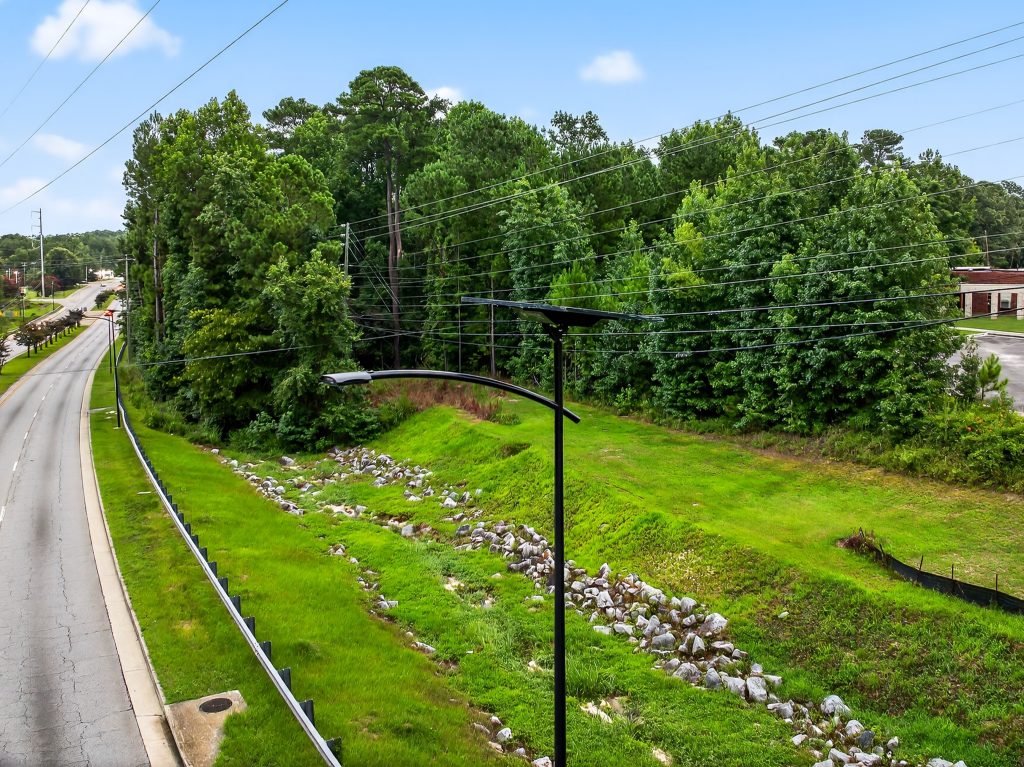
Mature tree canopies along Georgia roadways can limit sunlight reaching solar panels, even when the surrounding area receives adequate solar exposure. Seasonal changes in vegetation, nearby buildings, and other structures can create varying shade conditions throughout the year.
Municipalities should also consider future landscaping and tree growth when planning installations. If shading is a concern, adjust pole locations or evaluate alternative system configurations.
Assessing each proposed installation point individually helps ensure solar streetlights are positioned to receive sufficient sunlight rather than relying on general conditions across an entire corridor.
Match Battery Storage with Lighting Schedules
Design Around Nighttime Energy Demand
A solar streetlight must generate and store enough energy to support its required nighttime operation. For Georgia municipalities, battery capacity should be evaluated alongside available sunlight, lighting output, and operating hours. Some roadways require consistent full-output illumination, while others may accommodate programmed lighting profiles that adjust brightness during lower-activity periods.
Energy management becomes particularly important during periods of reduced sunlight. Fonroche’s SmartLight systems use Power 365™ technology to manage stored energy and support project-specific lighting schedules.
Rather than selecting batteries based on capacity alone, municipalities should ensure solar generation, energy storage, and lighting demand are engineered together to meet the project’s year-round operating requirements.
Review Pole, Foundation, and Installation Requirements
Plan for the Physical Conditions of Each Site
Selecting solar streetlights also requires evaluating the structures supporting them. Pole height, mounting configuration, and wind exposure influence structural requirements, while soil conditions determine appropriate foundation designs. Municipalities should also consider the installation of access, drainage, and necessary site preparation.
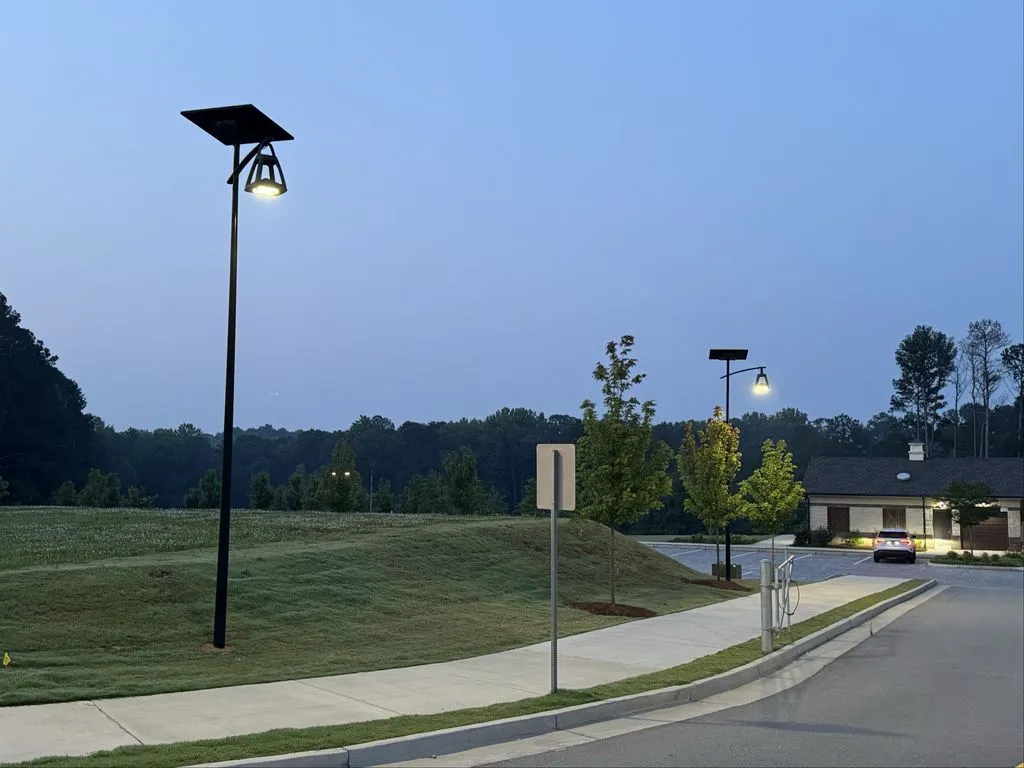
Unlike conventional grid-connected lighting, off-grid solar streetlights eliminate the need for electrical trenching, underground power cables, and utility connections. However, poles and foundations still require proper installation and engineering review.
For Georgia municipalities, evaluating these requirements early helps identify potential site constraints, establish installation responsibilities, and ensure the proposed lighting infrastructure is appropriate for local conditions.
Evaluate Manufacturer Experience and Long-Term Support
Look Beyond Equipment Specifications
Choosing a solar street lighting manufacturer involves more than comparing equipment specifications. Georgia municipalities should consider the manufacturer’s experience with roadway projects and ability to provide engineering support throughout the process.
A qualified manufacturer should provide photometric studies, site-specific solar assessments, battery-sizing recommendations, and installation guidance to help ensure the proposed system meets project requirements.
Long-term support is equally important. Public works teams should review warranty coverage, maintenance responsibilities, replacement component availability, and technical assistance after installation.
Evaluating these factors helps municipalities select a complete lighting solution with the documentation and support needed for long-term infrastructure management.
Solar Street Lighting in Action: Windsor Spring Road, Augusta
42 SmartLight Essential Units Bring Off-Grid Lighting to a Three-Quarter-Mile Corridor
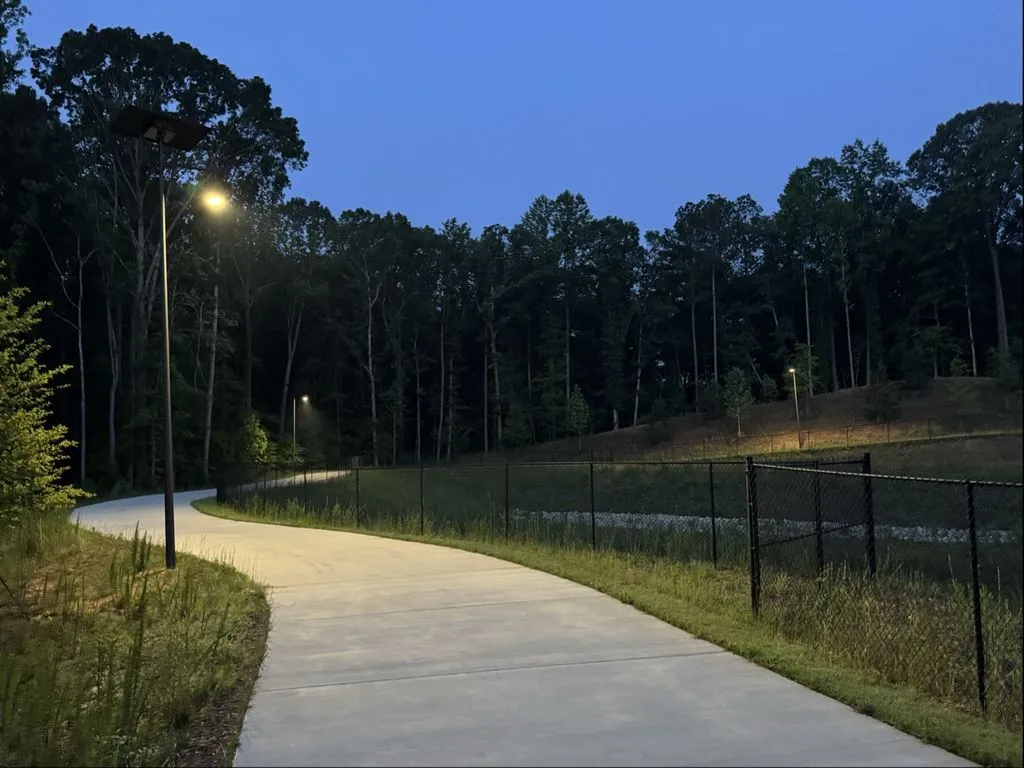
In Augusta, Georgia, a previously unlit section of Windsor Spring Road presented roadway visibility challenges. To address these conditions, the city installed 42 Fonroche SmartLight Essential units with Power 365™ technology along a three-quarter-mile corridor.
The autonomous solar lighting systems eliminated the need for underground electrical cabling and utility connections, allowing the city to illuminate the roadway without extending conventional grid infrastructure.
The project demonstrates how off-grid solar street lighting can address municipal infrastructure challenges through site-specific planning and engineering.
Questions Georgia Municipalities Should Ask Before Purchasing
A Practical Checklist for Municipal Decisionmakers
Before approving a solar street lighting proposal, Georgia public works teams should confirm that the system meets their project’s technical and operational requirements.
Key questions include:
- Lighting Design: Has a site-specific photometric study confirmed appropriate illumination and pole spacing?
- Solar Exposure: Have sunlight availability and seasonal shading been evaluated?
- Battery Storage: Is the system sized for the required nighttime lighting schedule?
- Installation: What pole, foundation, and site preparation requirements apply?
- Long-Term Support: What warranties, technical assistance, and replacement components are available?
- Project Scope: What equipment, engineering services, and installation responsibilities are included?
Documented answers help municipalities compare proposals beyond the initial purchase price.
Frequently Asked Questions About Solar Street Lighting in Georgia
Municipalities should evaluate required light levels, pole spacing, and operating hours before selecting equipment. Site assessments should also examine seasonal solar exposure, battery capacity, and structural requirements. Manufacturer experience, engineering documentation, warranty coverage, and long-term technical support are equally important.
Yes, when properly designed for the site’s energy requirements. Solar generation, battery capacity, and programmed lighting schedules must work together to support nighttime illumination, including periods of reduced sunlight. Municipalities should request documented performance assumptions based on local conditions.
Trees, nearby buildings, and seasonal vegetation changes can reduce sunlight reaching solar panels, affecting energy generation. A site-specific shading assessment helps identify potential limitations. Adjusting pole locations or system configurations may be necessary to maintain adequate solar exposure.
No. Autonomous solar streetlights generate and store electricity independently, eliminating the need for underground electrical cabling or utility connections. However, municipalities must still consider pole installation, foundation requirements, structural engineering, and site preparation when planning their lighting projects.
Municipalities should prioritize manufacturers with municipal roadway experience, engineering assistance, photometric studies, and site-specific system design capabilities. They should also review technical documentation, warranty terms, replacement component availability, and long-term service support before making purchasing decisions.
Choosing the Right Solar Street Lighting System for Georgia
Make an Informed Investment in Municipal Infrastructure
Choosing the right solar street lighting system begins with understanding each project’s specific requirements. Lighting performance, solar exposure, battery storage, installation needs, and manufacturer support should be evaluated together rather than focusing solely on upfront costs.
Fonroche Lighting America helps Georgia municipalities assess these factors and explore off-grid solar lighting solutions suited to their roadway conditions, operational needs, and long-term infrastructure goals.