
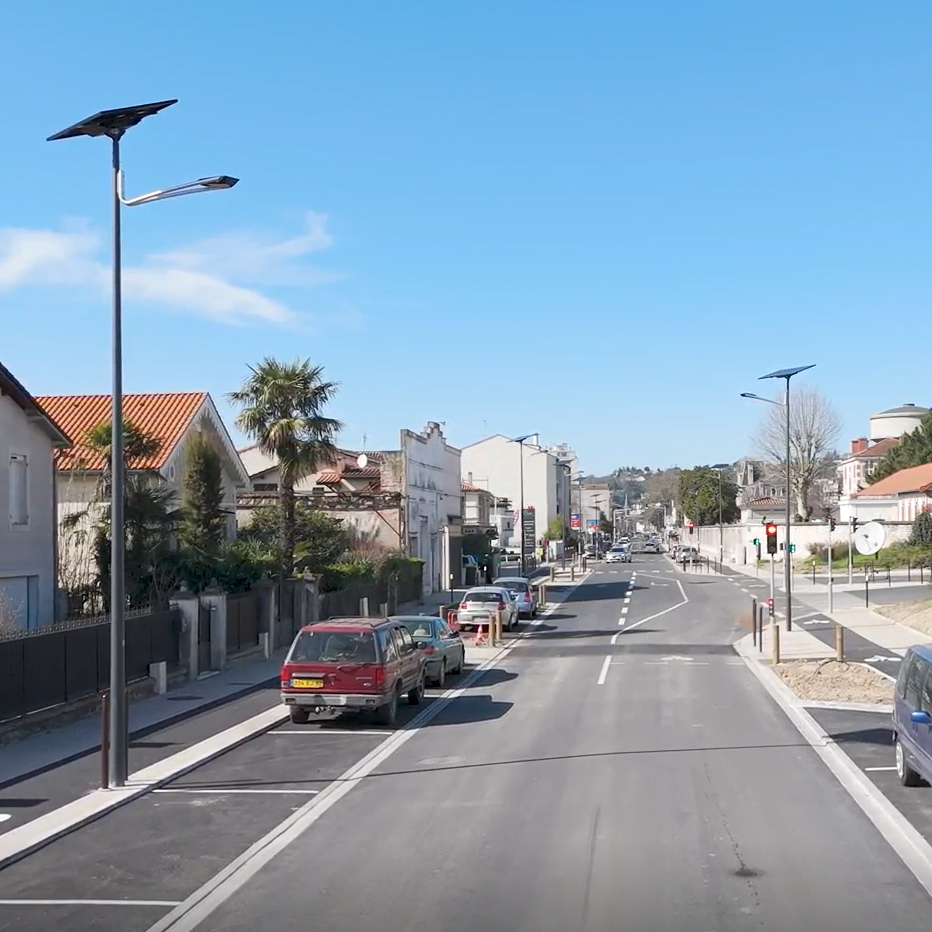
Solar Street Lighting Reliability in Virginia: Power 365
Why can Fonroche Lighting America’s Power 365 technology provide reliable solar street lighting in Virginia’s cloudy, humid, and storm-prone climate when conventional solar systems often cannot?
Because Power 365 is engineered for Virginia’s worst operating conditions, not its average days: extended cloud cover, high humidity, coastal wind-driven rain, and winter’s long nights. Fonroche Lighting America designs Power 365 as an autonomy-first platform that couples conservative energy sizing, robust storage, and smart energy management with environmental hardening and remote verification through Fonroche Connect. In short, it’s about solar street lighting reliability in Virginia’s cloudy, humid, storm-prone climate, and how Fonroche Lighting America’s Power 365 delivers 365 nights of off-grid light with smart monitoring. This reliability approach is anchored by smart solar lighting technology.
For public infrastructure solar lighting and energy-efficient street lighting programs, this autonomy-first design helps keep solar-powered street lighting dependable through every season. In some materials, you’ll see this referred to as SmartLight Power 365; it is the same reliability-first design.
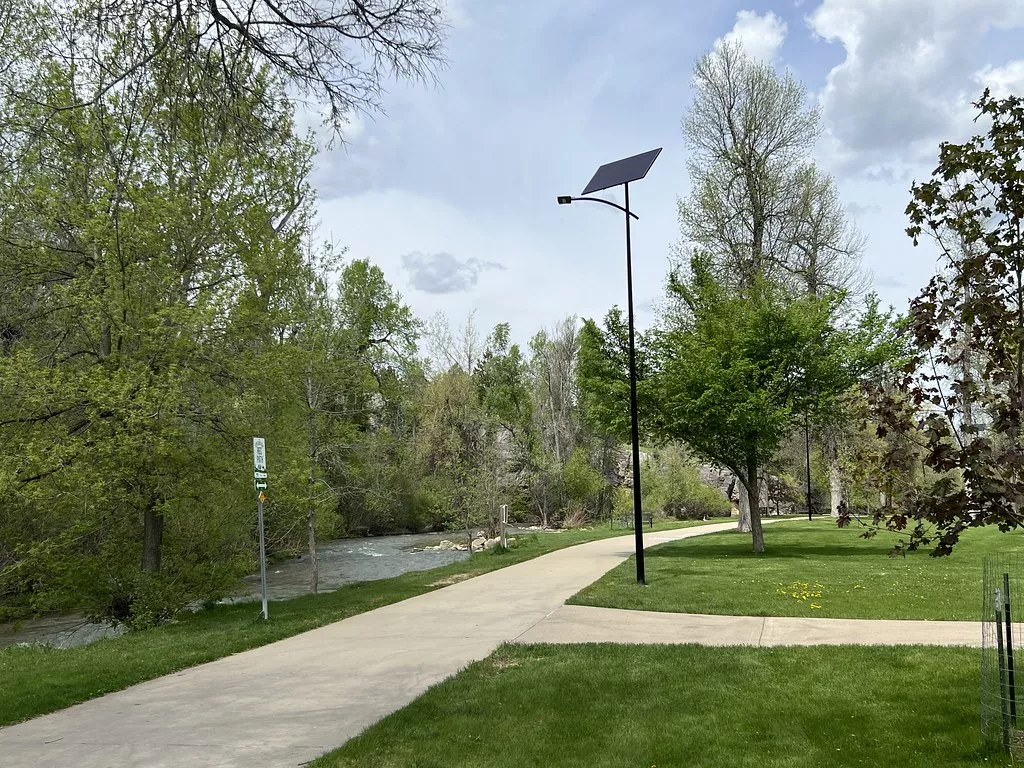
Virginia’s climate creates predictable failure modes for conventional solar lighting
Virginia is a demanding environment for autonomous lighting because it regularly compresses solar charging opportunities while simultaneously increasing the system’s nighttime duty cycle. When systems are designed around generic assumptions, reliability gaps appear quickly.
Extended cloud cover and low-irradiance sequences
Multi-day overcast periods are common across the Commonwealth, particularly during coastal weather systems and seasonal transitions. Conventional solar street lights are frequently sized to typical sun-hour averages, so a few consecutive low-harvest days can push the system into an energy deficit it cannot recover from without multiple clear days. The result is inconsistent output, shortened run time, or shutdown, a recurring scenario in Virginia solar street lighting deployments.
Humidity, condensation risk, and thermal cycling
Virginia’s humidity is not just uncomfortable; it is an engineering stressor. High humidity increases condensation risk in enclosures and accelerates degradation when sealing, cable management, and component protection are marginal. Summer heat combined with daily thermal cycles also stresses electronics and batteries if the system is not designed to manage temperature and moisture exposure over the years of operation.
Coastal storms, salt air, and wind-driven rain
From Hampton Roads to the Eastern Shore, coastal exposure adds salt-laden air and persistent wind-driven rain. Storm events can introduce rapid pressure differentials, water intrusion pathways, and mechanical loads that reveal weaknesses in materials, fasteners, seals, and pole structures. If a system is not designed for harsh exposure, performance and uptime become unpredictable after major weather events.
Winter daylight constraints and longer nightly run time
Virginia winter brings shorter days, lower sun angles, and longer nights. In practical terms, the system must run longer while charging less. Conventional systems that appear acceptable in summer often underperform in winter because their energy model does not align with the seasonal worst case. This is why municipal solar street lighting must be modeled to the seasonal worst case.
Limited operational visibility
When lighting is distributed across roadways, parking lots, parks, and public spaces, field-only oversight is reactive. Without monitoring, owners cannot quickly confirm system health after a storm, diagnose performance drift, or validate that each asset is delivering the intended lighting profile through changing conditions. With monitoring, owners can also achieve streetlight maintenance savings by reducing unnecessary night checks and truck rolls.
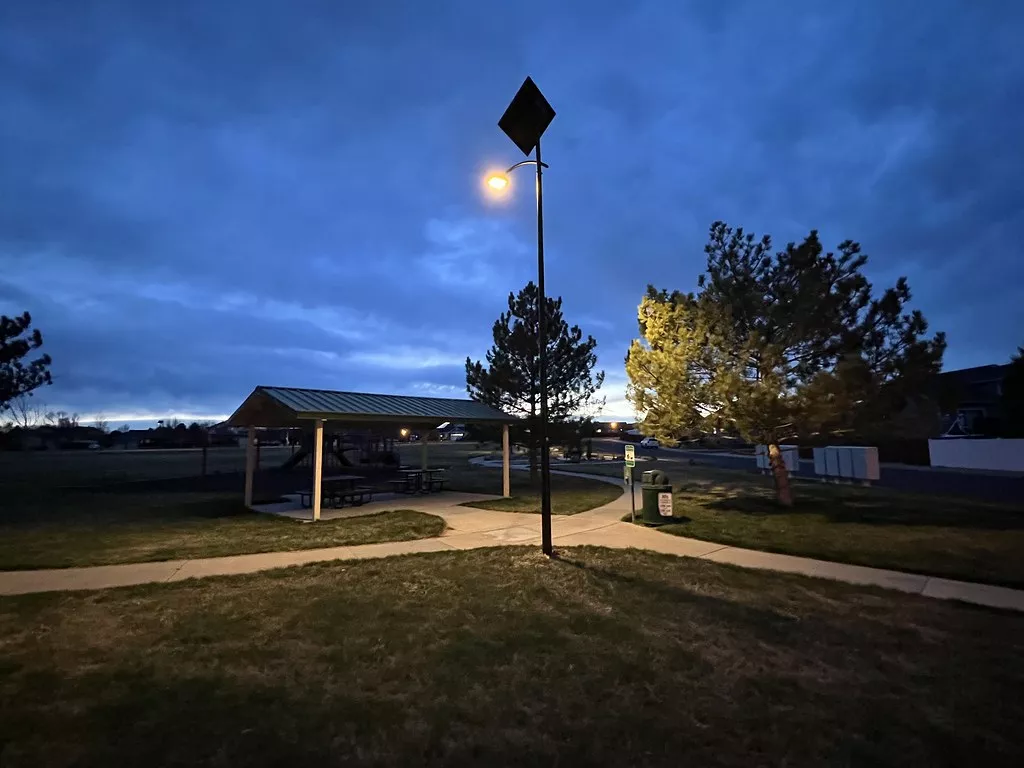
Power 365: engineered for worst-case weeks, not best-case days
Fonroche Lighting America developed Power 365 to prevent the exact failure modes Virginia tends to expose: undersizing, insufficient autonomy, simplistic control behavior, and inadequate environmental hardening. Power 365 is designed as a reliability system whose primary metric is continuity of service.
Conservative energy sizing aligned to Virginia’s low-harvest reality
Power 365 is built on the premise that the design point must be the hard stretch: consecutive cloudy days, stormy weeks, and winter periods where harvest is constrained. By using conservative sizing principles, Power 365 is engineered to maintain energy balance through low-irradiance sequences and to rebuild reserves when limited charging windows reappear. This is where conventional, average-based sizing fails most often in Virginia.
Battery autonomy is the centre of the architecture
Autonomy is the ability to sustain lighting without immediate recharging. In Virginia, autonomy determines whether lighting remains stable through overcast sequences, post-storm conditions, and winter run times. Power 365 emphasizes usable stored energy and predictable discharge behaviour, so the lighting mission is protected when harvest is temporarily constrained. Just as important, Power 365 is designed to manage storage intelligently, maintaining operational stability without relying on abrupt, last-minute output reductions that infrastructure owners experience as unreliability.
Smart energy management that stabilizes output and accelerates recovery
Virginia weather is variable: a system may move from several days of heavy clouds to brief, high-value sun breaks between fronts. Power 365® uses smart energy management to coordinate charging, storage, and load in a way that keeps performance predictable under volatility. The objective is controlled behaviour during scarcity and efficient recovery when charging opportunities return, without creating erratic lighting results across the network.
Environmental hardening for humidity and coastal exposure
Reliability is not only energy. In Virginia, environmental protection and mechanical integrity determine whether a system remains stable through seasons of moisture and storm exposure. Power 365 systems are built for durability. They protect critical components from humidity damage. They are designed for harsh, rain-heavy conditions. This includes nor’easters, tropical systems, and repeated coastal weather cycles.
Off-grid reliability when conditions are unstable
Power 365 is autonomous by design, which matters in storm-prone regions where external power conditions can be uncertain. After severe weather, infrastructure decision-makers need lighting that continues operating independently at priority locations. Power 365 is built to keep delivering light during destabilizing periods. It works even when the grid is not continuous. This off-grid roadway lighting capability is especially valuable on critical corridors and detours.
Fonroche Connect: reliability is measurable, verifiable, and manageable
Fonroche Lighting America’s reliability approach includes operational visibility. Fonroche Connect provides remote monitoring that turns an off-grid lighting deployment into a managed infrastructure network. With Fonroche Connect, Virginia owners can check system status across many sites. They can spot issues sooner. They can also validate systems faster after storms. This avoids waiting for nighttime field checks. In practice, Fonroche Connect improves reliability by enabling technical oversight. It confirms Power 365 units operate as expected through cloud cover and humidity cycles. It also checks performance after major storm events. Together, these tools function as solar lighting solutions for municipalities.
Where Power 365 reliability matters most in Virginia infrastructure
Virginia applications test reliability in different ways. But they share one expectation: lighting must stay consistent in the Commonwealth’s harshest weather. Power 365 is deployed where that expectation is non-negotiable.
- Roadways and corridors (solar roadway lighting): Reliable operation during long cloud cover and winter run times. Inconsistent lighting can create operational risk. Off-grid roadway lighting helps prevent outages when the grid is compromised.
- Intersections and crossings: Solar-powered streetlights provide steady, predictable illumination during storms. Rapid weather changes can disrupt normal operations.
- Parks and trails: Performance through humidity, condensation-prone seasons, and variable daylight patterns that challenge energy balance.
- Parking lots and municipal facilities: Keep consistent service across open, wind-exposed sites during coastal storms and heavy rain. Support energy-efficient street lighting goals across the network.
- Public spaces in coastal zones: Durability and uptime where salt air and wind-driven rain are routine, not occasional.
These deployments span city, county, and DOT networks. Teams reviewing solar street lighting projects in Virginia often need proof of continuity before approval. For municipalities planning programs, these are proven solar lighting solutions. They also ease solar street lighting installation by standardizing design reviews, siting, and commissioning.
Conclusion
Conventional solar lighting systems often struggle in Virginia because they are designed for typical conditions and then deployed into a climate defined by multi-day cloud cover, high humidity, coastal storms, and winter daylight constraints. Fonroche Lighting America’s Power 365 is engineered to avoid those failure modes by prioritising autonomy, conservative energy sizing, smart energy management, and environmental hardening, with performance that can be monitored and verified through Fonroche Connect.
For Virginia infrastructure decision-makers evaluating autonomous solar street lighting reliability, including municipal solar street lighting and broader energy-efficient street lighting initiatives, Fonroche Lighting America is ready to review your site conditions and specify a Power 365 solution engineered for your worst-case weeks.