
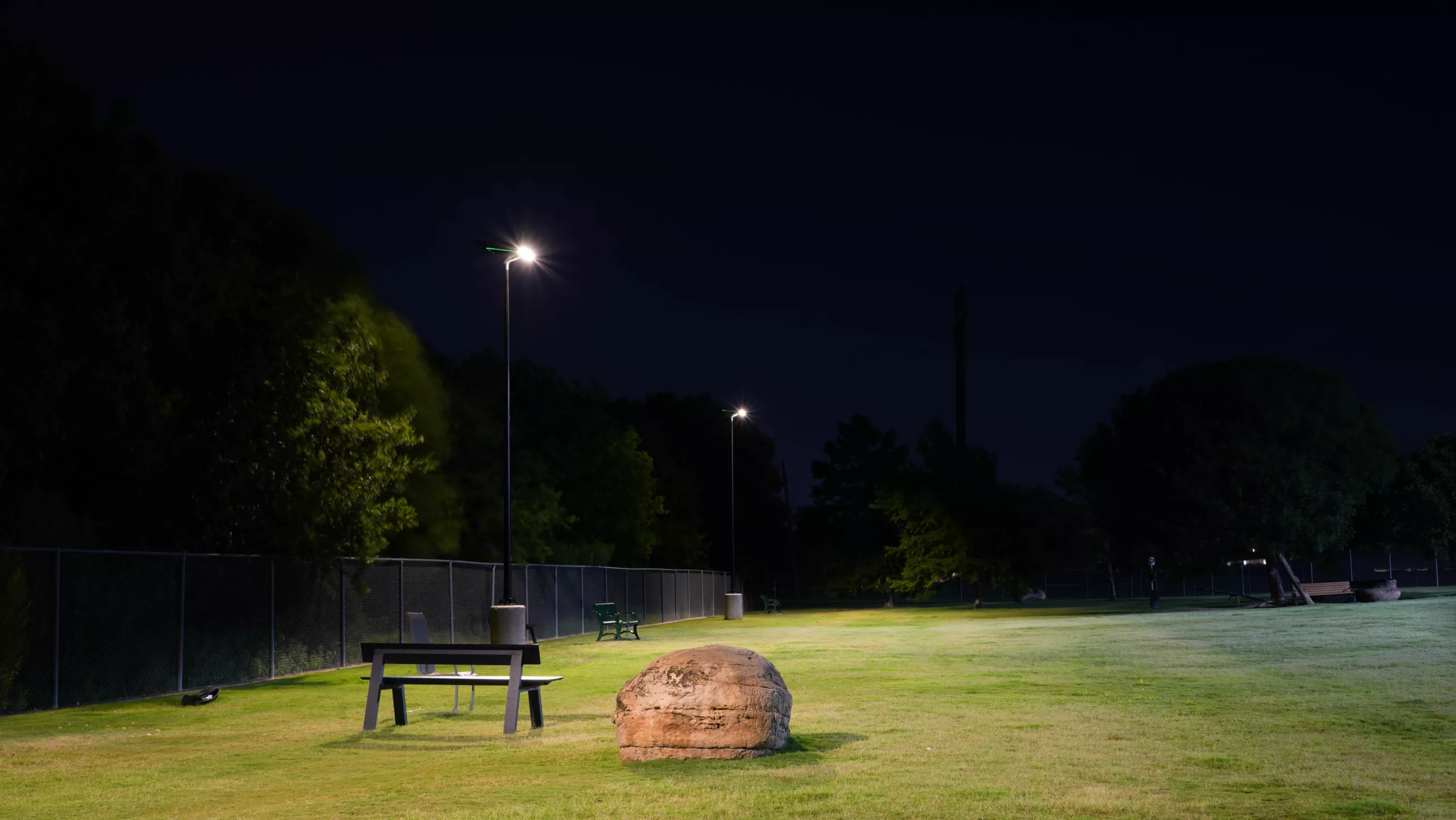
Where Off-Grid Solar Lighting Makes Sense in Florida
From roads and parking areas to parks, pathways, waterfronts, and remote locations, off-grid solar lighting offers a different infrastructure approach when bringing electrical power to a site is difficult or disruptive.
Florida communities need reliable outdoor lighting across roads, parking lots, parks, campuses, pedestrian spaces, and other public areas. However, getting power to those locations is not always straightforward. Existing electrical access, distance from utilities, underground infrastructure, established landscaping, and remote site conditions can all influence how a lighting project is planned.
Off-grid solar lighting provides an alternative by generating and storing energy directly at the lighting location rather than depending on electrical service. For municipalities and developers evaluating commercial solar streetlights, the decision should still begin with the site. Solar availability, lighting requirements, existing infrastructure, and long-term operating needs ultimately determine where an autonomous system makes practical sense.
What Makes a Site a Good Candidate for Off-Grid Solar Lighting?
The strongest applications often begin with a simple question: how difficult would it be to bring reliable electrical power to the proposed lighting locations?
A site may be a strong candidate for off-grid solar lighting when electrical service is distant or unavailable, or when reaching new light locations would require extending conduit, cabling, and other underground infrastructure. On developed properties, trenching through existing pavement, sidewalks, or landscaping can add another layer of complexity.
Remote locations and phased developments can also make autonomous lighting worth evaluating, particularly when new lighting locations may be added over time, or grid independence is an infrastructure priority. However, the site must also provide adequate solar exposure and support the lighting and energy requirements of the project.
When comparing municipal street lighting suppliers, Florida project teams should therefore look beyond the fixture itself and consider how each proposed system will be powered, installed, and supported by the conditions at the site. Municipal project teams can review our Florida solar street lighting planning guide for a broader look at site evaluation, system design, energy storage, poles, and procurement.
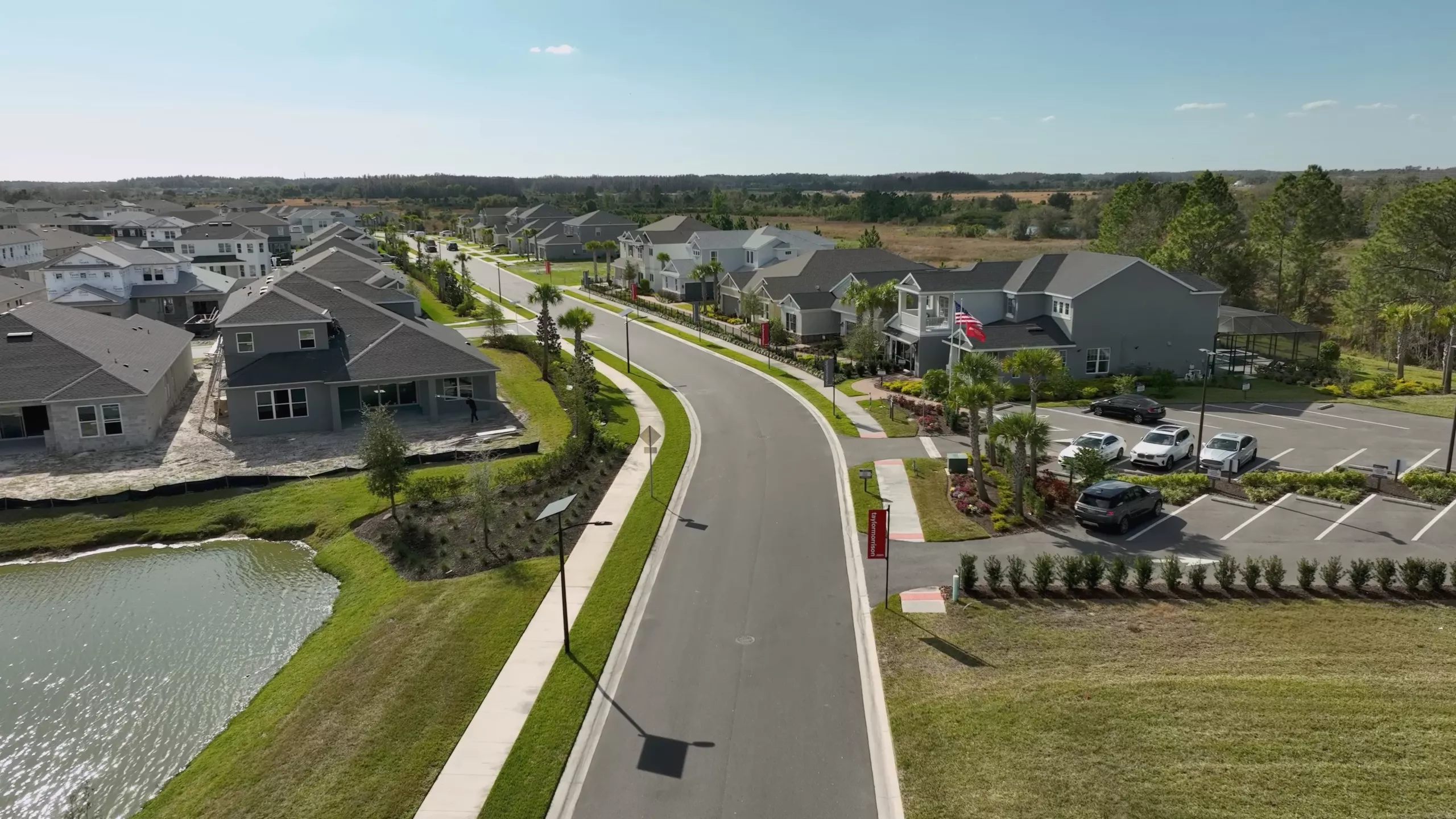
Roads, Intersections and Rural Corridors
Roadway lighting becomes a different infrastructure challenge when proposed lighting locations are separated from existing electrical services.
Municipal streets, county roads, intersections, facility entrances, and rural corridors can all require lighting in places where extending electrical infrastructure is difficult. Commercial solar streetlights can provide an alternative by generating and storing power at each lighting location, allowing project teams to evaluate pole placement based on the roadway and site rather than electrical access alone.
However, selecting the best solar-powered streetlights for a roadway project requires looking beyond the fixture. Road geometry, required visibility, pole locations, operating schedules, available solar energy, battery storage, and structural requirements all influence system design. LED solar power lights must be engineered around these conditions to deliver the required lighting performance throughout the planned operating schedule.
For remote roads and other challenging locations, a properly designed autonomous system can make solar roadway lighting a practical option without requiring power distribution between each light.
Parking Lots, Campuses and Developing Properties
Large properties often have multiple lighting needs, making placement flexibility and future development important planning considerations.
Municipal parking lots, schools, universities, commercial campuses, resorts, and mixed-use developments often combine vehicle areas, pedestrian routes, entrances, and gathering spaces. Solar parking lot lighting can be planned around these different activity zones rather than treating the entire property as one uniform space.
Off-grid commercial solar lighting can also provide flexibility where electrical infrastructure does not reach every proposed lighting location or where a property is expanding in phases. Commercial solar street lights may serve larger parking and circulation areas, while pedestrian-scale solar solutions can support walkways and other spaces requiring a different lighting approach.
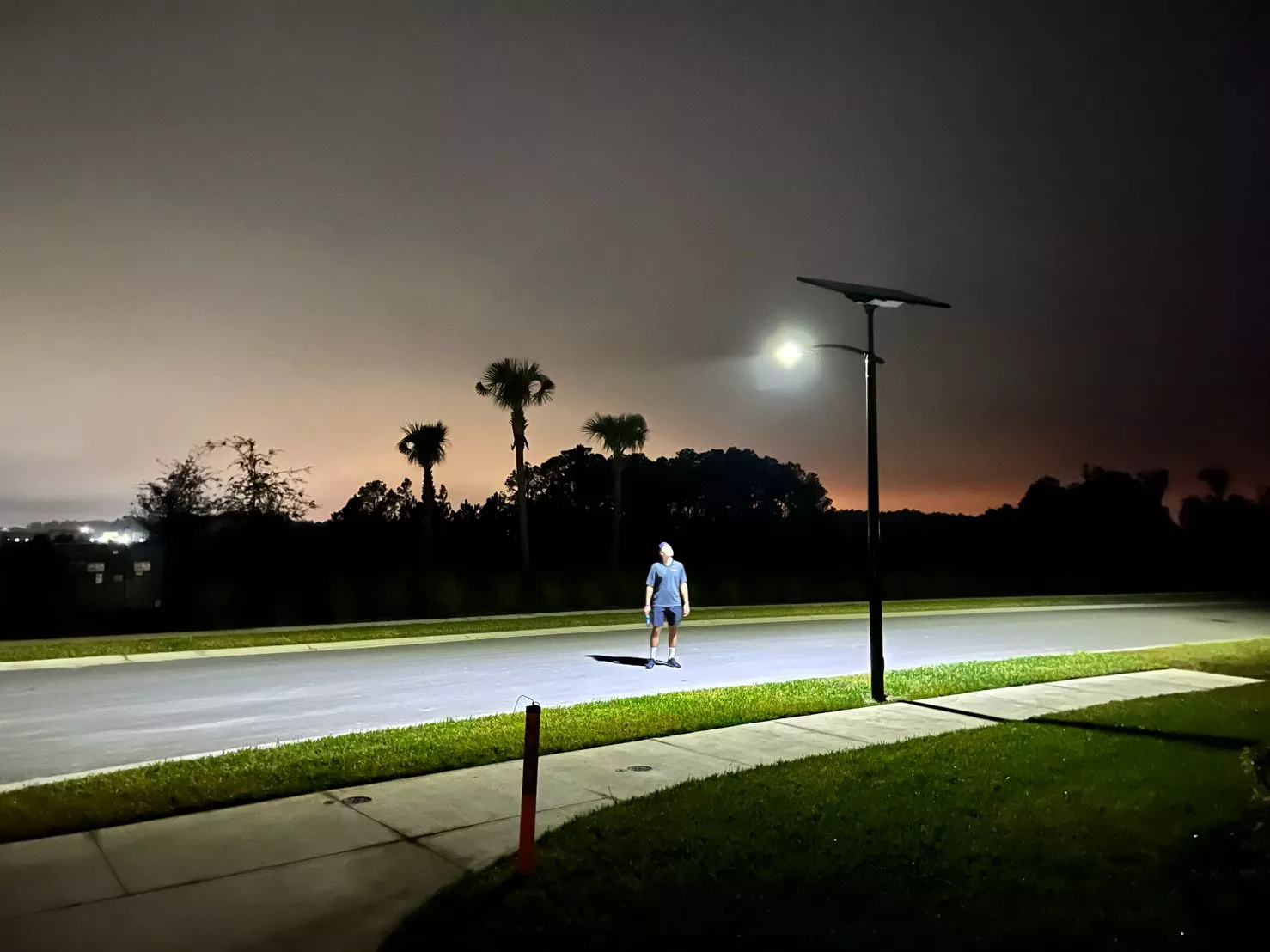
Parks, Trails and Pedestrian Pathways
Pedestrian-focused environments often require a different lighting scale and distribution than roadways and large parking areas.
Florida parks, trails, greenways, and walking paths need lighting that supports pedestrian visibility and wayfinding without overwhelming the surrounding environment. Landscape solar lighting can be particularly useful where extending electrical infrastructure through established landscapes would create unnecessary disruption.
Depending on the space, solar pathway lighting and solar pedestrian lighting can be positioned around walking routes, entrances, gathering areas, and other key connections. Solutions such as NOWATT solar bollards can provide pedestrian-scale illumination, while crystal studs can support route guidance and pathway definition where appropriate.
For planners evaluating landscape solar lights, placement, lighting levels, surrounding vegetation, solar exposure, and how people use the space after dark should guide the final system design.
Waterfronts and Coastal Public Spaces
Florida waterfront projects can combine pedestrian lighting needs with site conditions that make infrastructure planning especially important.
Waterfront parks, seawall walkways, coastal pathways, and dock approaches can present different lighting challenges than inland sites. Coastal exposure, flood-prone conditions, existing infrastructure, pedestrian activity, and available solar access should all be considered when determining where and how lighting is installed.
Lighting distribution, shielding, and color temperature may also need to reflect the specific requirements of the surrounding environment. In Madeira Beach, Florida, the City installed NOWATT BRUT solar bollards along the Patriot Park seawall walkway and dock access, providing pedestrian-scale illumination without relying on underground electrical connections along the route.
Projects like this demonstrate how off-grid solar lighting can be adapted to the practical needs and conditions of a waterfront public space.
When Extending Electrical Infrastructure Becomes the Bigger Challenge
In some locations, the difficult part of a lighting project isn’t installing the light, it is getting electrical power to where the light is needed.
The farther a lighting location is from usable electrical service, the more infrastructure may be required before the first light can operate. This is especially relevant for rural corridors, isolated facilities, expanding developments, and established sites where extending power could involve significant underground work or disruption.
This is where off-grid solar lighting can change the project approach. By generating and storing energy at the point of use, each lighting location can operate independently rather than requiring electrical distribution between poles.
That does not make solar the automatic choice. When comparing off-grid vs. grid-connected street lighting, Florida project teams should consider the distance to power, site conditions, installation requirements, lighting performance, and long-term operating needs to determine which infrastructure approach makes the most sense.
This one is better because it answers the article’s main question directly and avoids repeating the same trenching/cabling explanation for the third time.
Frequently Asked Questions About Off-Grid Solar Lighting in Florida
Off-grid solar lighting is especially worth evaluating where electrical service is distant; underground infrastructure would be difficult to extend, or grid independence is important. Suitable applications can include roads, parking areas, parks, pathways, waterfronts, campuses, and remote locations.
Yes. Off-grid solar lighting can support municipal streets, intersections, rural corridors, and other roadway applications when the system is properly designed around roadway geometry, required illumination, operating schedules, solar availability, energy storage, and structural requirements.
Yes. Solar pathway lighting can support visibility and wayfinding along parks, trails, greenways, and pedestrian connections. The appropriate solution depends on how the space is used, required lighting levels, placement, surrounding vegetation, and available solar exposure.
Solar street lighting is typically designed for roads, parking areas, and larger circulation zones. Landscape solar lighting is generally pedestrian-focused and can include solar bollards and other solutions designed for pathways, landscaped areas, and public spaces.
Yes. Autonomous solar lighting can serve parking areas, campuses, schools, resorts, and developing properties, particularly where lighting locations are separated from existing electrical infrastructure, or greater placement flexibility is needed.
Municipalities should compare more than the fixture. Consider lighting performance, energy generation and storage, operating schedules, pole and structural requirements, site conditions, system engineering, documentation, installation requirements, and long-term support when evaluating municipal street lighting suppliers.
Finding the Right Lighting Approach for Your Florida Site
Choosing the right lighting approach starts with understanding how the site will actually be used. The application, users, existing infrastructure, solar availability, lighting requirements, and operating schedule should all inform the final system design.
The question isn’t simply whether solar lighting can be installed. It is whether an autonomous system fits the site’s infrastructure and long-term operating needs. Fonroche Lighting America works with Florida municipalities, developers, and project teams to evaluate these factors and develop off-grid solar lighting solutions around the requirements of each project.