

Retrofitting Landscape Lighting in South Carolina: When Does Solar Make Sense?
Upgrading Lighting in an Established Landscape
Improving lighting at an existing property means working around paths, mature planting, buildings, and electrical infrastructure. For a Charleston hotel courtyard, Columbia campus, or Greenville community walkway, the decision starts with a practical question: should the property repair its wired system, replace it, or add standalone solar lighting where coverage is missing?
A landscape lighting retrofit in South Carolina should address the condition of the existing system and the work each option requires. A solar retrofit introduces independent solar fixtures into the site’s lighting plan; it does not automatically convert existing wired lights to solar.
Start With What Needs Fixing
Assess whether the problem lies with individual fixtures, the electrical infrastructure, or the lighting layout. Damaged or ageing fixtures may need replacement, while recurring wiring faults and underground repairs call for an assessment of the power supply and cabling. Check out existing mounting points before deciding what can remain in service.
Coverage problems require a different response. Lights may still operate correctly but leave gaps between paths, entrances, and gathering spaces as the property’s use changes.
For example, a Columbia campus courtyard could gain a new building entrance or pedestrian connection beyond the existing lighting coverage. In that scenario, adding lighting along the new route may be more appropriate than replacing the entire system.
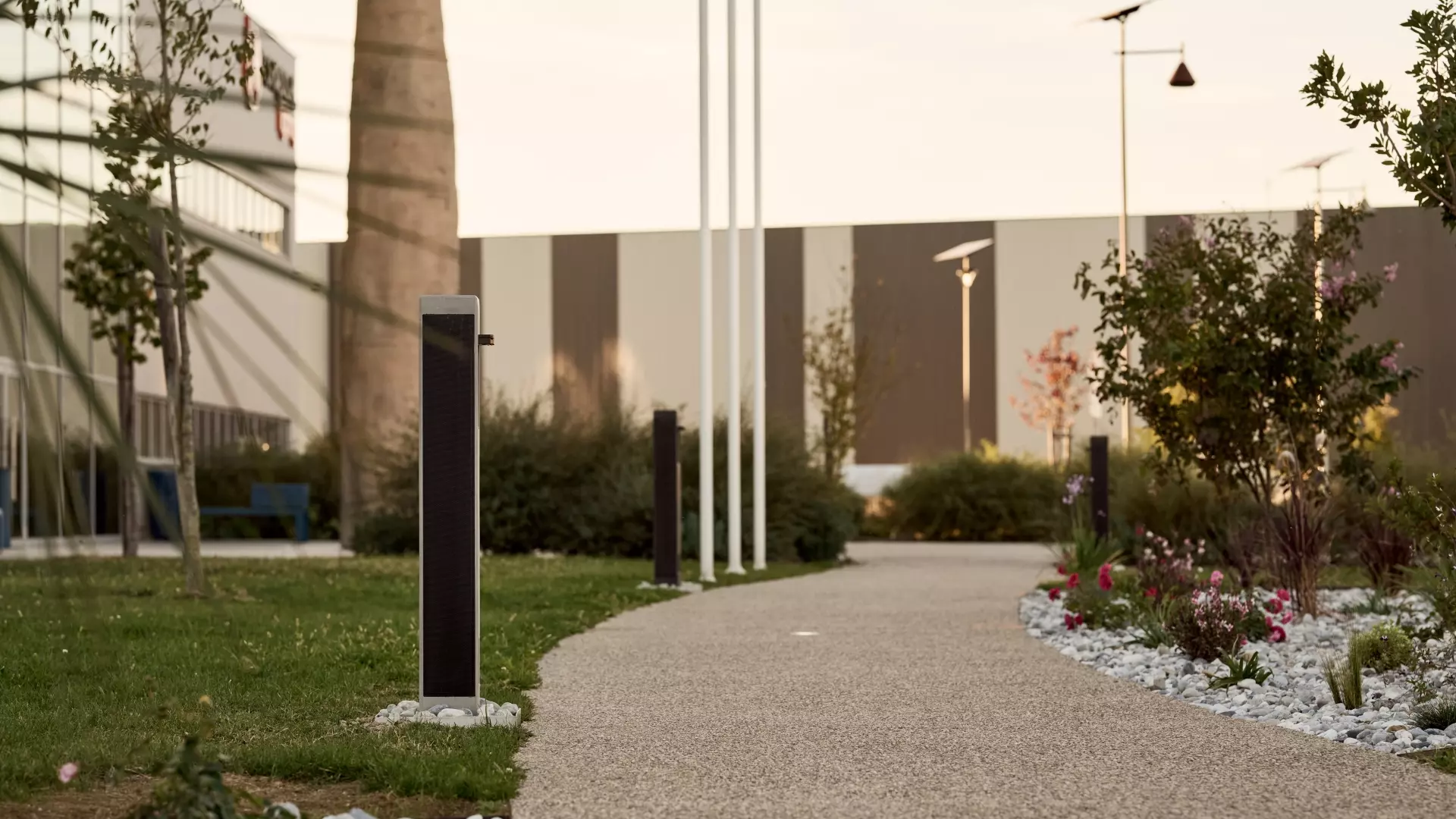
Compare Repairing, Replacing and Supplementing
When Repairing Wired Lighting Makes Sense
Repairing or replacing wired landscape lighting may be appropriate where electrical infrastructure remains serviceable, and existing fixture locations provide suitable coverage. A qualified electrical professional can assess recurring faults and determine whether the work involves individual components or more extensive repairs.
Compare electrical investigation, replacement fixtures, and any excavation required to access damaged cables. Include restoring paving and planting, along with future electricity use and servicing, when reviewing the overall cost.
When Standalone Solar Is Worth Evaluating
A solar landscape lighting retrofit is worth considering where extending power would require new cable runs, conduit, or opening finished surfaces. Repeated repairs to failing underground infrastructure can also justify evaluating another approach, provided proposed solar locations receive sufficient sunlight.
For a South Carolina hotel or campus, a mixed approach could retain functioning wired lights near buildings while adding solar along suitable unserved paths. Compare solar fixture mounting, foundations, site preparation, and ongoing servicing against the electrical work and restoration required for a wired extension. The better choice depends on site conditions, required lighting performance, and total ownership costs.
Upgrade Lighting with Less Landscape Disruption
Protect Planting, Paving and Underground Services
Established planting, tree roots, paved paths, and patios can influence fixture placement and installation access. Locate irrigation lines and other underground services before excavation or drilling. Using solar lighting for established landscapes removes electrical cable runs to each standalone fixture, potentially reducing excavation. Foundations and mounting work may still cause localized disturbance, so include surface repairs and landscape restoration in the project’s scope.
Maintain Access During Installation
For a Charleston hotel courtyard upgrade, planning could include keeping routes between guest rooms, entrances, and amenities accessible throughout the work. Coordinate temporary work areas, equipment access, and pedestrian diversions with property staff. Schedule installation around daily operations and restore affected areas before reopening them.
Check Whether Solar Fits the Proposed Locations
An existing wired fixture location may offer good pedestrian coverage but insufficient sunlight for a solar replacement. Assess each proposed position for shade from mature trees, buildings, and covered walkways, accounting for seasonal changes and future vegetation growth. Available solar energy must support the required lighting output and operating hours.
For a potential Greenville park upgrade, evaluate tree canopy alongside the coverage needed along paths. On Myrtle Beach or Hilton Head hospitality grounds, review coastal exposure and drainage against the selected product’s documented suitability.
Check mounting surfaces, foundation requirements, and access for servicing before confirming the layout. Existing foundations should only be reused after their condition, dimensions, and anchoring compatibility have been assessed. These checks are central to planning solar landscape lighting in South Carolina and determining whether replacement locations need to change.
Choose NOWATT Products for the Upgrade
NOWATT BRUT, OKO, and FOLLOW bollards are options to evaluate when an upgrade calls for pedestrian illumination. Compare light distribution, mounting requirements, materials, and how each model fits the existing landscape. The selected fixture should address the coverage gap or replacement need identified during the site assessment.
Crystal Studs serves a different purpose: route marking and subtle visual guidance. They can help define paths through courtyards or gardens but should not automatically replace the illumination provided by an existing walkway fixture.
Evaluate NOWATT solar bollards and Crystal Studs according to the original lighting problem, whether replacing an unsuitable fixture or adding guidance along a newly used route.
Frequently Asked Questions About Solar Landscape Lighting Retrofits
Yes, where sunlight, lighting requirements, and installation conditions support it. Replacement typically involves standalone solar fixtures. Converting an existing wired fixture requires verified compatibility with a suitable solar power system.
Yes. Existing wired lights can remain while solar serves suitable areas with coverage gaps or difficult electrical access. Coordinate both within one plan to provide appropriate coverage and operating schedules.
Sometimes. Foundation dimensions, condition, anchor spacing, and structural capacity must meet the selected bollard mounting requirements. Confirm compatibility before deciding to reuse an existing foundation.
It may. Standalone solar avoids electrical cable trenches to each fixture, but foundations, anchors, or recessed installations can still require excavation or drilling. Disturbance depends on the mounting method and site conditions.
Solar is worth evaluating where extending electricity would disrupt paving or landscaping, or where underground wiring requires recurring repairs. Each proposed location must receive sufficient sunlight and support the required lighting output and operating hours.
Choose the Right Upgrade for Your South Carolina Property
Start with the lighting problem, assess the existing infrastructure, and compare the installation work each option requires. Confirm solar suitability before deciding where to repair, replace, or supplement fixtures. Explore Fonroche Lighting America’s solar lighting solutions in South Carolina and discuss your property’s layout, existing lighting, and upgrade needs with our team.